View methods side by side.
Choose up to four methods. Add them using the search and share the comparison by copying its link.
| Criterion |  Operations Gemba Walk | 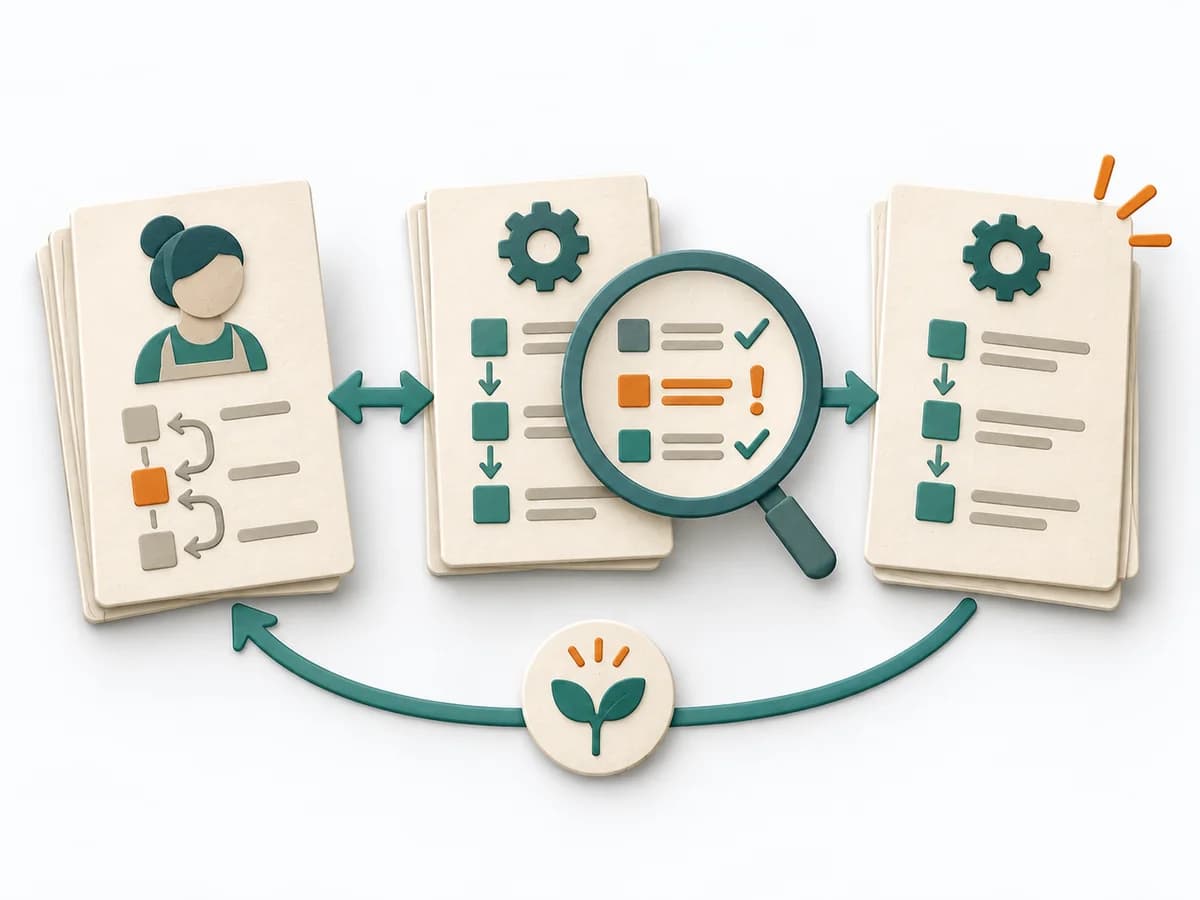 Operations Standard Work Analysis |  Facilitation Stakeholder Mapping |  Facilitation Stakeholder Salience Model |
|---|---|---|---|---|
Purposedifferent | When there is uncertainty about the real course of a process, the method brings observation to the place where work happens. It combines perception, follow-up questions, and process knowledge so decisions rest on actual workflows instead of assumptions. | When the same task is done differently depending on the person, the method exposes the reliable core. It creates comparability without unnecessarily choking off needed latitude. | When an initiative depends on many people, interests, and power dynamics, Stakeholder Mapping systematically orders the environment. It shows who influences, who is affected, and where relationship management or safeguarding matters first. | When stakeholders appear to matter very differently, the Stakeholder Salience Model rates their actual priority through power, legitimacy, and urgency. It turns individual contributions into a visible selection. The result is captured as a Salience diagram and a class-based strategy. |
Complexitydifferent | Low | Medium | Low | Medium |
Timedifferent | 30-120 min | 1-3 h | 60–90 min | 60-90 min |
Participantsdifferent | 2-6 | 2-6 | 2-8 | 3-6 |
Formatdifferent | Workshop | Workshop | Workshop + async | Workshop |
Outputdifferent | Observation Notes, Improvement Ideas | Standard Work Sheet, Deviation List, Improved Standard, Training Needs | Stakeholder Map, Engagement Plan, Risk Notes | Salience Diagram, Strategy per Class |
Tagsno overlap | LeanObservationProcessOperations | LeanProcessQuality | StakeholdersAlignmentFacilitationChange | StakeholdersFacilitationAlignmentGovernance |