View methods side by side.
Choose up to four methods. Add them using the search and share the comparison by copying its link.
| Criterion |  Business Strategy GAP Analysis |  Business Strategy SWOT Analysis |  Systems Thinking Leverage Points | 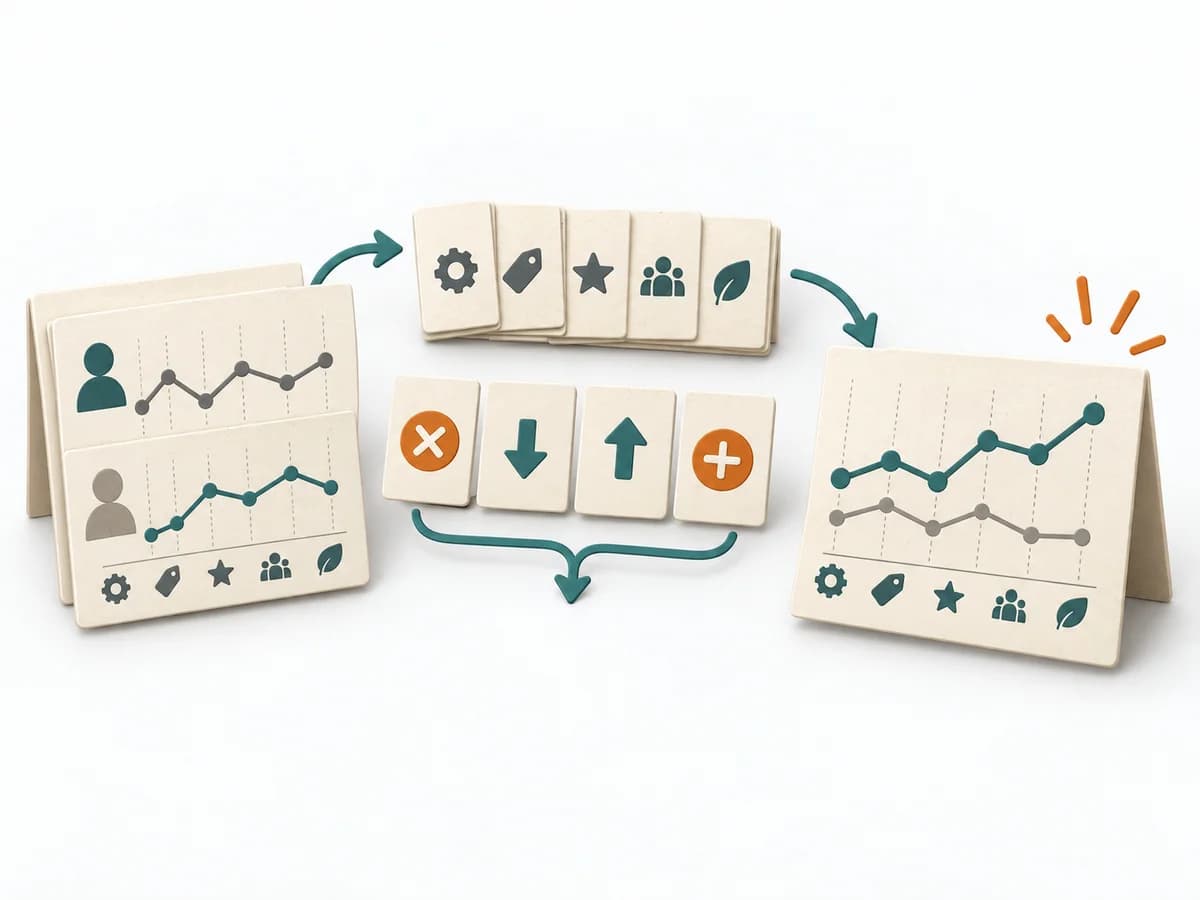 Business Strategy Blue Ocean Strategy Canvas |
|---|---|---|---|---|
Purposedifferent | GAP Analysis compares the current state with a target picture and makes the distance manageable. It becomes useful when, ahead of new initiatives, it must become clear which capabilities, processes, or resources are missing. | SWOT Analysis arranges strengths, weaknesses, opportunities, and threats into a compact picture of the situation. It keeps internal capabilities and external influences separate before strategic options emerge from them. | Leverage Points show exactly where interventions in a system produce a disproportionate effect. It draws relationships, patterns, and feedback loops. The result is captured as a leverage map and action strategy. | The Blue Ocean Strategy Canvas shows how an offering is positioned relative to the market. Differentiation thereby becomes tangible in value factors instead of merely being claimed. |
Complexitydifferent | Medium | Low | High | Medium |
Timedifferent | 1-3 h | 30-60 min | Half day | 2-4 h |
Participantsdifferent | 2-8 | 3-12 | 3-12 | 3-10 |
Formatdifferent | Workshop + async | Workshop | Workshop | Workshop |
Outputdifferent | Gap Matrix, Action Plan, Risk Notes | SWOT matrix, Strategic options, Action list | Leverage Map, Action Strategy | Strategy Canvas, Value Curve, ERRC Actions |
Tags1 shared | StrategyAnalysisPlanning | StrategyAnalysisMarketPositioning | Systems thinkingChangeStrategy | StrategyPositioningInnovationValue |