View methods side by side.
Choose up to four methods. Add them using the search and share the comparison by copying its link.
| Criterion |  Business Strategy GAP Analysis | 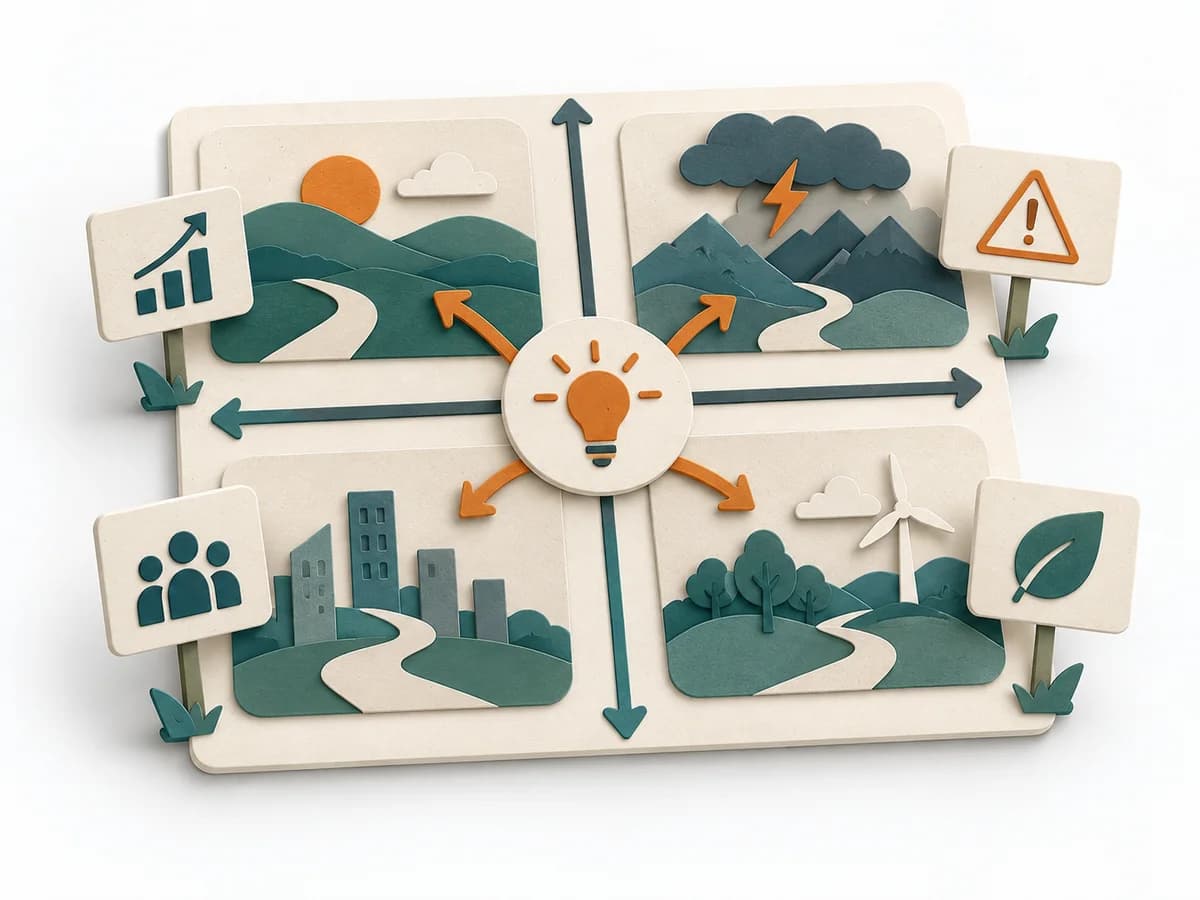 Business Strategy Scenario Planning | 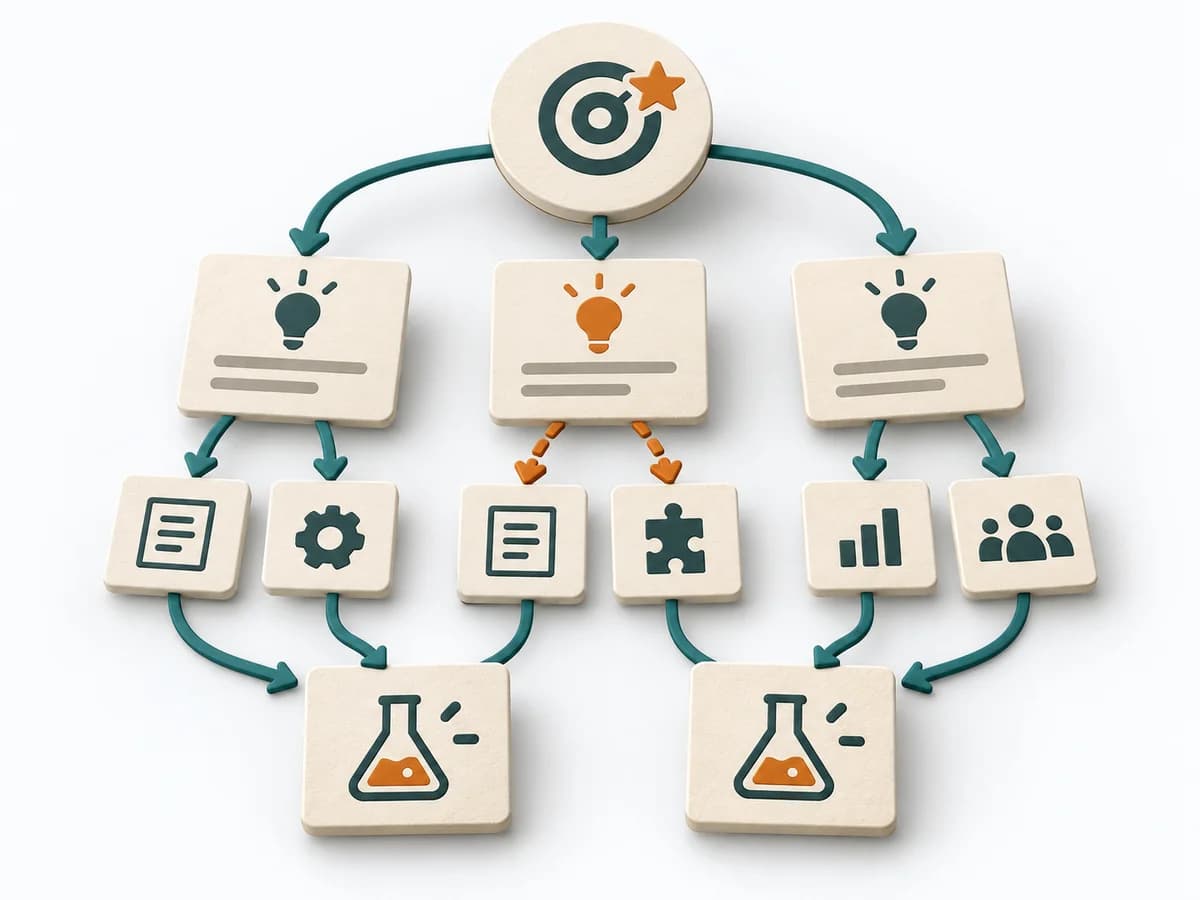 Product Discovery Opportunity Solution Tree |  Product Discovery Experiment Canvas |
|---|---|---|---|---|
Purposedifferent | GAP Analysis compares the current state with a target picture and makes the distance manageable. It becomes useful when, ahead of new initiatives, it must become clear which capabilities, processes, or resources are missing. | Scenario Planning opens the view to several plausible futures instead of a single forecast. The method protects strategies from depending on too narrow an expected path. | When discovery keeps swinging between goals, ideas, and learning loops, it creates clear steering logic. It connects the desired outcome, opportunities, and experiments into a legible structure. | When experiments become unreadable after the fact, it arranges hypothesis, signal, and learning goal on a single canvas. It separates problem, assumption, solution, and evidence. The result is captured as a Completed Experiment Canvas and a Success Metric. |
Complexitydifferent | Medium | High | Medium | Low |
Timedifferent | 1-3 h | 0.5-2 Tage | 1-2 h Setup, laufend | 30-60 min |
Participantsdifferent | 2-8 | 4-12 | 2-6 | 1-5 |
Formatdifferent | Workshop + async | Workshop | Workshop + async | Workshop + async |
Outputdifferent | Gap Matrix, Action Plan, Risk Notes | Scenario Set, Strategic Implications, Robust Options | Opportunity Solution Tree, Experiment Backlog, Learning Log | Completed Experiment Canvas, Success Metric |
Tagsno overlap | StrategyAnalysisPlanning | StrategyUncertaintyPlanning | DiscoveryOutcomesExperimentsOpportunity | ExperimentsValidationDiscoveryHypothesis |