View methods side by side.
Choose up to four methods. Add them using the search and share the comparison by copying its link.
| Criterion |  Business Strategy GAP Analysis | 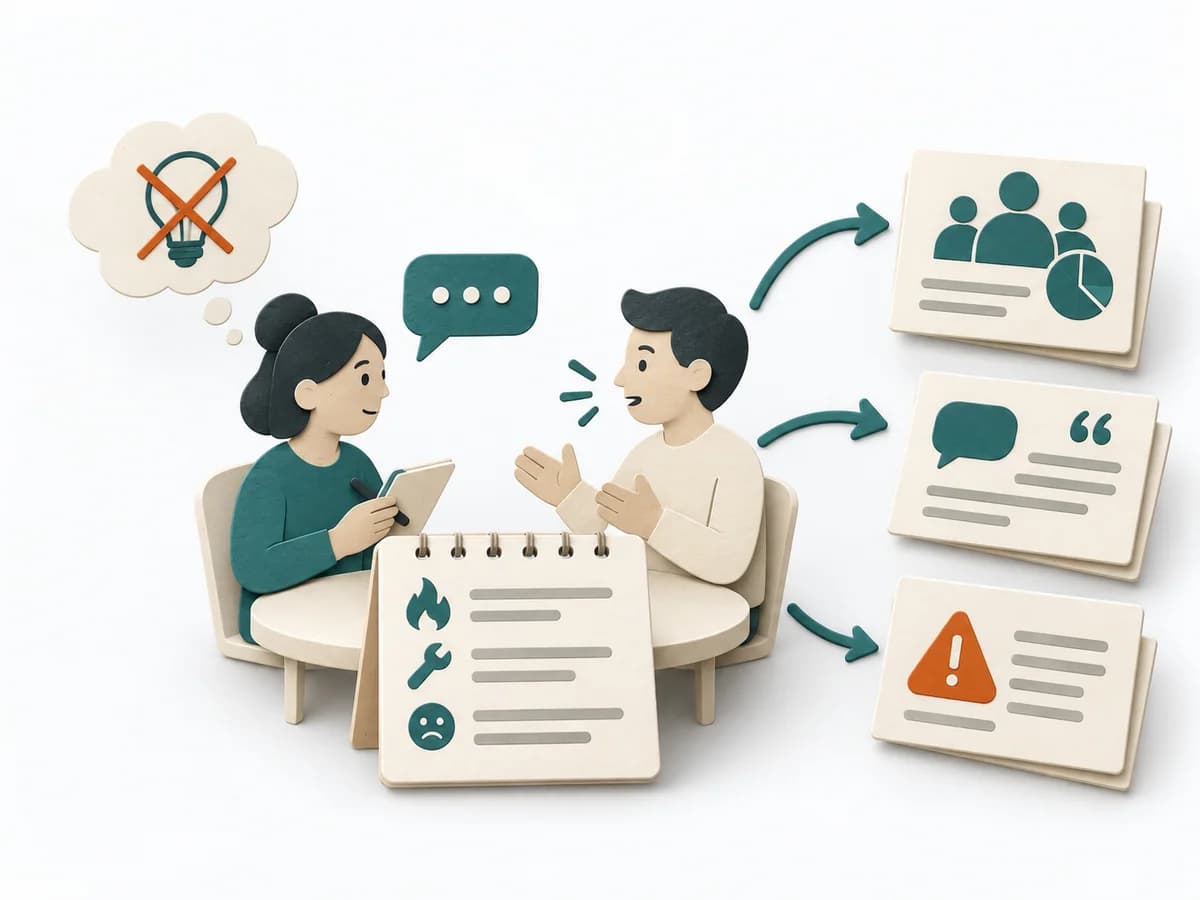 Product Discovery Problem Interview | 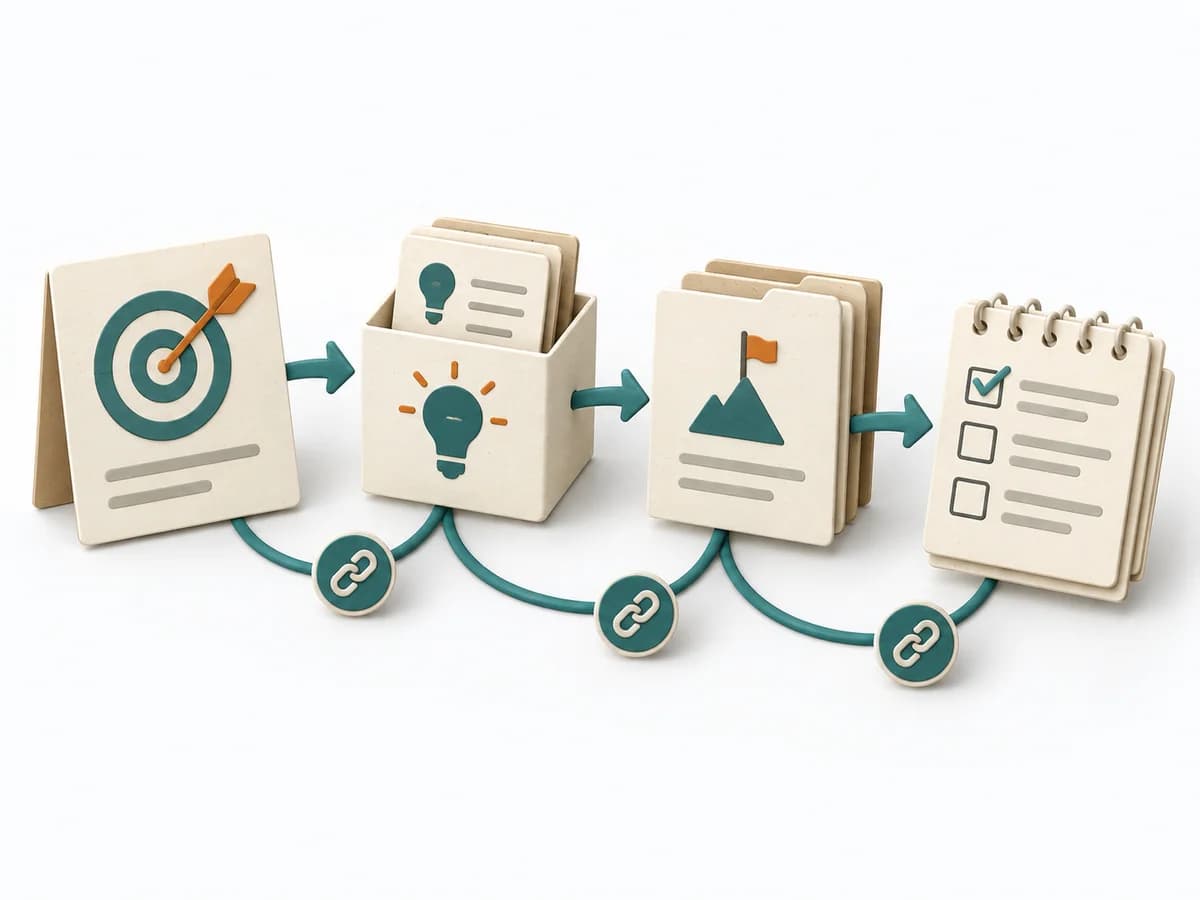 Product Strategy GIST Planning | 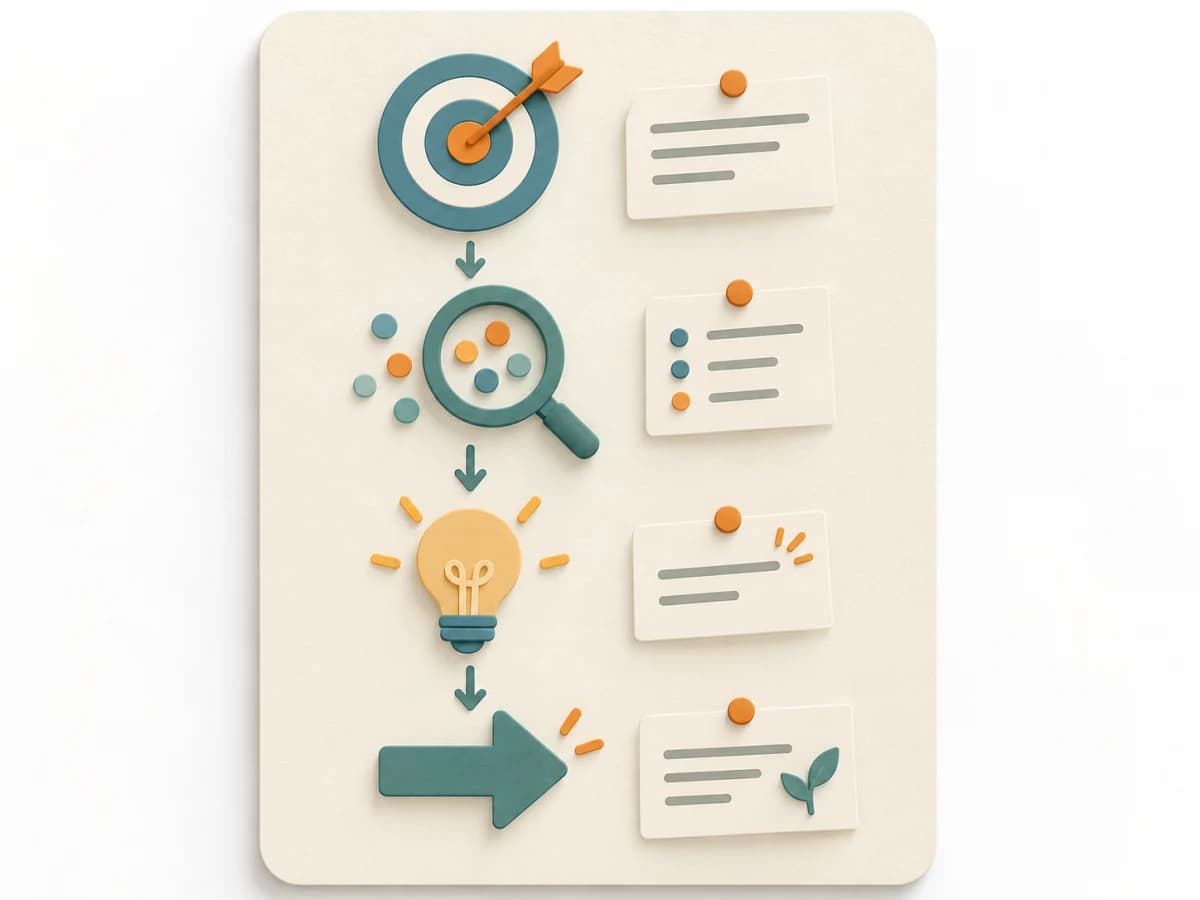 Product Discovery Learning Card |
|---|---|---|---|---|
Purposedifferent | GAP Analysis compares the current state with a target picture and makes the distance manageable. It becomes useful when, ahead of new initiatives, it must become clear which capabilities, processes, or resources are missing. | When the picture of the problem still needs to become solid, it asks about real situations and consequences. It separates genuine suffering from mere interest in a solution. | GIST Planning helps clarify target groups, value, goals, and priorities. It links customer value, product logic, and decision priorities, and captures the result as goals, an idea bank, and a step-project list. | The Learning Card connects traceable test results to a reasoned next action while keeping the limits of the insight visible. |
Complexitydifferent | Medium | Medium | Medium | Low |
Timedifferent | 1-3 h | 30-60 min je Interview | Wochen bis Monate je Goal | 25-40 min |
Participantsdifferent | 2-8 | 5-12 Interviews | 3-10 | 1-5 |
Formatsame | Workshop + async | Workshop + async | Workshop + async | Workshop + async |
Outputdifferent | Gap Matrix, Action Plan, Risk Notes | Problem Evidence, Risk Notes, Customer Segments | Goals, Idea bank, Step-project list, Tasks, Learning reports | Learning Card with evidence and next action |
Tagsno overlap | StrategyAnalysisPlanning | DiscoveryInterviewsValidation | RoadmapOutcomesPlanningExperiments | ExperimentsValidationDiscoveryLearning |