View methods side by side.
Choose up to four methods. Add them using the search and share the comparison by copying its link.
| Criterion |  Business Strategy GAP Analysis |  Systems Thinking Iceberg Model | 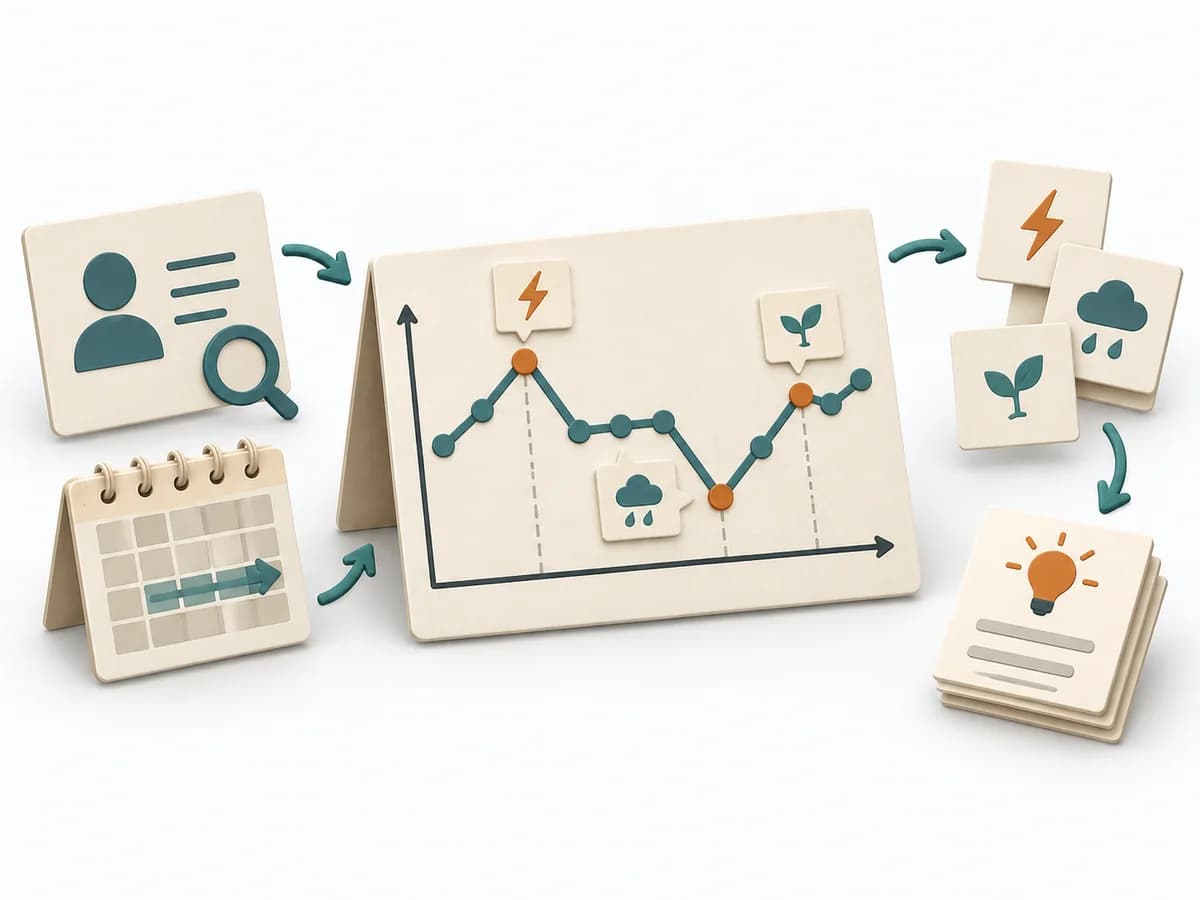 Systems Thinking Behavior Over Time Graph |  Systems Thinking System Dynamics Simulation |
|---|---|---|---|---|
Purposedifferent | GAP Analysis compares the current state with a target picture and makes the distance manageable. It becomes useful when, ahead of new initiatives, it must become clear which capabilities, processes, or resources are missing. | The Iceberg Model separates visible events from patterns, structures, and mental models. This turns a single observation into a deeper understanding of why a problem keeps recurring. | A Behavior Over Time Graph shows how a metric or observation develops over time. The method makes trends, breaks, and recurring patterns visible that get lost in snapshots. | System Dynamics Simulation makes assumptions about time, delay, and feedback testable through experiments. It draws relationships, patterns, and feedback loops. The result is captured as a simulation model and scenario reports. |
Complexitydifferent | Medium | Low | Low | High |
Timedifferent | 1-3 h | 30-60 min | 20-45 min | Mehrere Tage bis Wochen |
Participantsdifferent | 2-8 | 2-10 | 1-10 | 1-5 Modellierende, Stakeholder asynchron |
Formatdifferent | Workshop + async | Workshop + async | Workshop + async | Async |
Outputdifferent | Gap Matrix, Action Plan, Risk Notes | Iceberg Worksheet, Pattern Notes, Intervention Ideas | Behavior Over Time Graph, Trend Hypotheses, Key Events | Simulation Model, Scenario Reports |
Tagsno overlap | StrategyAnalysisPlanning | Systems thinkingRoot causePatterns | Systems thinkingPatternsDynamics | Systems thinkingDynamicsSimulationAnalysis |