View methods side by side.
Choose up to four methods. Add them using the search and share the comparison by copying its link.
| Criterion |  Business Strategy GAP Analysis | 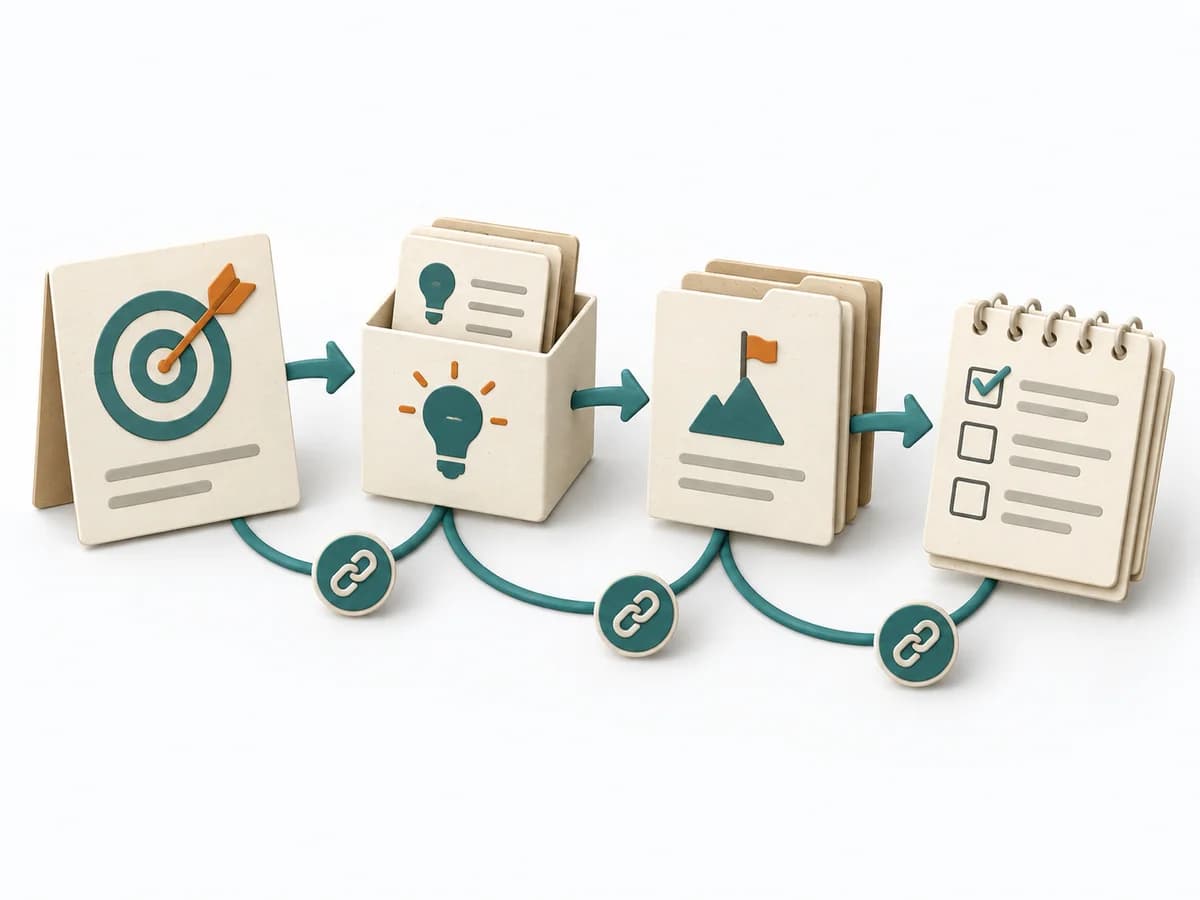 Product Strategy GIST Planning |  DevOps Incident Command |  DevOps Blameless Postmortem |
|---|---|---|---|---|
Purposedifferent | GAP Analysis compares the current state with a target picture and makes the distance manageable. It becomes useful when, ahead of new initiatives, it must become clear which capabilities, processes, or resources are missing. | GIST Planning helps clarify target groups, value, goals, and priorities. It links customer value, product logic, and decision priorities, and captures the result as goals, an idea bank, and a step-project list. | During an acute incident with several people involved, the method creates a clear leadership and communication structure. It reduces chaos when fast coordination and clean situational awareness are both needed at once. | After an incident with damage or a near miss, the method creates a sober field for learning without assigning blame. It directs attention to the course of events, conditions, and effective countermeasures. |
Complexitysame | Medium | Medium | Medium | Medium |
Timedifferent | 1-3 h | Wochen bis Monate je Goal | As needed | 30-90 min |
Participantsdifferent | 2-8 | 3-10 | 4-15 | 3-12 |
Formatsame | Workshop + async | Workshop + async | Workshop + async | Workshop + async |
Outputdifferent | Gap Matrix, Action Plan, Risk Notes | Goals, Idea bank, Step-project list, Tasks, Learning reports | Incident Log, Action Tracker, Stakeholder Updates | Postmortem Doc, Action Items, Timeline |
Tagsno overlap | StrategyAnalysisPlanning | RoadmapOutcomesPlanningExperiments | IncidentOperationsReliability | Site Reliability EngineeringIncidentLearningReliability |