View methods side by side.
Choose up to four methods. Add them using the search and share the comparison by copying its link.
| Criterion |  Business Strategy GAP Analysis |  Decision Making Constraint Analysis | 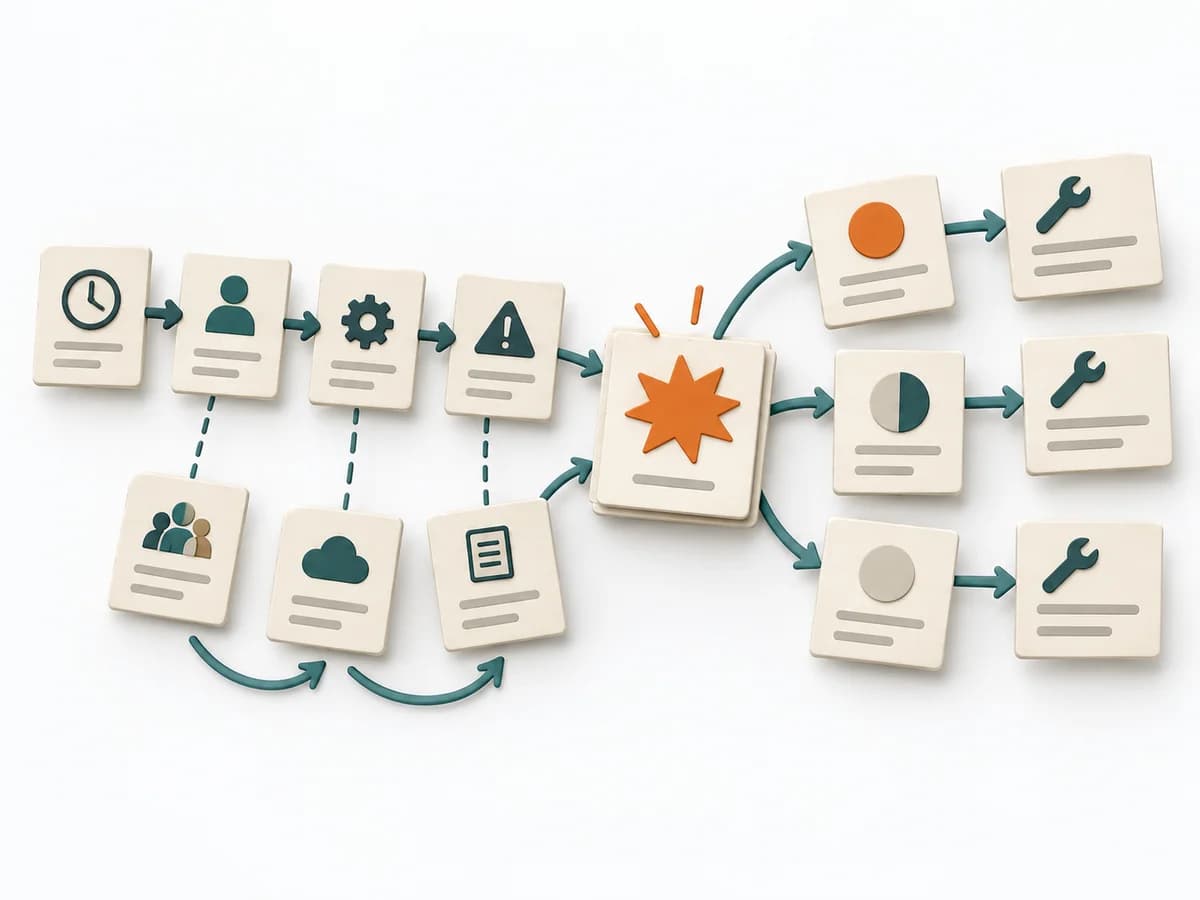 Operations Causal Factor Analysis |  Operations 5 Whys |
|---|---|---|---|---|
Purposedifferent | GAP Analysis compares the current state with a target picture and makes the distance manageable. It becomes useful when, ahead of new initiatives, it must become clear which capabilities, processes, or resources are missing. | When an initiative stalls, the limit often lies not in the idea but in hard or soft boundary conditions. Constraint Analysis separates these limits and shows which of them can actually be shaped. | For an event with a complicated course, the method breaks down the contributing factors along the timeline. It shows how conditions, decisions, and reactions together produce a course of events. | For a single, hard-to-explain deviation, the method exposes the causal chain behind the visible symptom. It keeps the cause open until a controllable condition emerges instead of a mere description. |
Complexitydifferent | Medium | Low | High | Low |
Timedifferent | 1-3 h | 30-90 min | 2-6 h | 15-30 min |
Participantsdifferent | 2-8 | 2-8 | 3-10 | 2-6 |
Formatdifferent | Workshop + async | Workshop + async | Workshop + async | Workshop |
Outputdifferent | Gap Matrix, Action Plan, Risk Notes | Constraint List, Hard/Soft Classification, Option Impact Notes, Decision Boundaries | Event Timeline, Causal Factor Chart, Cause List, Corrective Actions | Root cause notes, Countermeasures |
Tagsno overlap | StrategyAnalysisPlanning | ConstraintsDecisionPlanningOptions | CausalityIncidentRoot causeTimeline | Root causeIncidentLeanProblem solving |