View methods side by side.
Choose up to four methods. Add them using the search and share the comparison by copying its link.
| Criterion |  Business Strategy GAP Analysis |  Product Discovery Assumption Mapping | 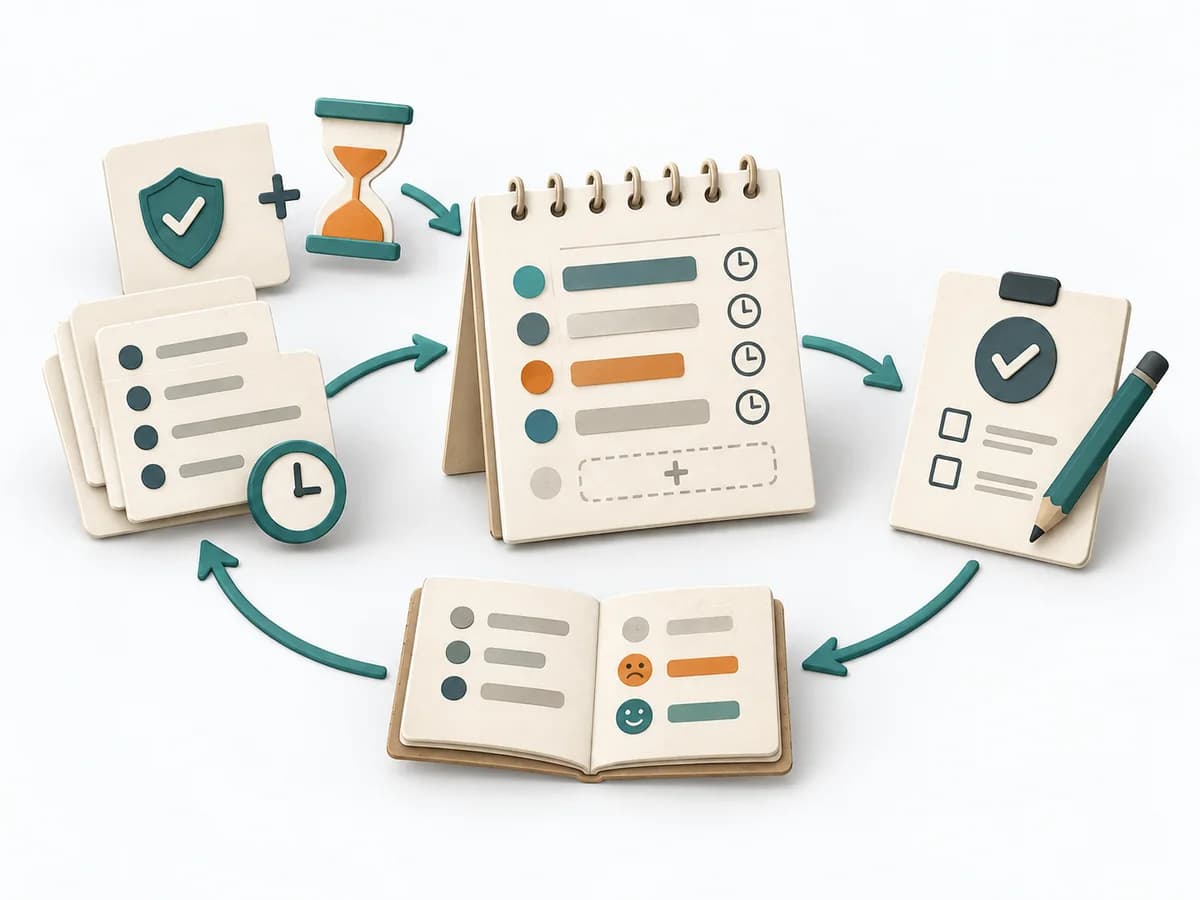 Operations ALPEN Method | 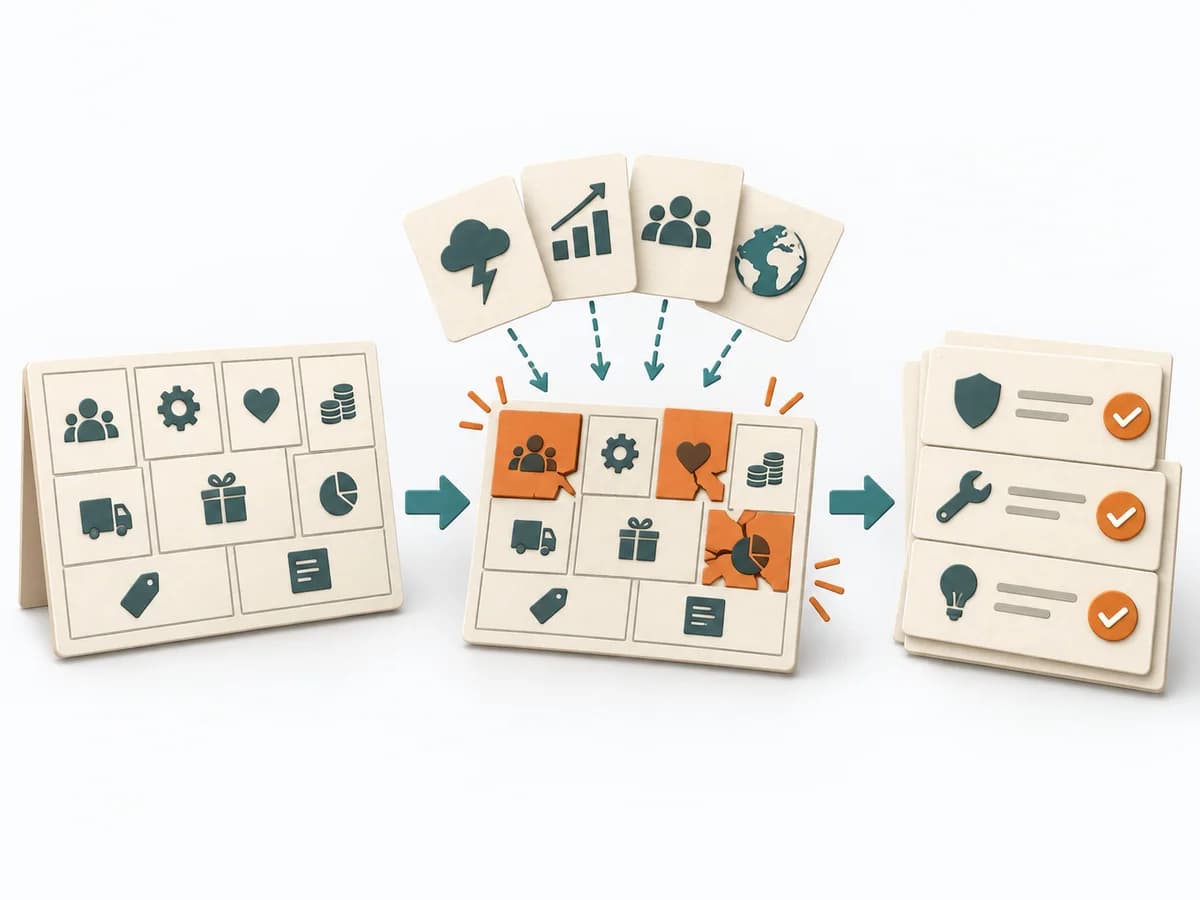 Business Strategy Business Model Stress Test |
|---|---|---|---|---|
Purposedifferent | GAP Analysis compares the current state with a target picture and makes the distance manageable. It becomes useful when, ahead of new initiatives, it must become clear which capabilities, processes, or resources are missing. | When assumptions still sit unordered in the room, it weighs uncertainty against leverage. It makes visible which hypotheses should be checked first. | With an overloaded day full of too many tasks, a realistic picture of the day emerges. The method connects estimating, deciding, and buffer thinking so planning fits available energy and time. | A Business Model Stress Test checks how well a business model holds up under pressure and headwinds. It compares strengths, risks, market logic, and courses of action. The result is captured as a stress-test report and action plan per scenario. |
Complexitydifferent | Medium | Medium | Low | High |
Timedifferent | 1-3 h | 45-60 min | 10-20 min daily | Half day |
Participantsdifferent | 2-8 | 2-8 | 1 | 3-8 |
Formatdifferent | Workshop + async | Workshop + async | Async | Workshop |
Outputdifferent | Gap Matrix, Action Plan, Risk Notes | Assumption map, Test backlog, Risk ranking | Daily Plan, Time Estimates, Review Notes | Stress Test Report, Action Plan per Scenario |
Tagsno overlap | StrategyAnalysisPlanning | AssumptionsRiskExperimentsValidation | PlanningTime managementProductivityOperations | StrategyBusiness modelRiskDiagnosis |