View methods side by side.
Choose up to four methods. Add them using the search and share the comparison by copying its link.
| Criterion | 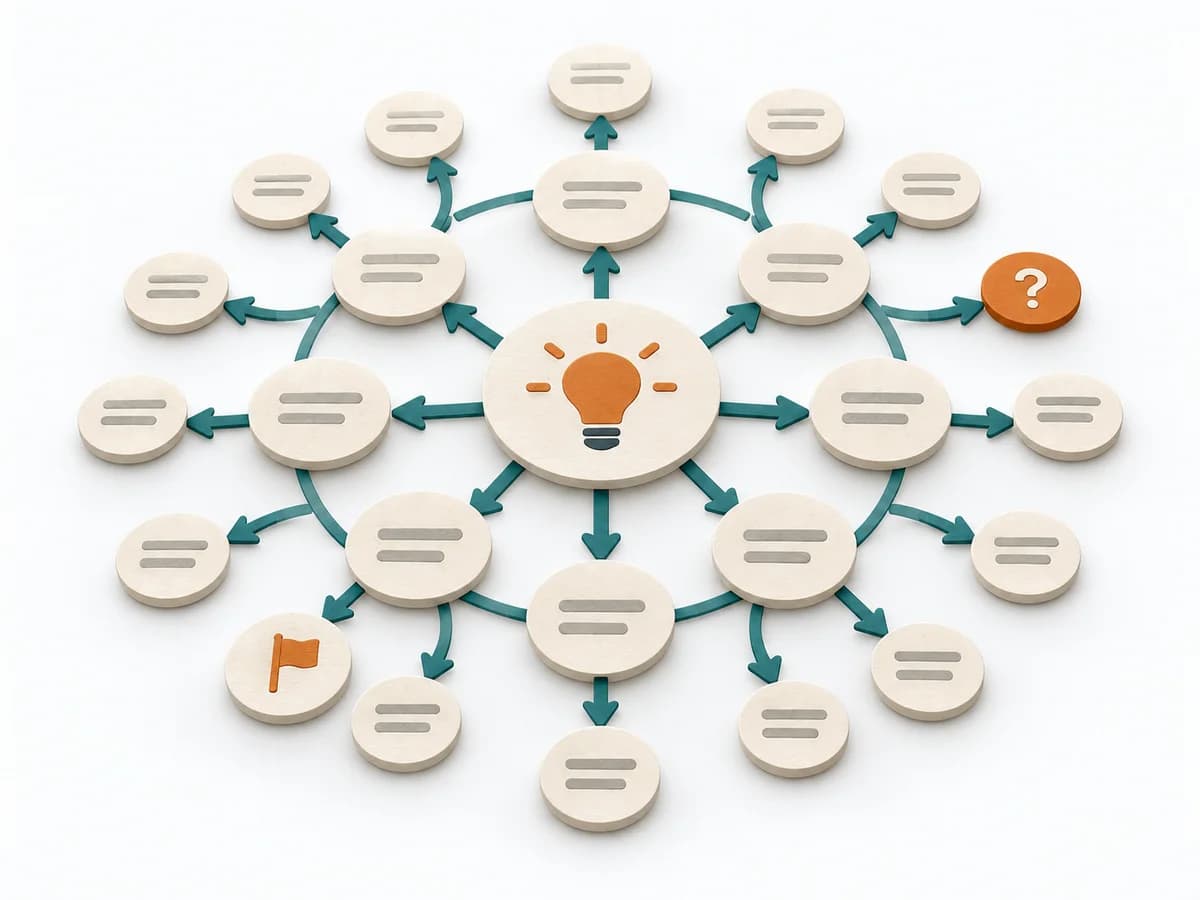 Systems Thinking Futures Wheel | 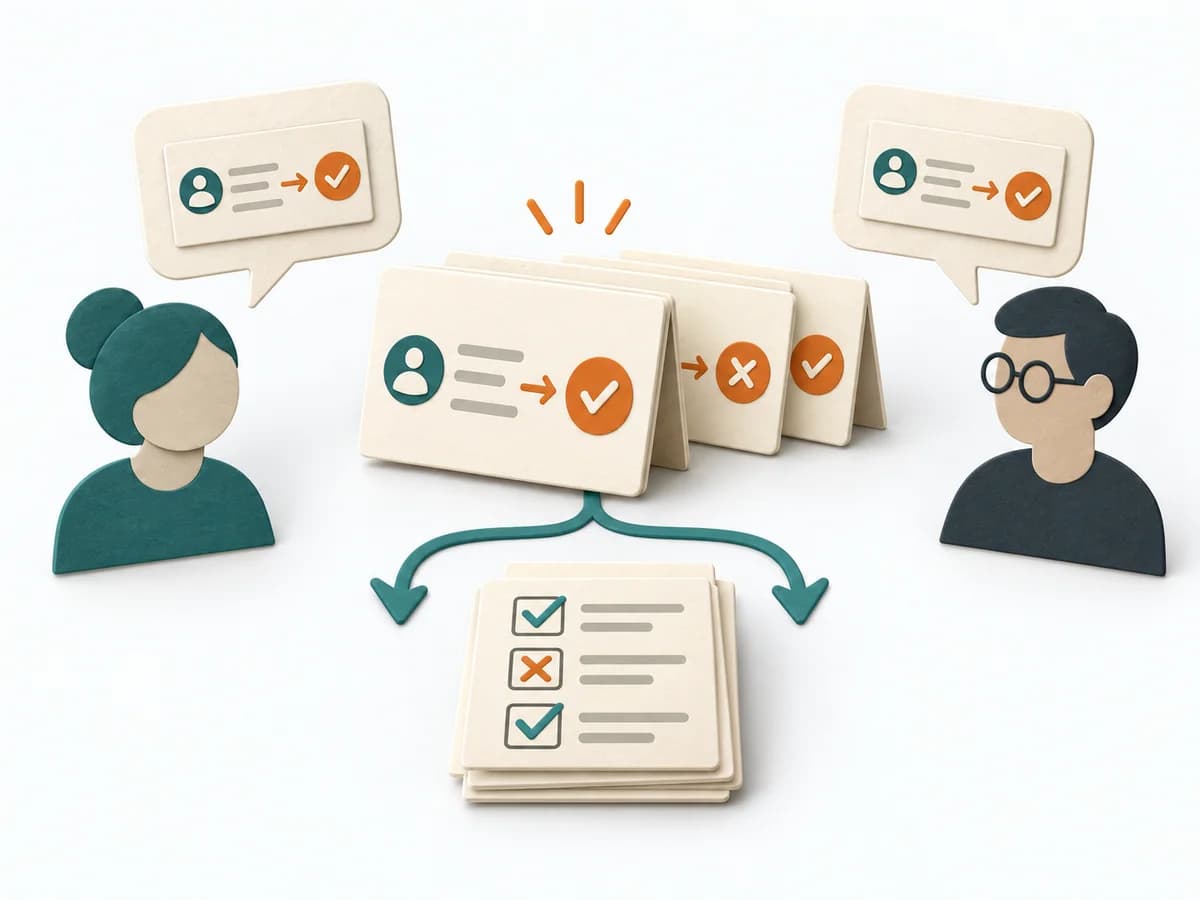 Agile Specification by Example | 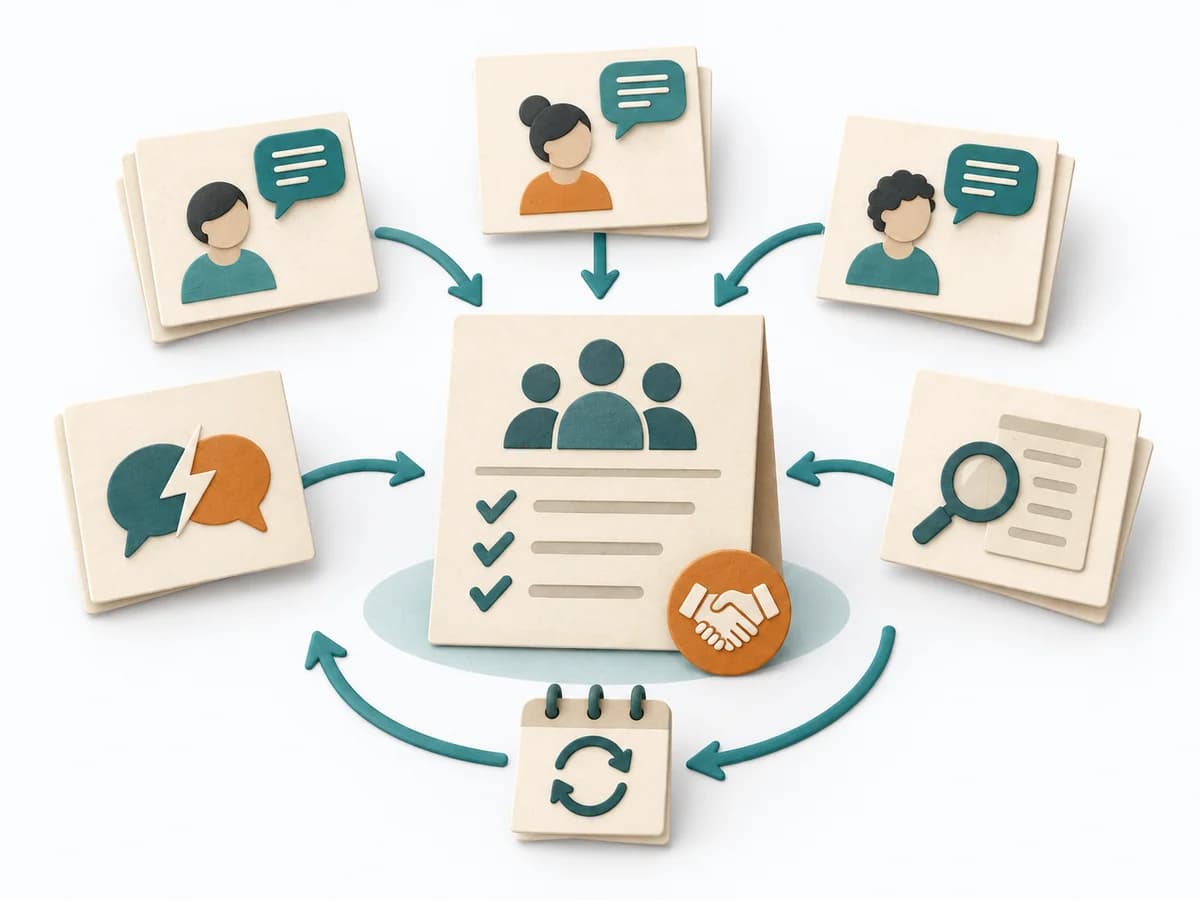 Agile Working Agreements |  Agile Planning Poker |
|---|---|---|---|---|
Purposedifferent | The Futures Wheel helps explore the consequences of a decision, a trend, or a strategic move in a structured way. It makes visible which first, second, and third-order effects could arise from an event. | When business rules need to become precise, it ties language, example, and test together. It sorts work by value, risk, and delivery ability. The result is captured as an Example Table and Acceptance Tests. | When collaboration needs more than implicit expectations, it lays out shared ground rules openly. It creates reliability for conduct, availability, and decision paths. | When estimates within the team diverge too much, it puts differing expectations on a common test bench. It separates rough complexity from unspoken assumptions. |
Complexitydifferent | Medium | Medium | Low | Low |
Timedifferent | 60-120 min | 60-90 min pro Feature | 45-90 min | 2-5 min je Item |
Participantsdifferent | 3-10 | 3-6 | 3-12 | 3-9 |
Formatdifferent | Workshop + async | Workshop | Workshop | Workshop + async |
Outputdifferent | Futures Wheel, Consequence Chains, Strategic Signals | Example Table, Acceptance Tests | Working Agreements, Team Norms, Review Cadence | Relative Estimates, Assumption Notes, Split Candidates |
Tagsno overlap | ForesightSystems thinkingSignals | AgileRequirementsExamplesBehavior-Driven Development | TeamCollaborationAgile | EstimationAgileRelative sizingTeam |