View methods side by side.
Choose up to four methods. Add them using the search and share the comparison by copying its link.
Selected:Futures WheelSAAM (Software Architecture Analysis Method)Leverage PointsFuture Reality Tree
| Criterion | 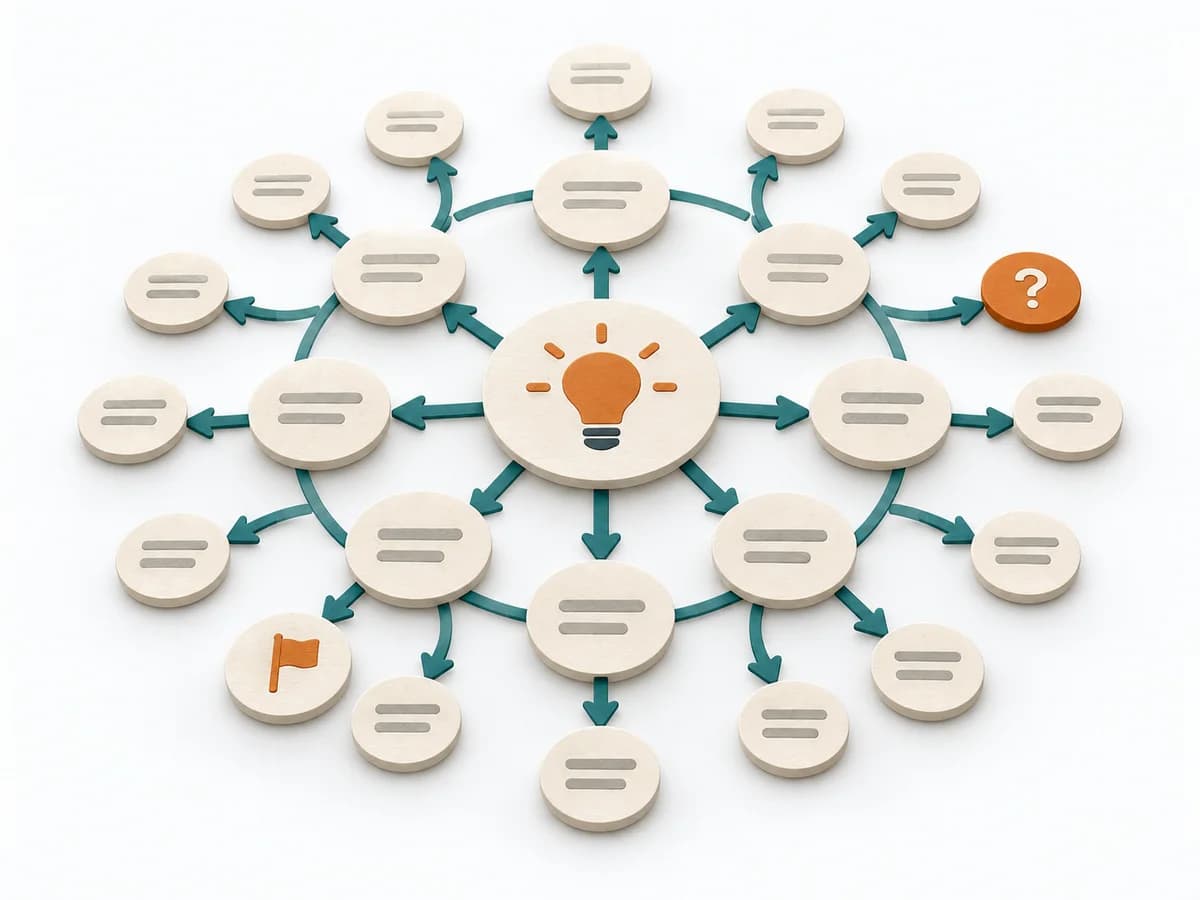 Systems Thinking Futures Wheel |  Architecture SAAM (Software Architecture Analysis Method) |  Systems Thinking Leverage Points | 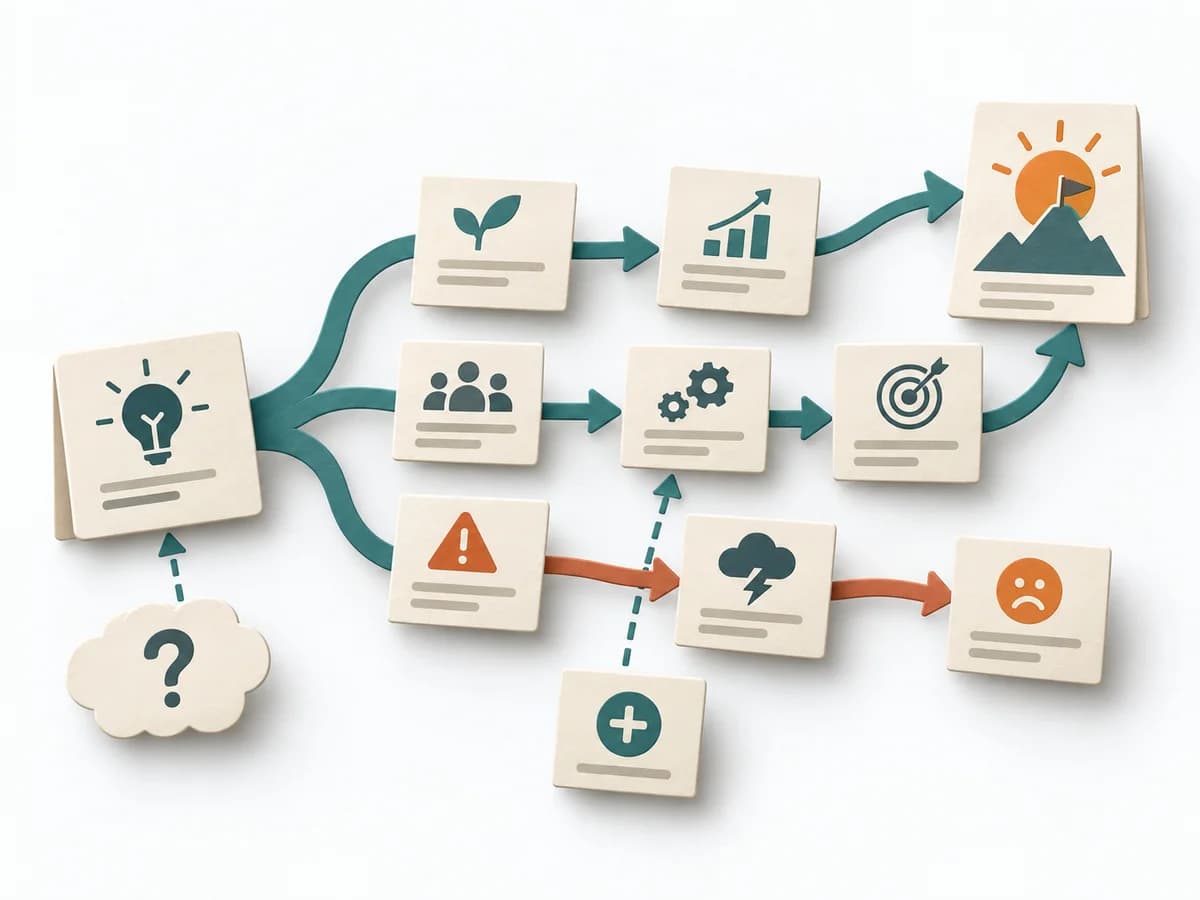 Systems Thinking Future Reality Tree |
|---|---|---|---|---|
Purposedifferent | The Futures Wheel helps explore the consequences of a decision, a trend, or a strategic move in a structured way. It makes visible which first, second, and third-order effects could arise from an event. | SAAM helps teams judge an architecture’s suitability for selected tasks and changes. It is particularly useful for examining modifiability and comparing architecture alternatives with clear reasoning. | Leverage Points show exactly where interventions in a system produce a disproportionate effect. It draws relationships, patterns, and feedback loops. The result is captured as a leverage map and action strategy. | A Future Reality Tree shows how desired actions are meant to lead to a better system state. The method checks whether a path of change holds together logically before time flows into implementation. |
Complexitydifferent | Medium | High | High | High |
Timedifferent | 60-120 min | Preparation, scenario analysis, and findings review; effort depends on scope | Half day | 2-4 h |
Participantsdifferent | 3-10 | Architecture experts and stakeholders for scenarios and weighting | 3-12 | 3-8 |
Formatdifferent | Workshop + async | Workshop + async | Workshop | Workshop |
Outputdifferent | Futures Wheel, Consequence Chains, Strategic Signals | Domain functions mapped to components and connections, Quality attributes and evaluation criteria, Typical tasks and their effects on the architecture, Reasoned evaluation or comparison of alternatives | Leverage Map, Action Strategy | Future Reality Tree, Negative Branches, Assumption List, Improved Injections |
Tagsno overlap | ForesightSystems thinkingSignals | ArchitectureChangeAnalysisComparisonQuality | Systems thinkingChangeStrategy | Theory of ConstraintsSystems thinkingChange |