View methods side by side.
Choose up to four methods. Add them using the search and share the comparison by copying its link.
| Criterion | 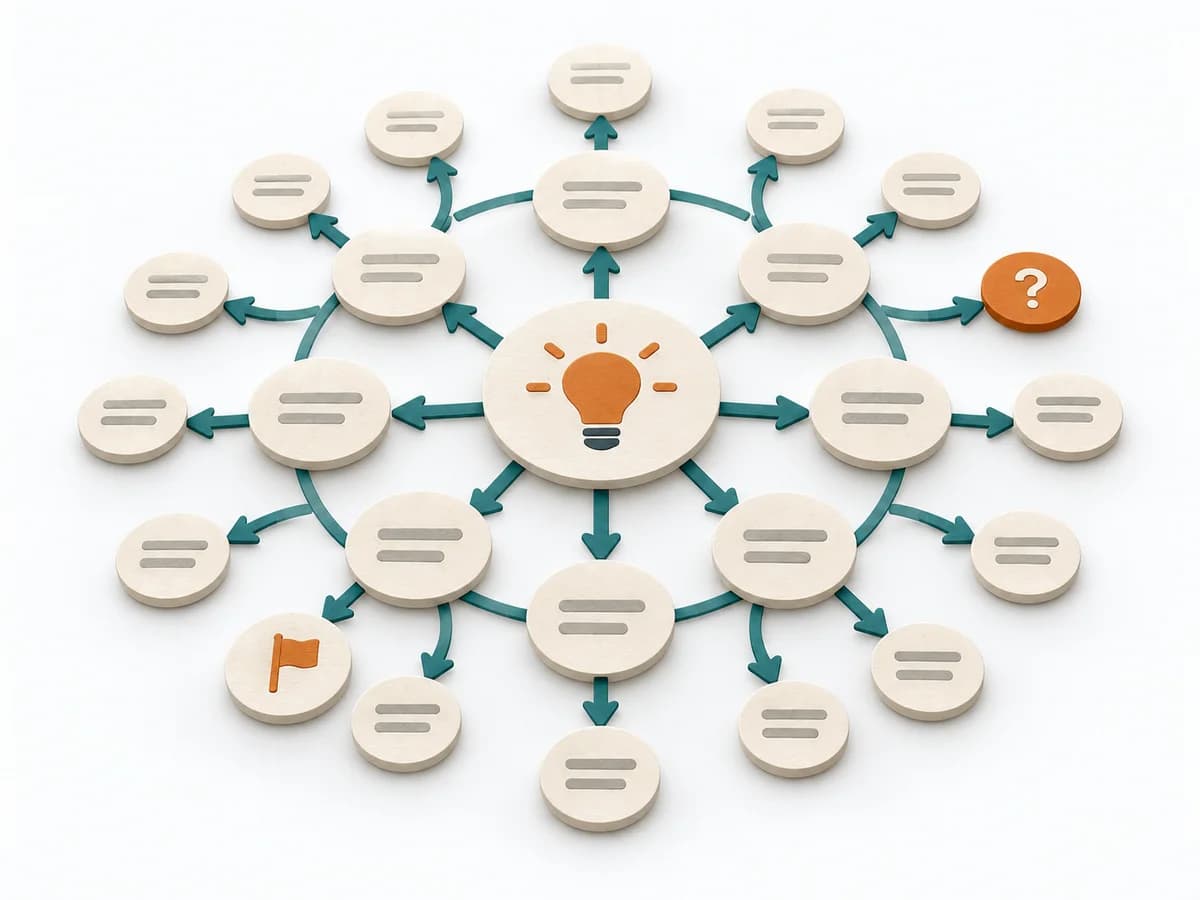 Systems Thinking Futures Wheel | 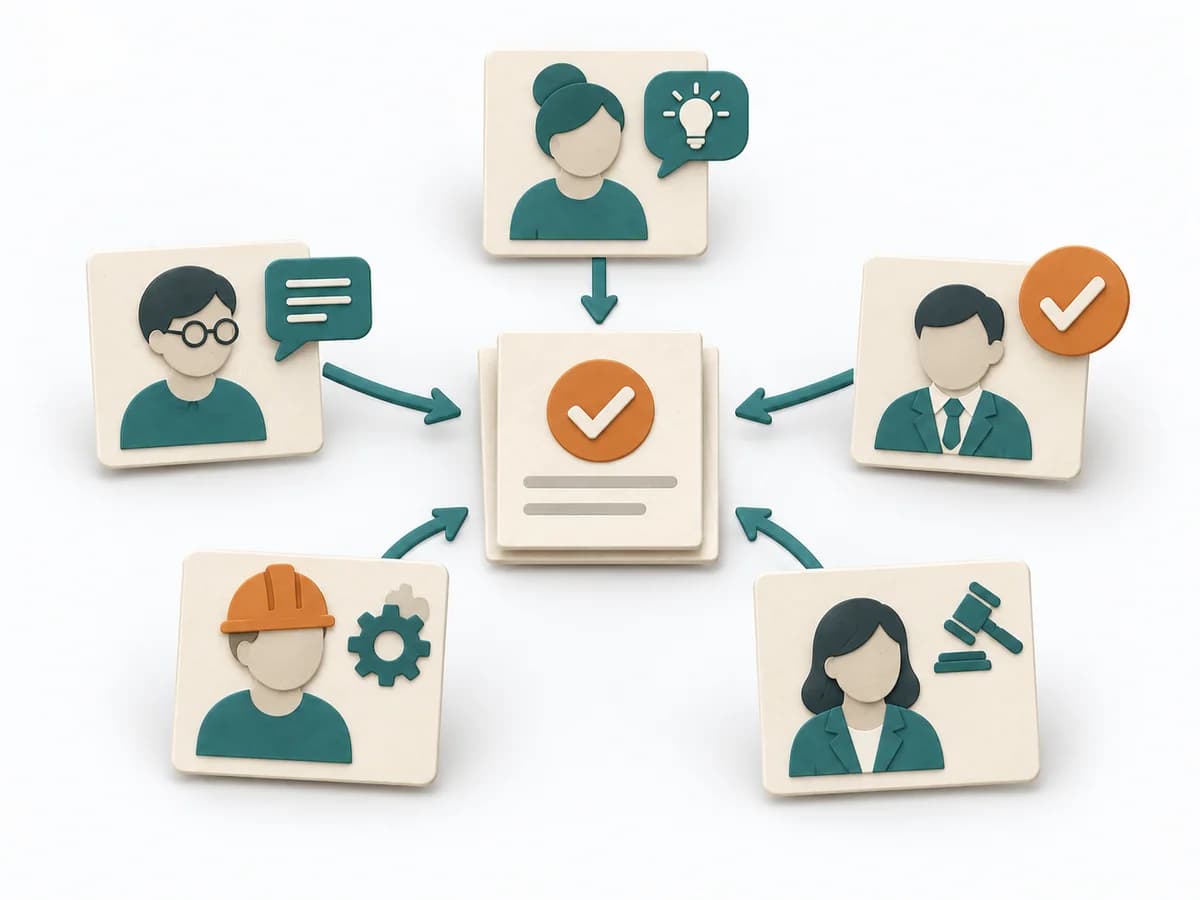 Decision Making RAPID | 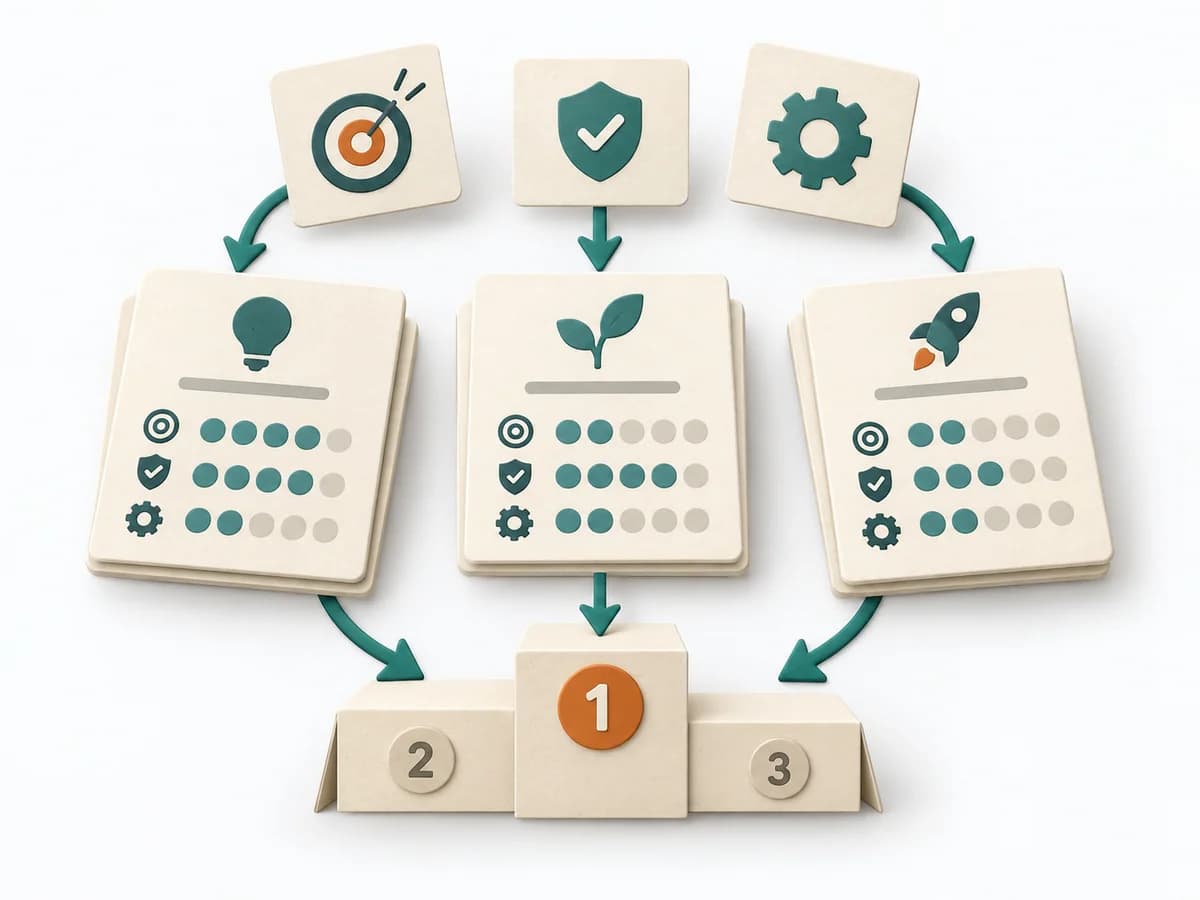 Product Strategy ICE Scoring |  Decision Making Decision Rights Mapping |
|---|---|---|---|---|
Purposedifferent | The Futures Wheel helps explore the consequences of a decision, a trend, or a strategic move in a structured way. It makes visible which first, second, and third-order effects could arise from an event. | In complex management decisions, clarity is often missing about who recommends, who agrees, and who makes the decision. RAPID creates this assignment and stabilizes decisions across several levels. | When ideas need sorting quickly, it condenses impact, confidence, and effort into one compact score. It connects customer value, product logic, and decision priorities. The result is captured as an ICE table and top-ideas list. | In organizations with many stakeholders, it often blurs who actually decides and who is merely consulted. It separates options, evaluation criteria, and open risks. The result is captured as a Decision Rights matrix and an agreement. |
Complexitydifferent | Medium | Medium | Low | Medium |
Timedifferent | 60-120 min | 45-90 min | 30-60 min | 90-180 min |
Participantsdifferent | 3-10 | 3-12 | 2-8 | 4-12 |
Formatdifferent | Workshop + async | Workshop + async | Workshop + async | Workshop |
Outputdifferent | Futures Wheel, Consequence Chains, Strategic Signals | RAPID Role Map, Recommendation, Decision Log | ICE Table, Top Idea List | Decision Rights Matrix, Agreement |
Tagsno overlap | ForesightSystems thinkingSignals | DecisionRolesGovernance | PrioritizationScoringGrowthDecision | DecisionGovernanceAlignmentResponsibility |