View methods side by side.
Choose up to four methods. Add them using the search and share the comparison by copying its link.
| Criterion | 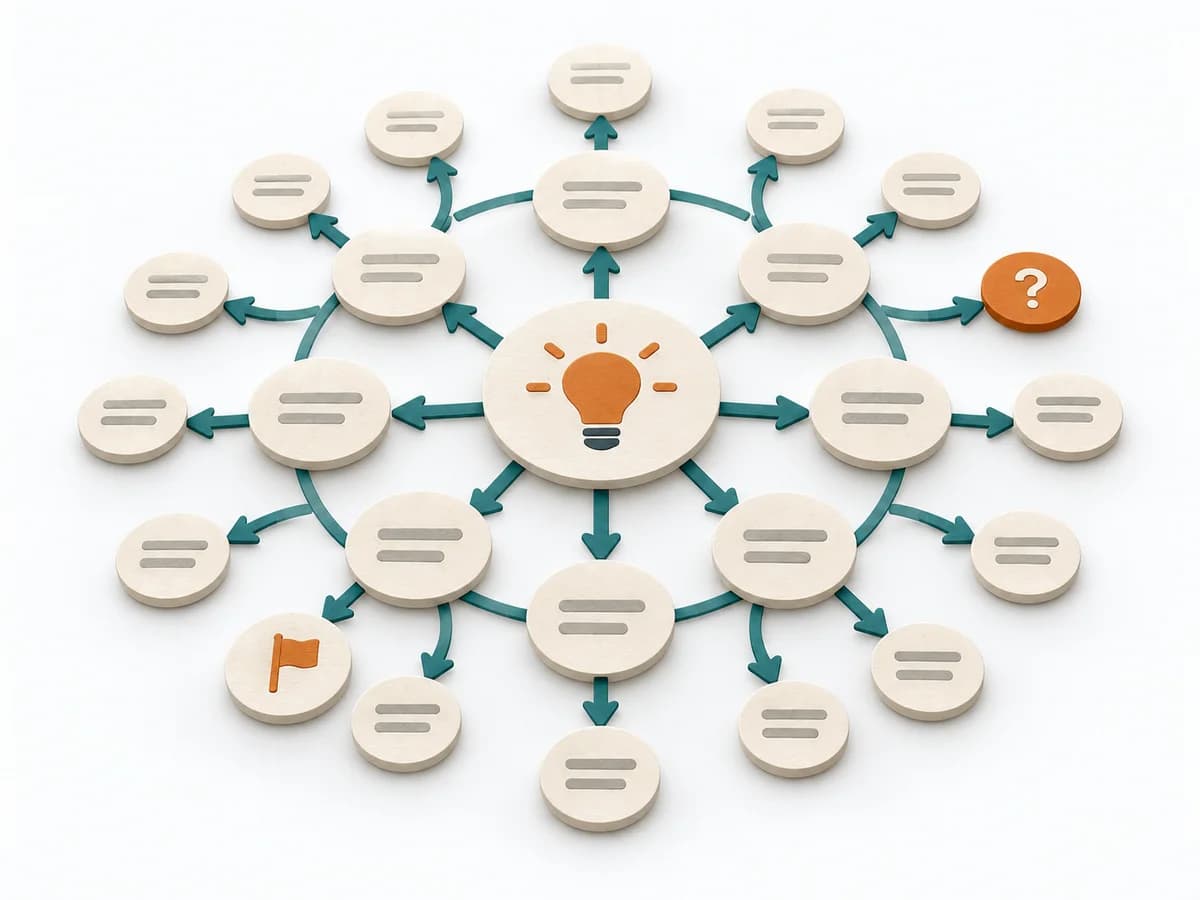 Systems Thinking Futures Wheel | 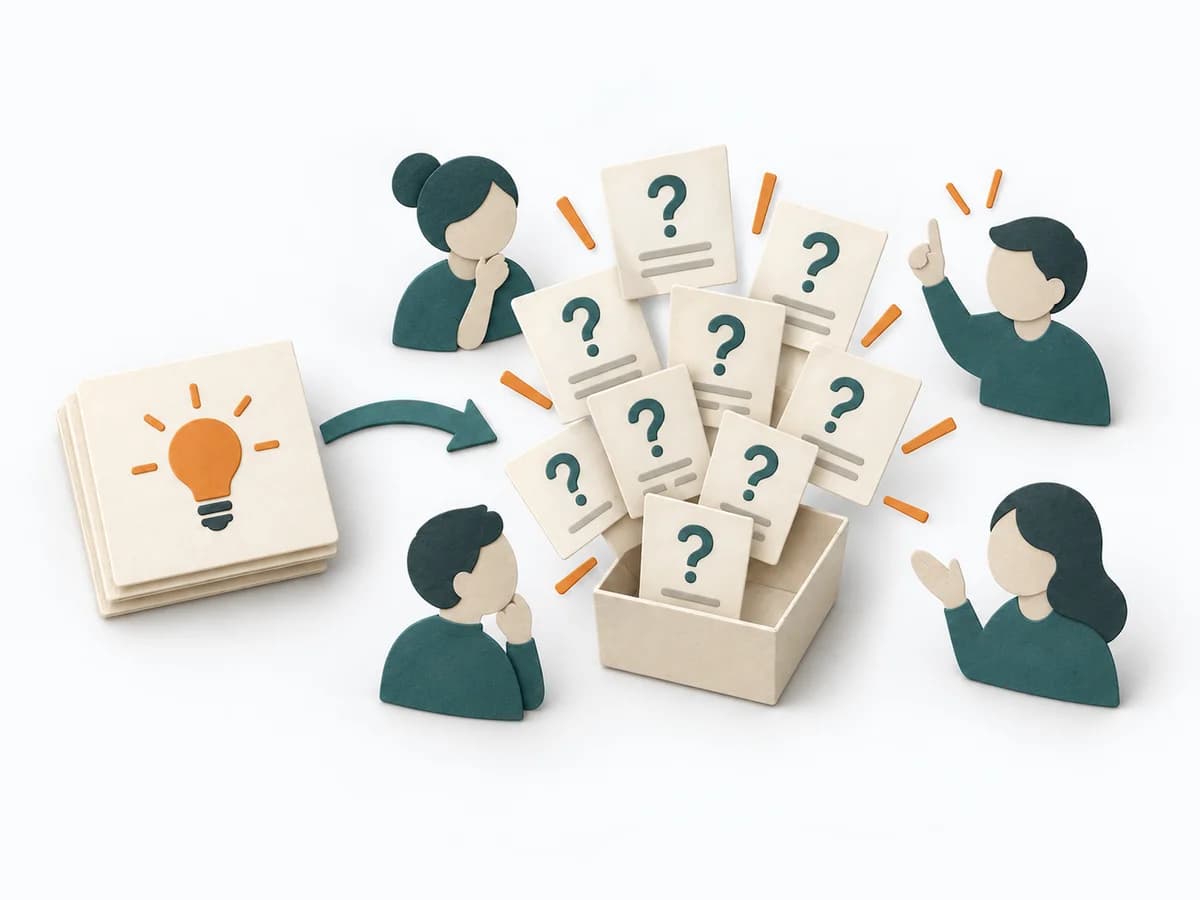 Facilitation Question Burst |  Facilitation Dot Voting | 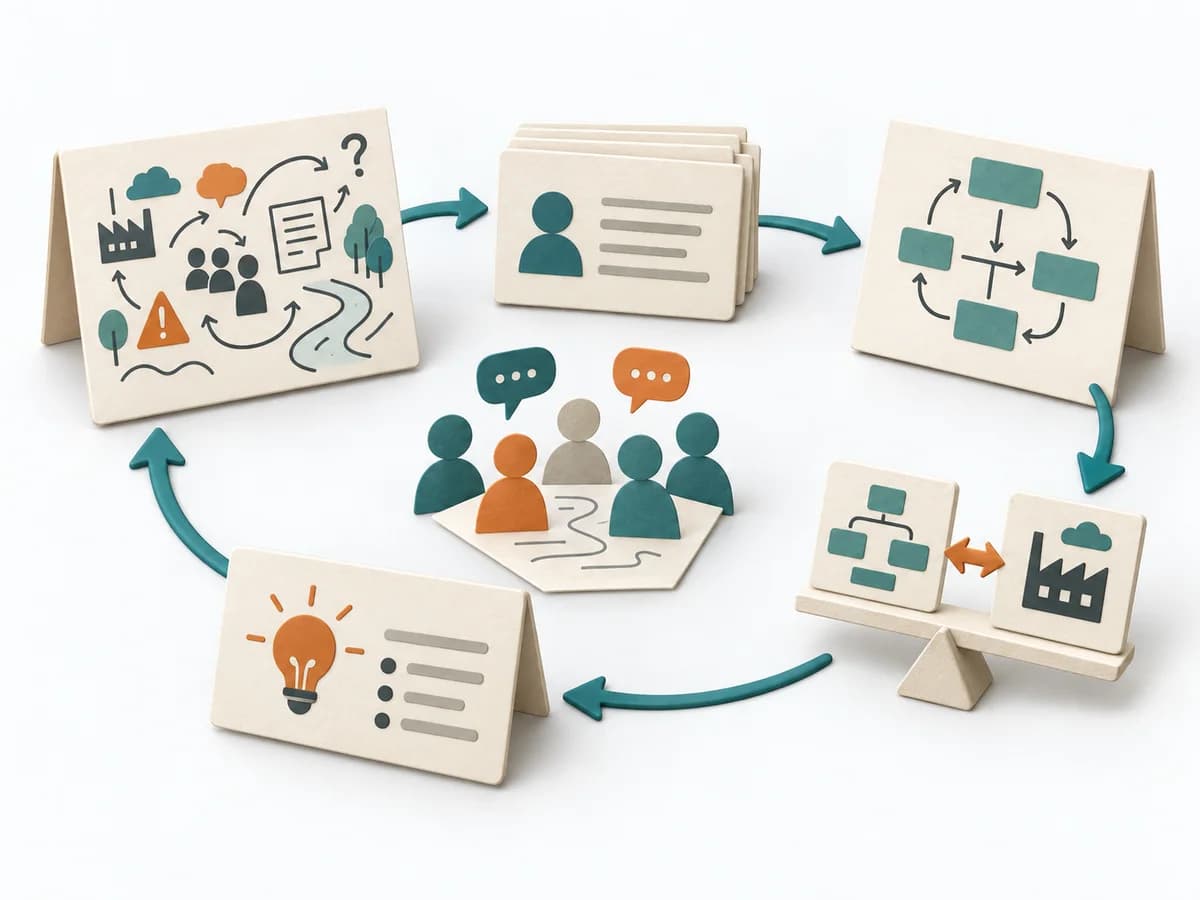 Systems Thinking Soft Systems Methodology |
|---|---|---|---|---|
Purposedifferent | The Futures Wheel helps explore the consequences of a decision, a trend, or a strategic move in a structured way. It makes visible which first, second, and third-order effects could arise from an event. | When a problem gets covered up too quickly with answers, Question Burst puts the better question at the center. The format opens the thinking space before the group commits to an interpretation. | When a workshop has produced too many options and the group needs to condense quickly, dot voting makes preferences visible in a short time. It bundles individual votes into a solid signal for the next selection. | Soft Systems Methodology helps explore unclear or politically charged problems systematically. Instead of forcing a quick answer, the method builds a shared understanding of perspectives and room for action. |
Complexitydifferent | Medium | Low | Low | High |
Timedifferent | 60-120 min | 15-30 min | 5-15 min | 0.5-3 Tage |
Participantsdifferent | 3-10 | 2-8 | 3-20 | 5-15 |
Formatdifferent | Workshop + async | Workshop | Workshop | Workshop |
Outputdifferent | Futures Wheel, Consequence Chains, Strategic Signals | Question List, Reframed Challenge, Learning Prompts | Ranked list, Consensus signal, Shortlist | Rich Picture, Root Definitions, Conceptual Models, Change Agenda |
Tagsno overlap | ForesightSystems thinkingSignals | QuestionsReframingFacilitationSensemaking | FacilitationVotingConsensusPrioritization | Soft systemsComplexitySensemakingSystems thinking |