View methods side by side.
Choose up to four methods. Add them using the search and share the comparison by copying its link.
| Criterion | 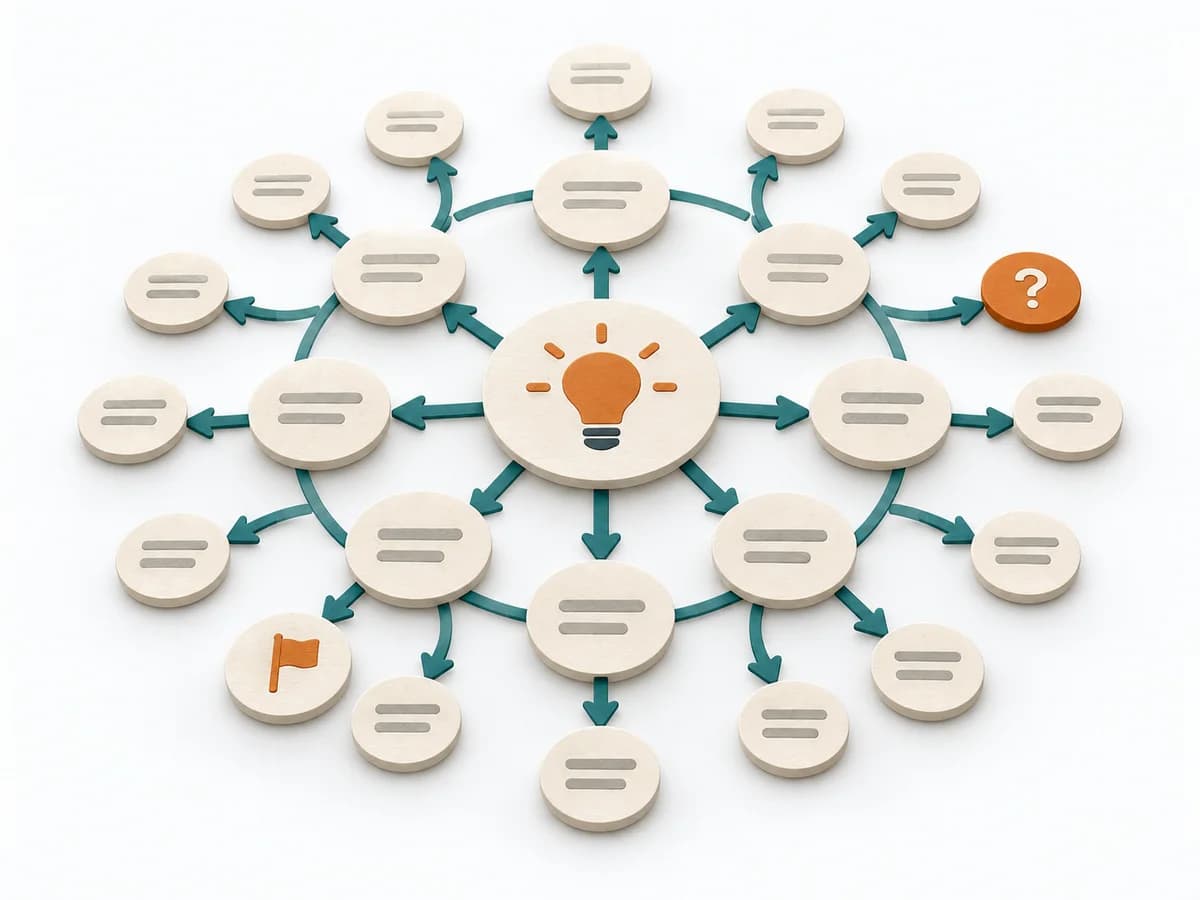 Systems Thinking Futures Wheel | 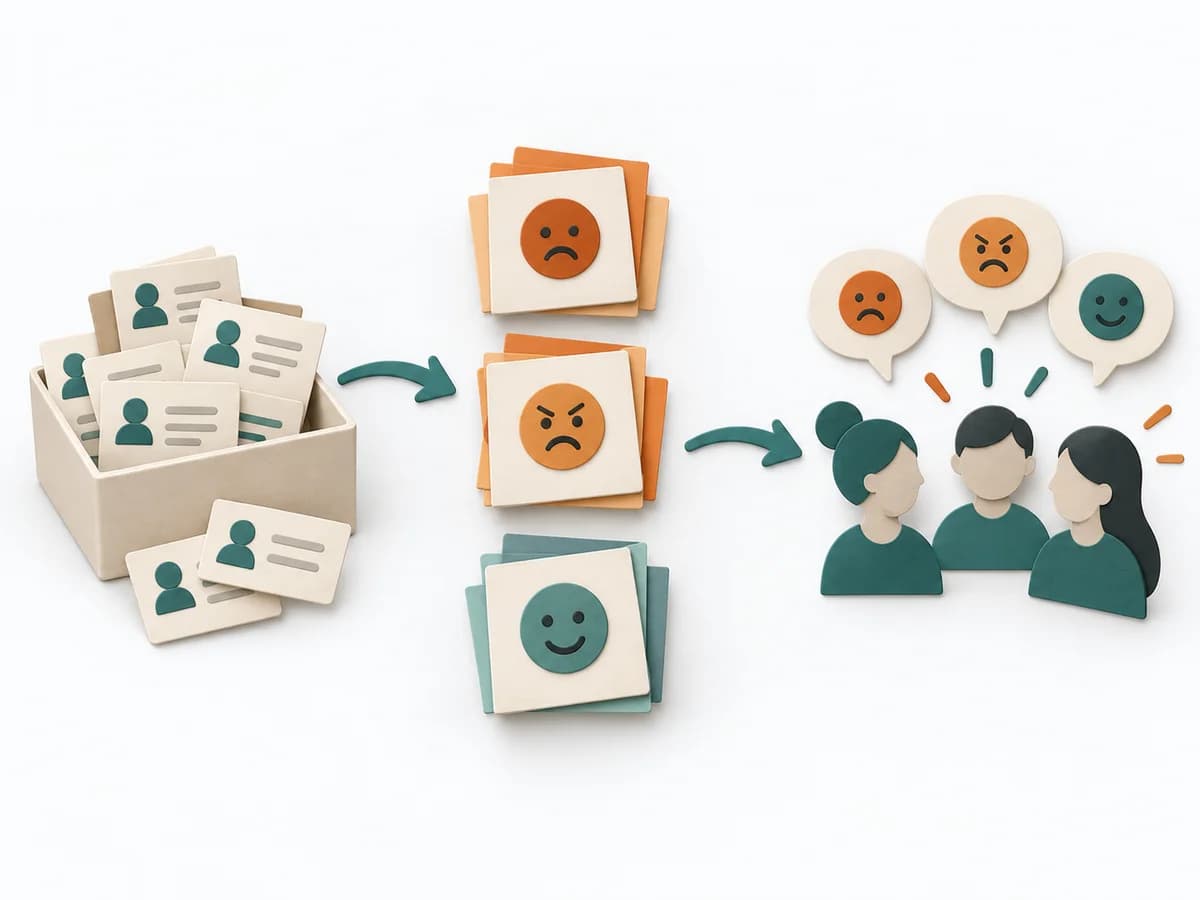 Agile Mad Sad Glad | 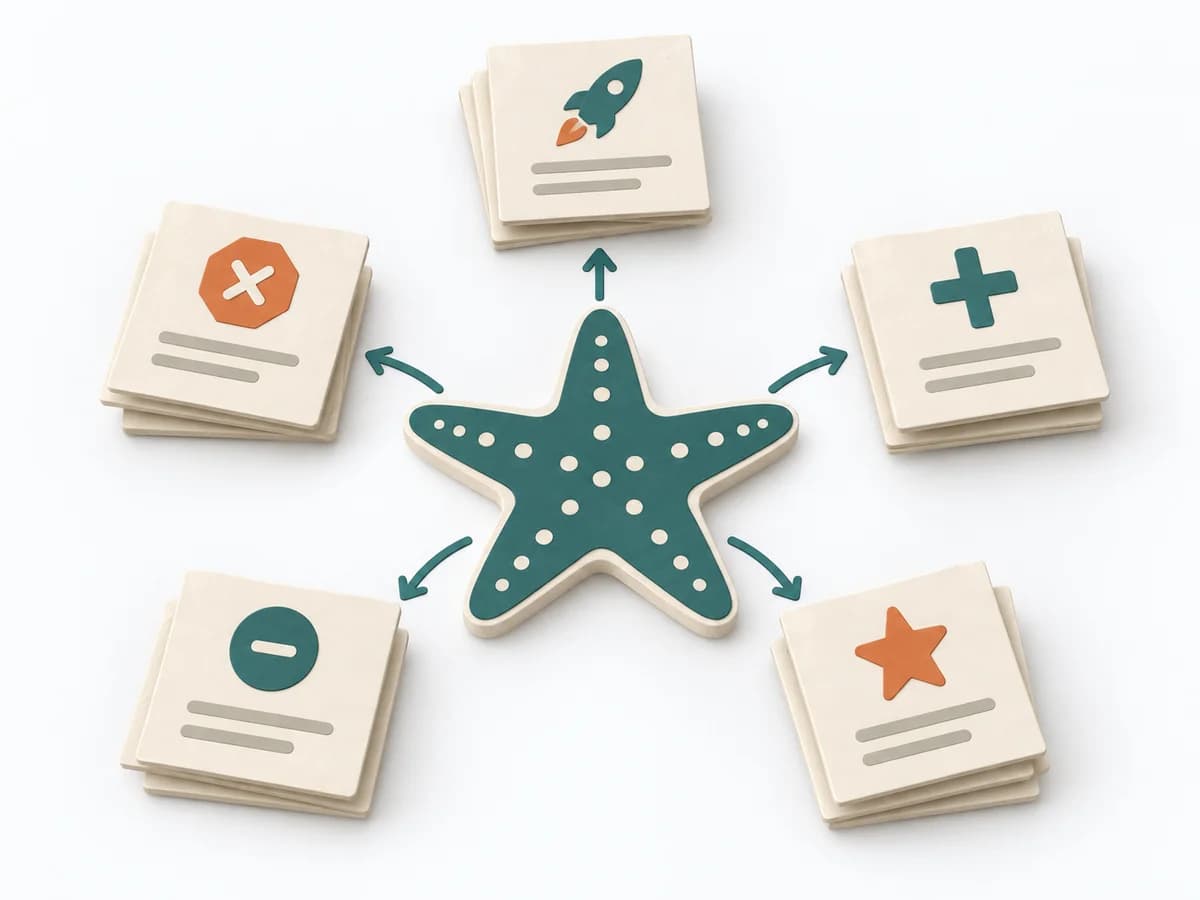 Agile Starfish Retrospective | 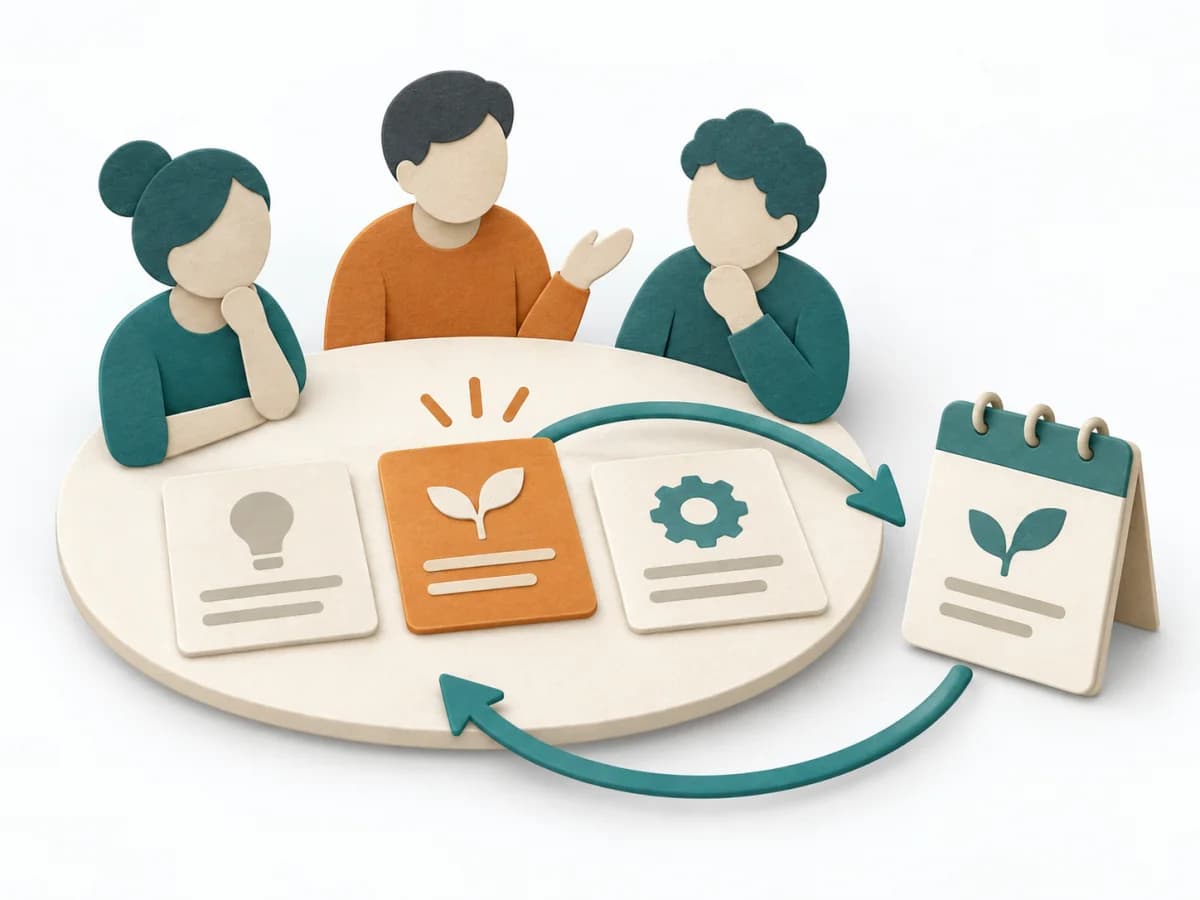 Agile Sprint Retrospective |
|---|---|---|---|---|
Purposedifferent | The Futures Wheel helps explore the consequences of a decision, a trend, or a strategic move in a structured way. It makes visible which first, second, and third-order effects could arise from an event. | When a team's or workshop's mood needs to become readable, it structures emotional signals with little setup. It makes strain, relief, and sources of energy tangible. | When improvement options need to be sorted more finely than just start and stop, it brings observations into clear kinds of action. This makes visible what should be done more, less, newly, or continued. | When a sprint is over and friction shouldn't simply be carried forward, it opens the view onto collaboration and patterns. It creates space to see causes and changes together. |
Complexitydifferent | Medium | Low | Low | Low |
Timedifferent | 60-120 min | 30-60 min | 45-90 min | Up to 3 hours for a one-month Sprint; shorter Sprints are usually shorter |
Participantsdifferent | 3-10 | 3-10 | 4-12 | Scrum Team |
Formatdifferent | Workshop + async | Workshop | Workshop | Workshop |
Outputdifferent | Futures Wheel, Consequence Chains, Strategic Signals | Emotion Board, Themes, Action Items | Starfish Board, Practice Changes, Experiments | Improvement actions, Team agreements |
Tagsno overlap | ForesightSystems thinkingSignals | RetrospectiveTeamReflection | RetrospectiveImprovementExperimentsTeam | RetrospectiveImprovementLearning |