View methods side by side.
Choose up to four methods. Add them using the search and share the comparison by copying its link.
| Criterion | 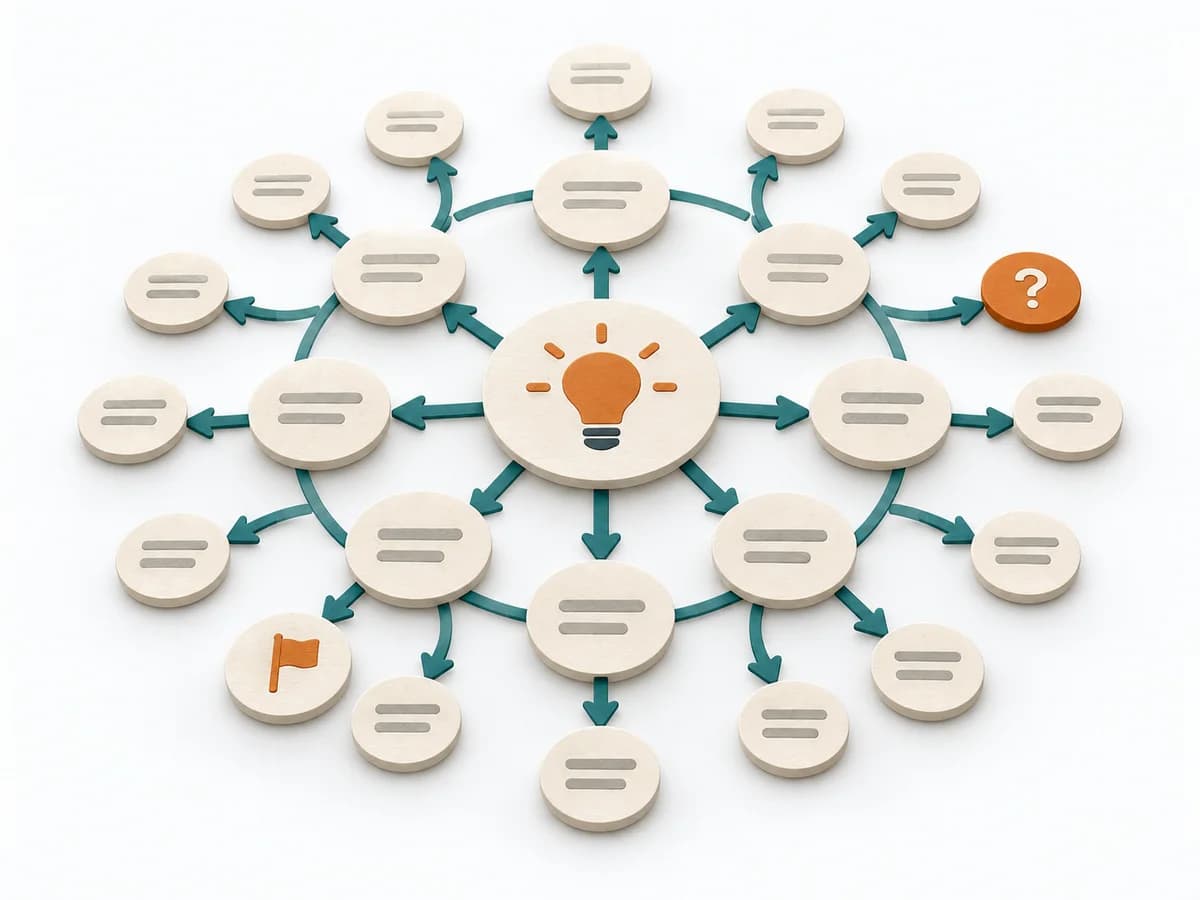 Systems Thinking Futures Wheel |  Systems Thinking Leverage Points | 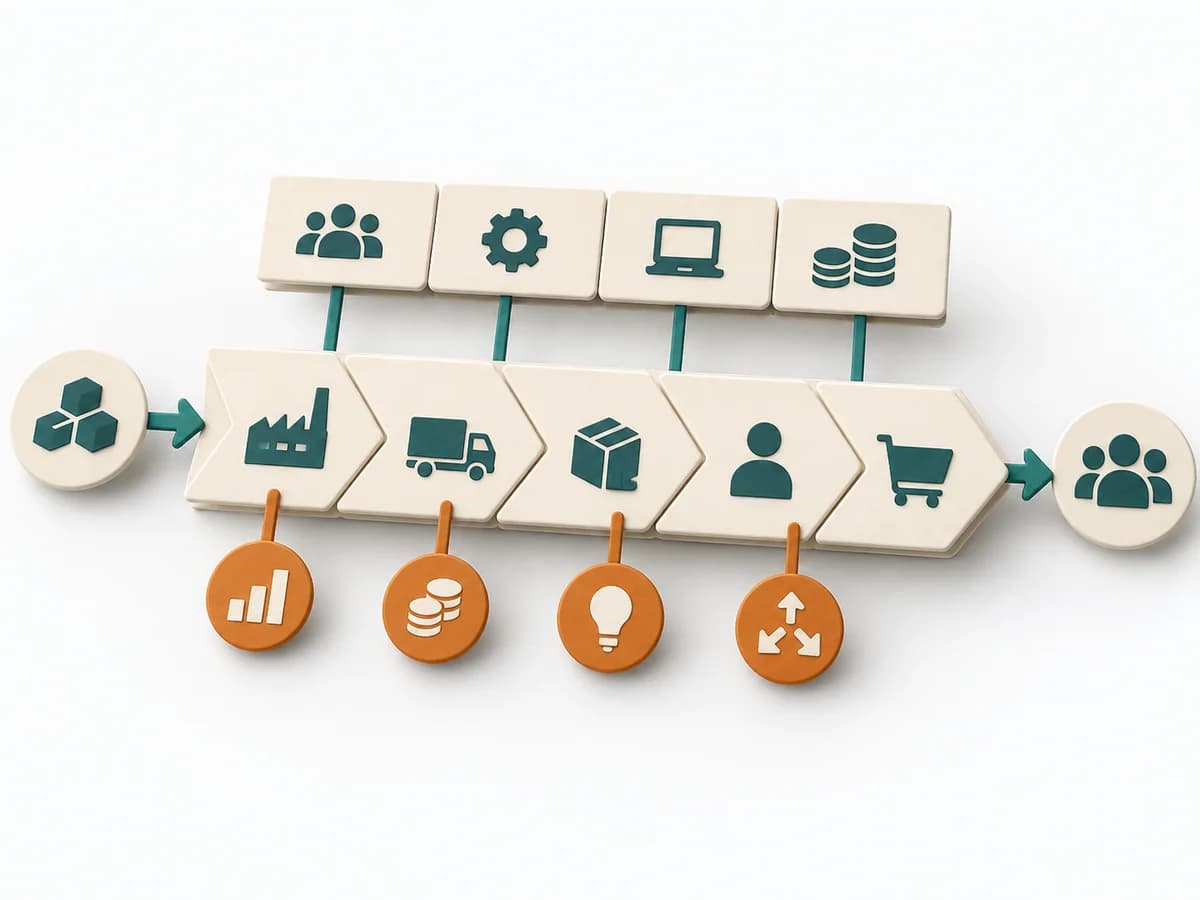 Business Strategy Value Chain Analysis | 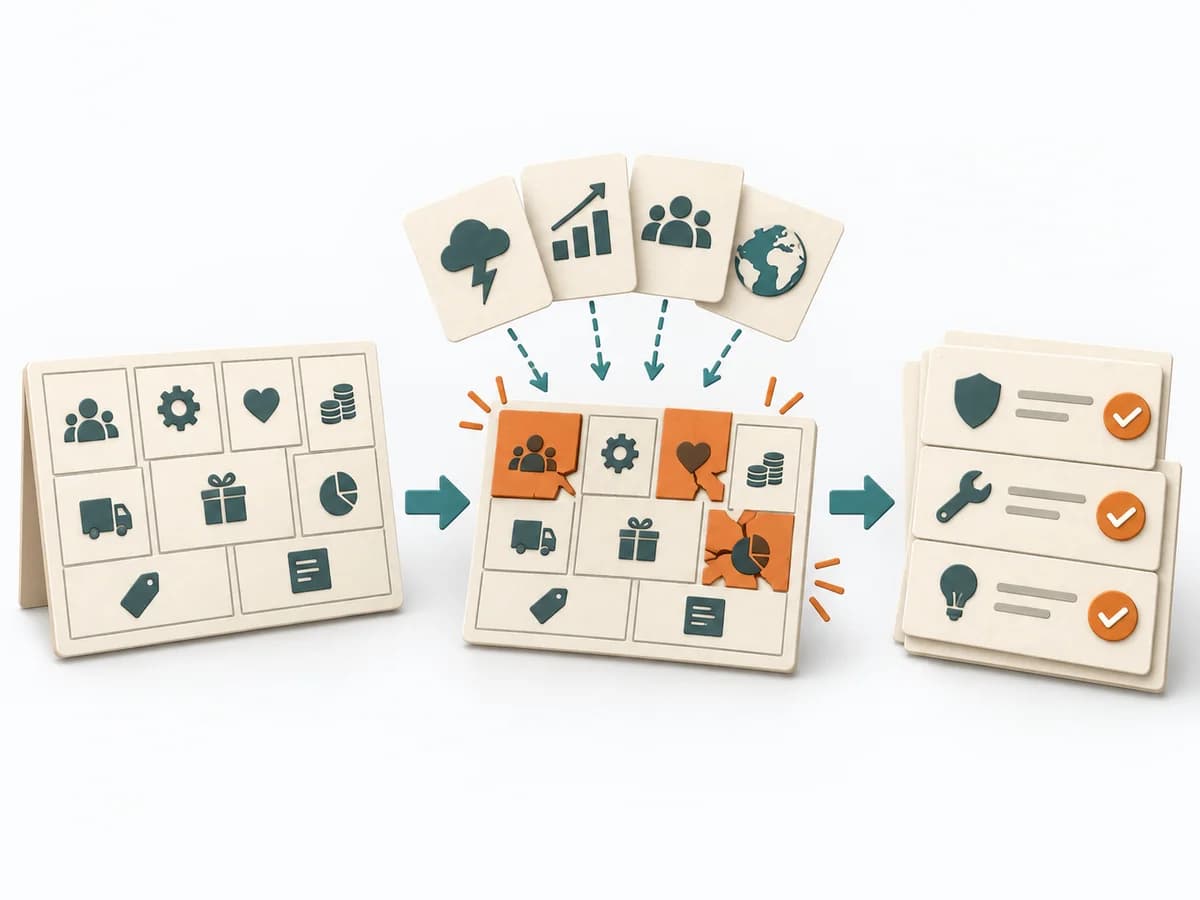 Business Strategy Business Model Stress Test |
|---|---|---|---|---|
Purposedifferent | The Futures Wheel helps explore the consequences of a decision, a trend, or a strategic move in a structured way. It makes visible which first, second, and third-order effects could arise from an event. | Leverage Points show exactly where interventions in a system produce a disproportionate effect. It draws relationships, patterns, and feedback loops. The result is captured as a leverage map and action strategy. | Value Chain Analysis shows where value is created, costs accrue, and differentiation becomes possible along the process. It compares strengths, risks, market logic, and courses of action. The result is captured as a value-chain map and lever list. | A Business Model Stress Test checks how well a business model holds up under pressure and headwinds. It compares strengths, risks, market logic, and courses of action. The result is captured as a stress-test report and action plan per scenario. |
Complexitydifferent | Medium | High | High | High |
Timedifferent | 60-120 min | Half day | Half day | Half day |
Participantsdifferent | 3-10 | 3-12 | 3-8 | 3-8 |
Formatdifferent | Workshop + async | Workshop | Workshop | Workshop |
Outputdifferent | Futures Wheel, Consequence Chains, Strategic Signals | Leverage Map, Action Strategy | Value Chain Map, Lever List | Stress Test Report, Action Plan per Scenario |
Tagsno overlap | ForesightSystems thinkingSignals | Systems thinkingChangeStrategy | StrategyBusiness modelDiagnosisAnalysis | StrategyBusiness modelRiskDiagnosis |