View methods side by side.
Choose up to four methods. Add them using the search and share the comparison by copying its link.
| Criterion | 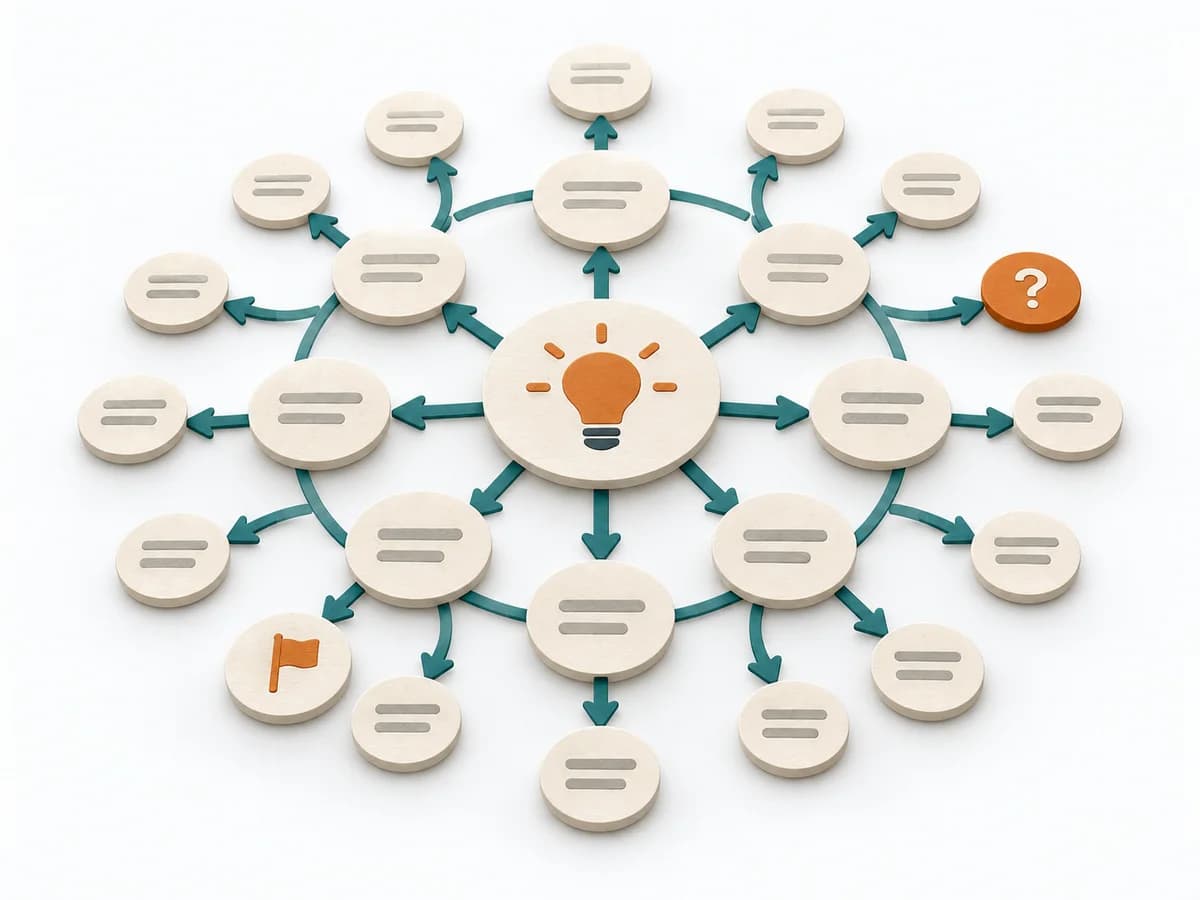 Systems Thinking Futures Wheel |  Systems Thinking Leverage Points | 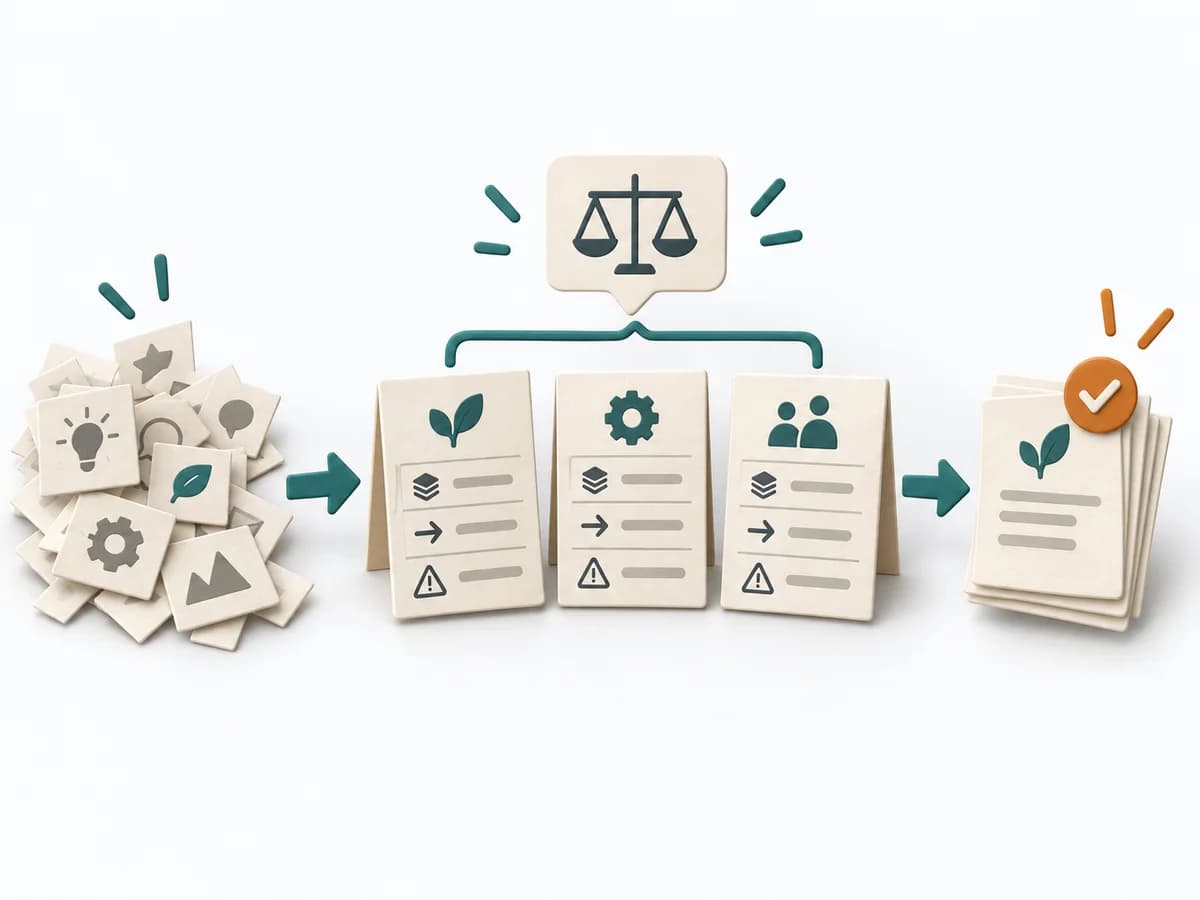 Decision Making Option Framing |  Operations Change Analysis |
|---|---|---|---|---|
Purposedifferent | The Futures Wheel helps explore the consequences of a decision, a trend, or a strategic move in a structured way. It makes visible which first, second, and third-order effects could arise from an event. | Leverage Points show exactly where interventions in a system produce a disproportionate effect. It draws relationships, patterns, and feedback loops. The result is captured as a leverage map and action strategy. | In early decisions, alternatives are often still vague, incomplete, or blended together. Option Framing brings every possibility into a comparable form and makes visible which variant actually fits the question. | For a deviation after a change, the method isolates the influence of the altered condition. It narrows down which differences are relevant and which are just accompanying noise. |
Complexitydifferent | Medium | High | Medium | Medium |
Timedifferent | 60-120 min | Half day | 45-120 min | 45-120 min |
Participantsdifferent | 3-10 | 3-12 | 3-8 | 2-6 |
Formatdifferent | Workshop + async | Workshop | Workshop + async | Workshop + async |
Outputdifferent | Futures Wheel, Consequence Chains, Strategic Signals | Leverage Map, Action Strategy | Option Frames, Assumption Notes, Comparable Shortlist, Decision Inputs | Change Matrix, Cause Hypotheses, Validation Questions, Action List |
Tagsno overlap | ForesightSystems thinkingSignals | Systems thinkingChangeStrategy | OptionsDecision framingStrategyComparison | ChangeRoot causeTroubleshootingComparison |