View methods side by side.
Choose up to four methods. Add them using the search and share the comparison by copying its link.
| Criterion | 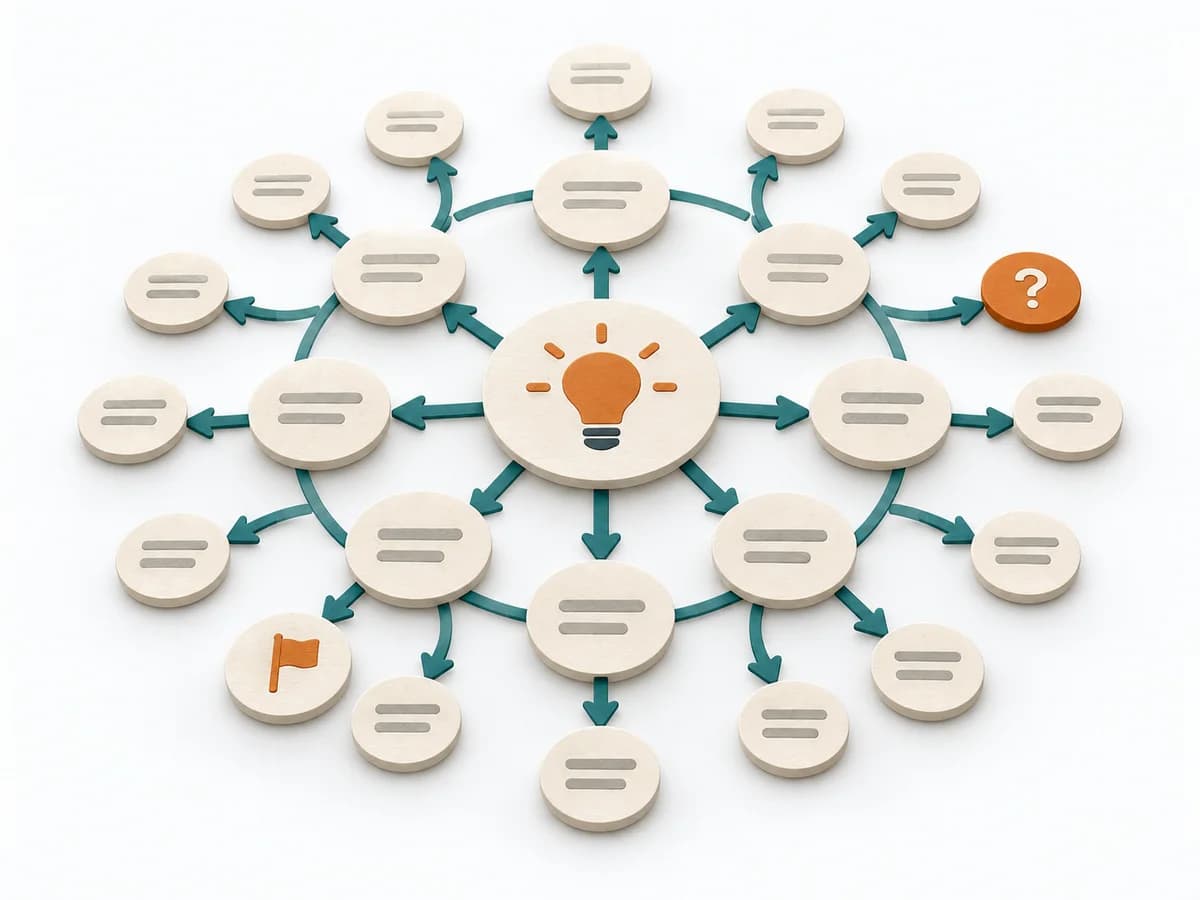 Systems Thinking Futures Wheel |  Product Strategy Lean Canvas | 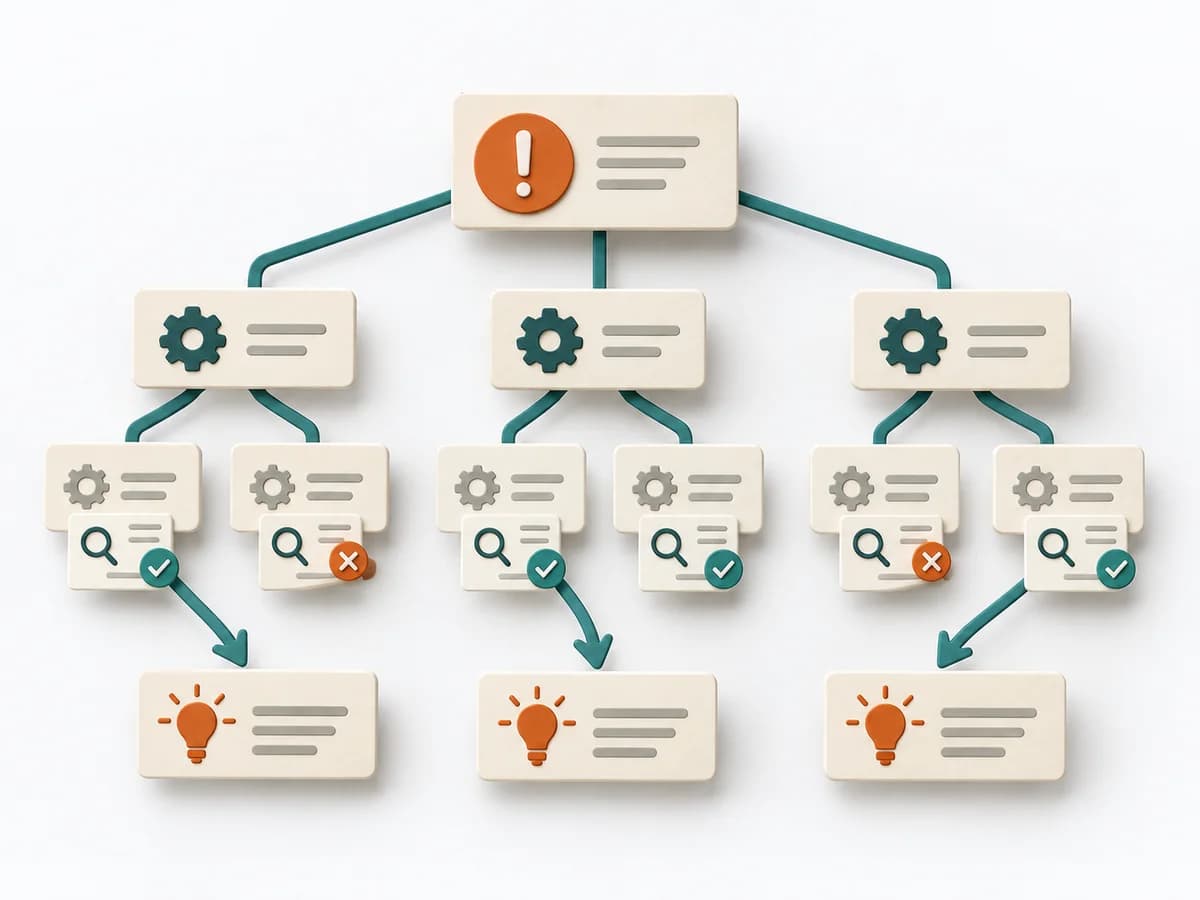 Operations Root Cause Tree Analysis |  Operations Barrier Analysis |
|---|---|---|---|---|
Purposedifferent | The Futures Wheel helps explore the consequences of a decision, a trend, or a strategic move in a structured way. It makes visible which first, second, and third-order effects could arise from an event. | When an early product bet still has too many open points, it brings target group, problem, and assumptions into a single view. It condenses the idea so core risks become nameable. | For a problem with several suspected causes, the method builds a causal structure instead of a mere list. It makes visible how causes connect and where the strongest points of leverage lie. | For a risk that can only be managed through multiple layers of protection, the method examines the effectiveness of each barrier. It shows where safeguards are missing, too weak, or fail under real conditions. |
Complexitysame | Medium | Medium | Medium | Medium |
Timedifferent | 60-120 min | 45-90 min | 1-3 h | 2-4 h |
Participantsdifferent | 3-10 | 1-6 | 2-8 | 2-6 |
Formatdifferent | Workshop + async | Workshop + async | Workshop | Workshop + async |
Outputdifferent | Futures Wheel, Consequence Chains, Strategic Signals | Lean Canvas, Core Assumptions, Experiment Backlog | Cause Tree, Evidence Notes, Countermeasures | Barrier Inventory, Failure Analysis per Barrier, Action Backlog |
Tagsno overlap | ForesightSystems thinkingSignals | StartupLeanAssumptionsBusiness model | Root causeTreeIncidentQuality | Root causeSafetyIncident |