View methods side by side.
Choose up to four methods. Add them using the search and share the comparison by copying its link.
| Criterion | 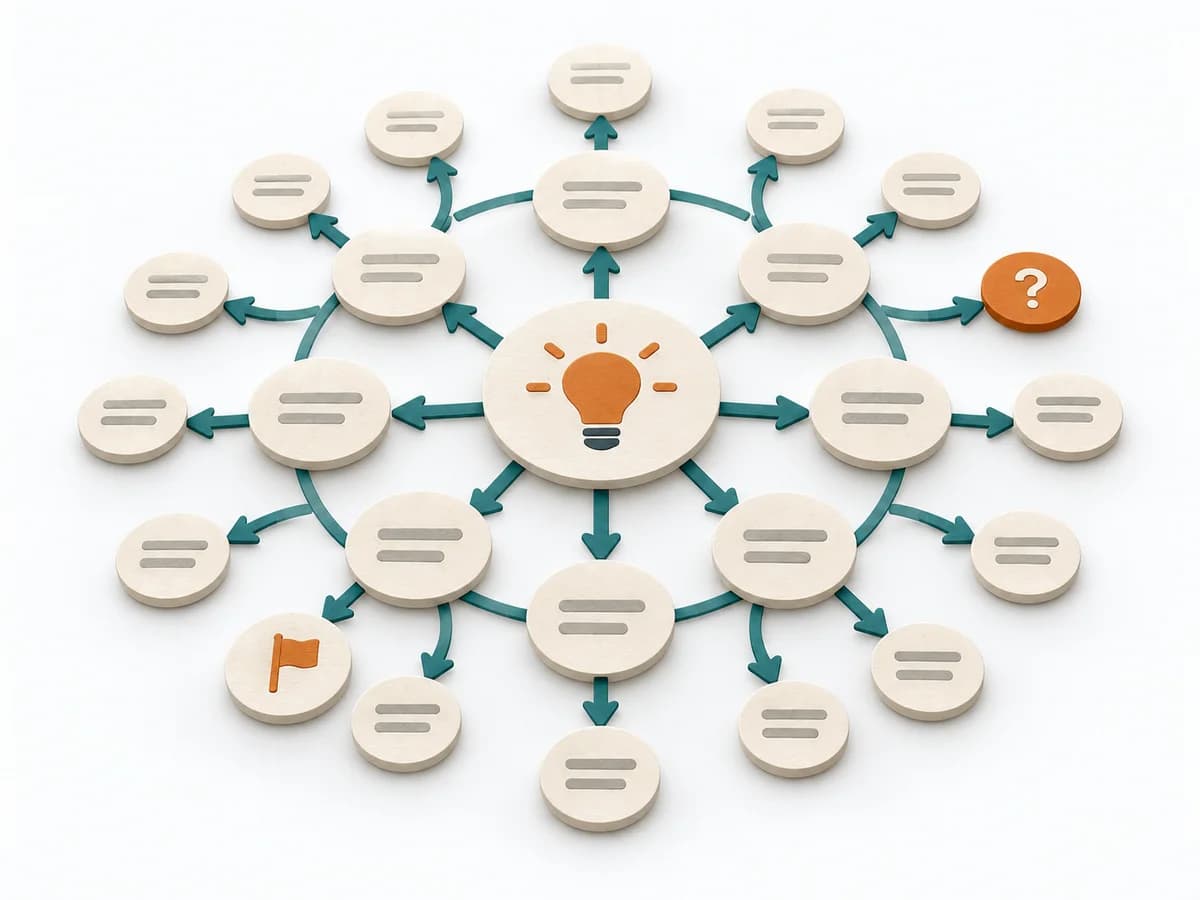 Systems Thinking Futures Wheel |  Facilitation Decision Jam |  Facilitation Stakeholder Mapping |  Facilitation Stakeholder Salience Model |
|---|---|---|---|---|
Purposedifferent | The Futures Wheel helps explore the consequences of a decision, a trend, or a strategic move in a structured way. It makes visible which first, second, and third-order effects could arise from an event. | When a decision is stuck, Decision Jam loosens the knot through structured separation of problem, idea, and selection. The format creates movement without jumping prematurely at the first seemingly elegant answer. | When an initiative depends on many people, interests, and power dynamics, Stakeholder Mapping systematically orders the environment. It shows who influences, who is affected, and where relationship management or safeguarding matters first. | When stakeholders appear to matter very differently, the Stakeholder Salience Model rates their actual priority through power, legitimacy, and urgency. It turns individual contributions into a visible selection. The result is captured as a Salience diagram and a class-based strategy. |
Complexitydifferent | Medium | Low | Low | Medium |
Timedifferent | 60-120 min | 60-90 min | 60–90 min | 60-90 min |
Participantsdifferent | 3-10 | 4-10 | 2-8 | 3-6 |
Formatdifferent | Workshop + async | Workshop | Workshop + async | Workshop |
Outputdifferent | Futures Wheel, Consequence Chains, Strategic Signals | Problem Cluster, Prioritized Challenge, Experiment | Stakeholder Map, Engagement Plan, Risk Notes | Salience Diagram, Strategy per Class |
Tagsno overlap | ForesightSystems thinkingSignals | FacilitationDecisionProblem solvingWorkshop | StakeholdersAlignmentFacilitationChange | StakeholdersFacilitationAlignmentGovernance |