View methods side by side.
Choose up to four methods. Add them using the search and share the comparison by copying its link.
| Criterion | 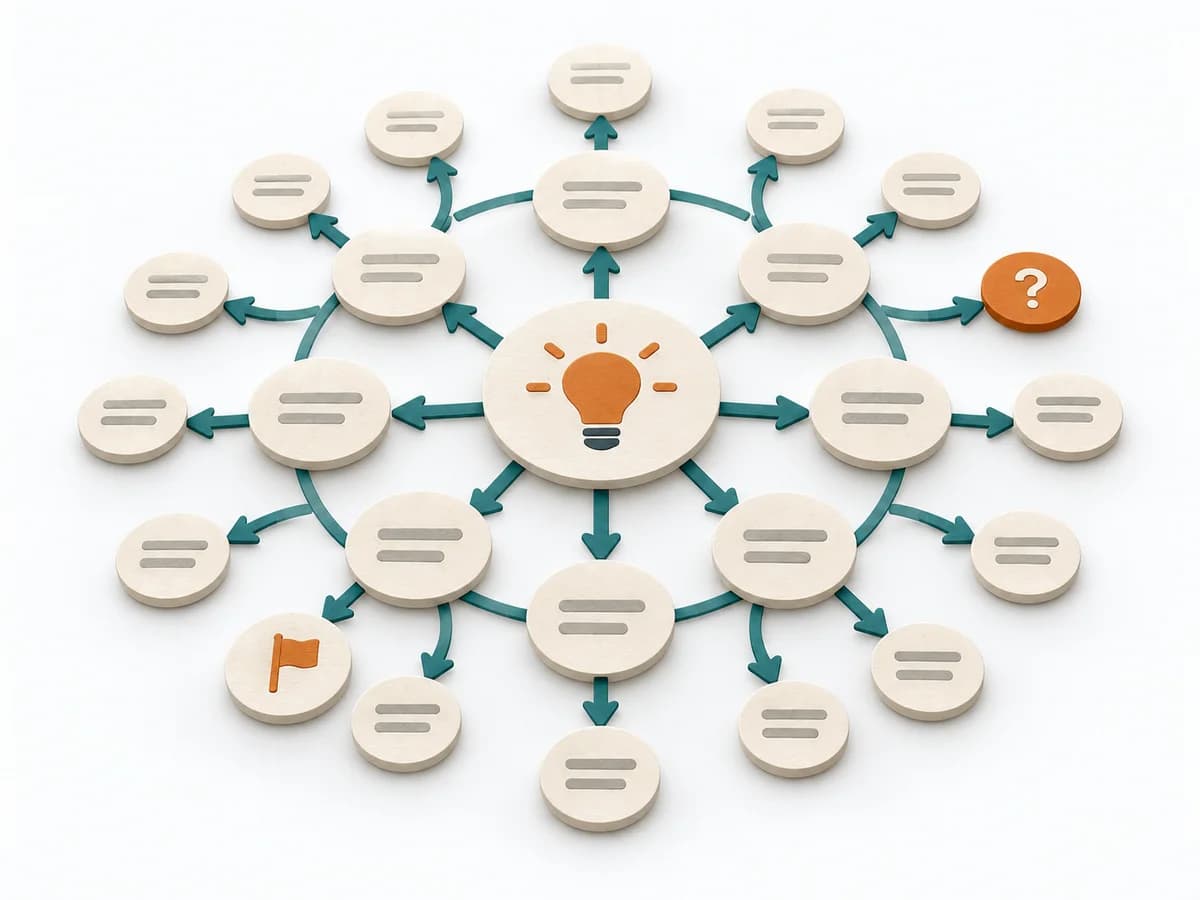 Systems Thinking Futures Wheel |  Agile Affinity Estimation |  Systems Thinking Iceberg Model | 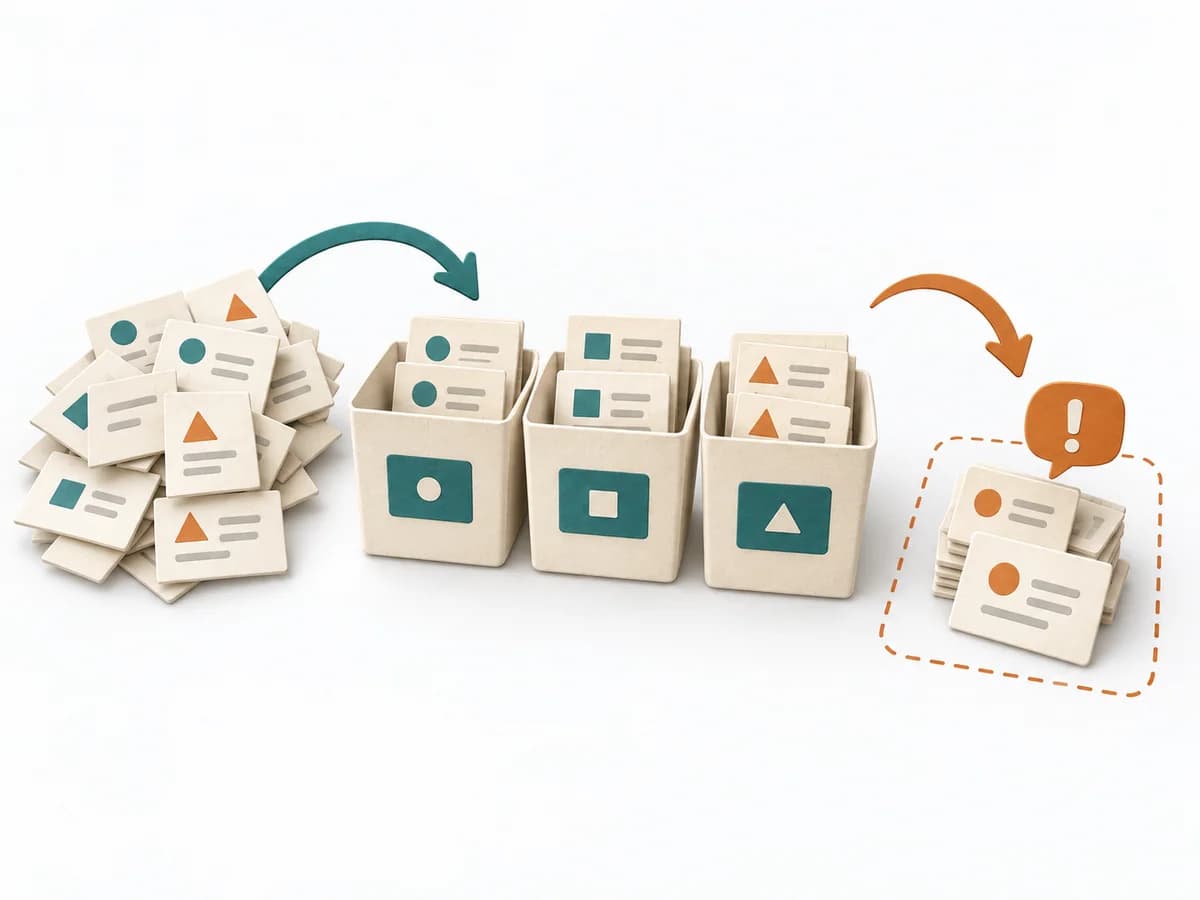 Agile Bucket System |
|---|---|---|---|---|
Purposedifferent | The Futures Wheel helps explore the consequences of a decision, a trend, or a strategic move in a structured way. It makes visible which first, second, and third-order effects could arise from an event. | When many tasks need to be classified quickly, it sorts them by perceived effort and similarity. It reduces the effort of fine-grained estimation for large volumes. | The Iceberg Model separates visible events from patterns, structures, and mental models. This turns a single observation into a deeper understanding of why a problem keeps recurring. | When a large batch of work needs a fast, rough estimate, it sorts items into predefined size buckets. It sorts work by value, risk, and delivery ability. The result is captured as a Bucketed Backlog, Relative Estimates, and Split Candidates. |
Complexitydifferent | Medium | Medium | Low | Medium |
Timedifferent | 60-120 min | 30-90 min | 30-60 min | 30-90 min |
Participantsdifferent | 3-10 | 3-12 | 2-10 | 3-12 |
Formatdifferent | Workshop + async | Workshop | Workshop + async | Workshop |
Outputdifferent | Futures Wheel, Consequence Chains, Strategic Signals | Affinity Size Map, Grouped Estimates, Unclear Items | Iceberg Worksheet, Pattern Notes, Intervention Ideas | Bucketed Backlog, Relative Estimates, Split Candidates |
Tagsno overlap | ForesightSystems thinkingSignals | EstimationBacklogRelative sizing | Systems thinkingRoot causePatterns | EstimationBacklogRelative sizing |