View methods side by side.
Choose up to four methods. Add them using the search and share the comparison by copying its link.
| Criterion | 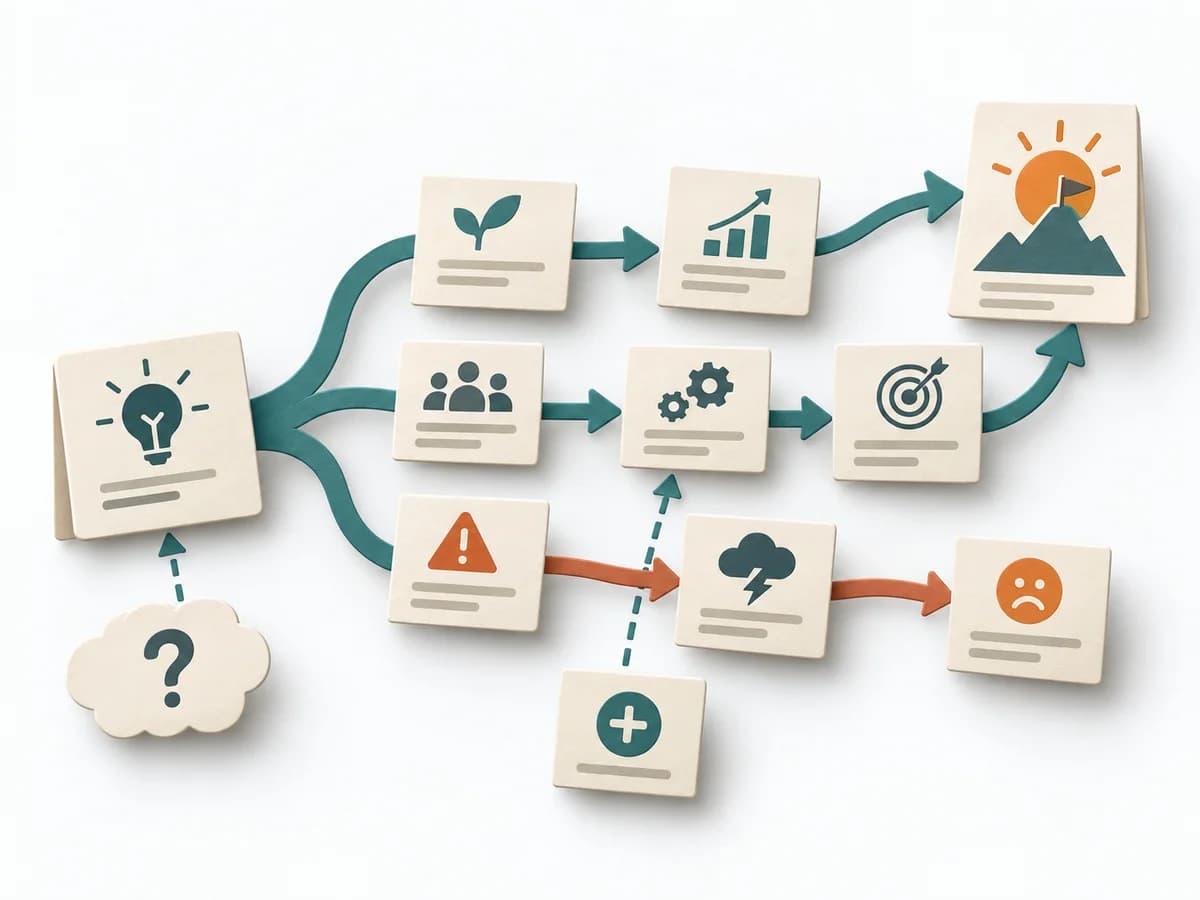 Systems Thinking Future Reality Tree | 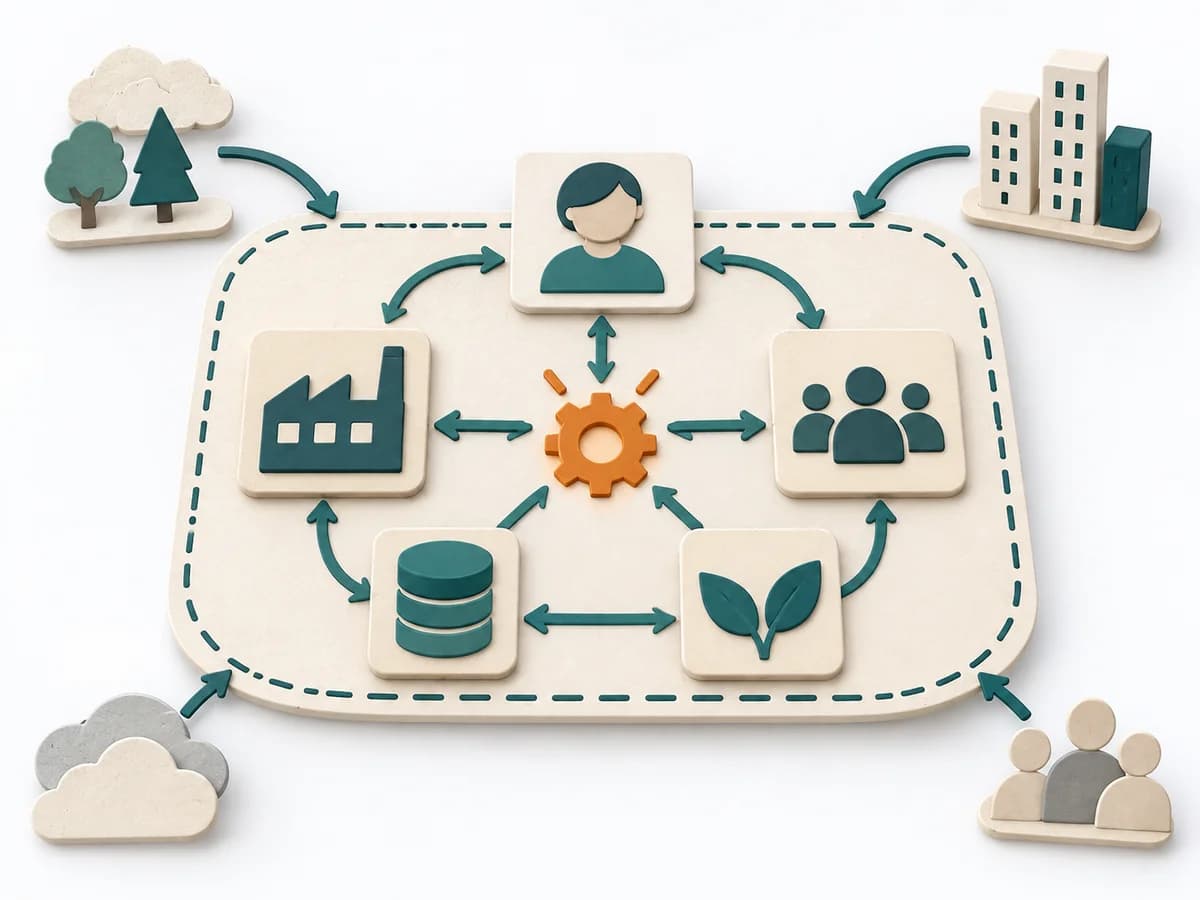 Systems Thinking Systems Mapping |  Decision Making Assumption Surfacing |  Product Strategy DIBB |
|---|---|---|---|---|
Purposedifferent | A Future Reality Tree shows how desired actions are meant to lead to a better system state. The method checks whether a path of change holds together logically before time flows into implementation. | Systems Mapping arranges elements, relationships, and boundaries so a complex field becomes legible at a glance. The overview stabilizes the overall picture before detail work or steering begins. | Plans often contain assumptions that were never openly stated and remain dangerous precisely because of that. Assumption Surfacing makes these silent premises visible and prioritizes which of them carry the initiative or could sink it. | DIBB helps clarify target groups, value, goals, and priorities by making the logic behind a decision explicit. It captures results as a DIBB document, belief list, bet list, and learning report. |
Complexitydifferent | High | Medium | Low | Low |
Timedifferent | 2-4 h | 1-3 h | 45-90 min | 1-2 h |
Participantsdifferent | 3-8 | 3-12 | 2-8 | 2-8 |
Formatdifferent | Workshop | Workshop + async | Workshop + async | Workshop + async |
Outputdifferent | Future Reality Tree, Negative Branches, Assumption List, Improved Injections | System Map, Dependencies, Leverage Points | Assumption List, Critical Assumptions, Learning Plan | DIBB document, Belief list, Bet list, Learning report |
Tagsno overlap | Theory of ConstraintsSystems thinkingChange | Systems thinkingMappingBoundariesChange | AssumptionsRiskDecisionDiscovery | StrategyDecisionAssumptionsHypothesis |