View methods side by side.
Choose up to four methods. Add them using the search and share the comparison by copying its link.
| Criterion | 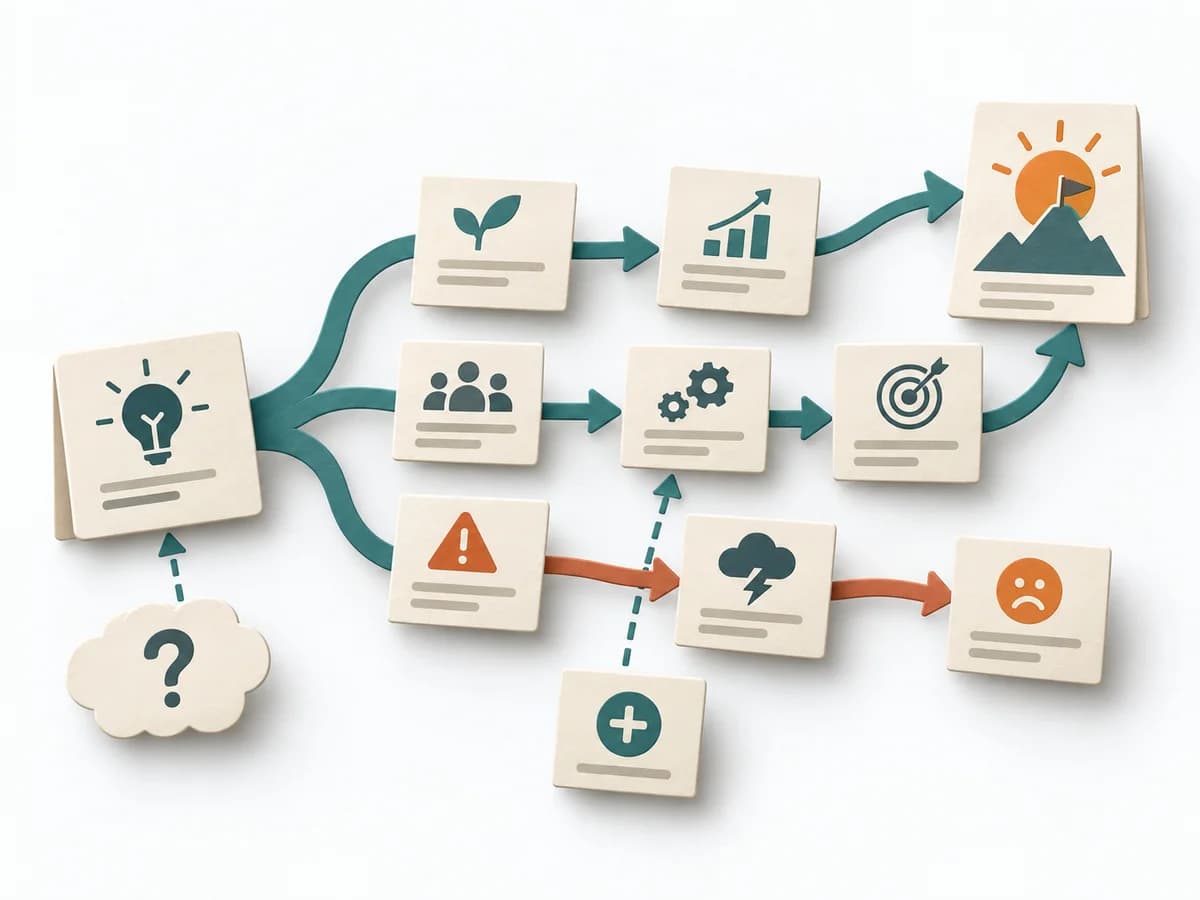 Systems Thinking Future Reality Tree |  Engineering Hypothesis-Driven Troubleshooting | 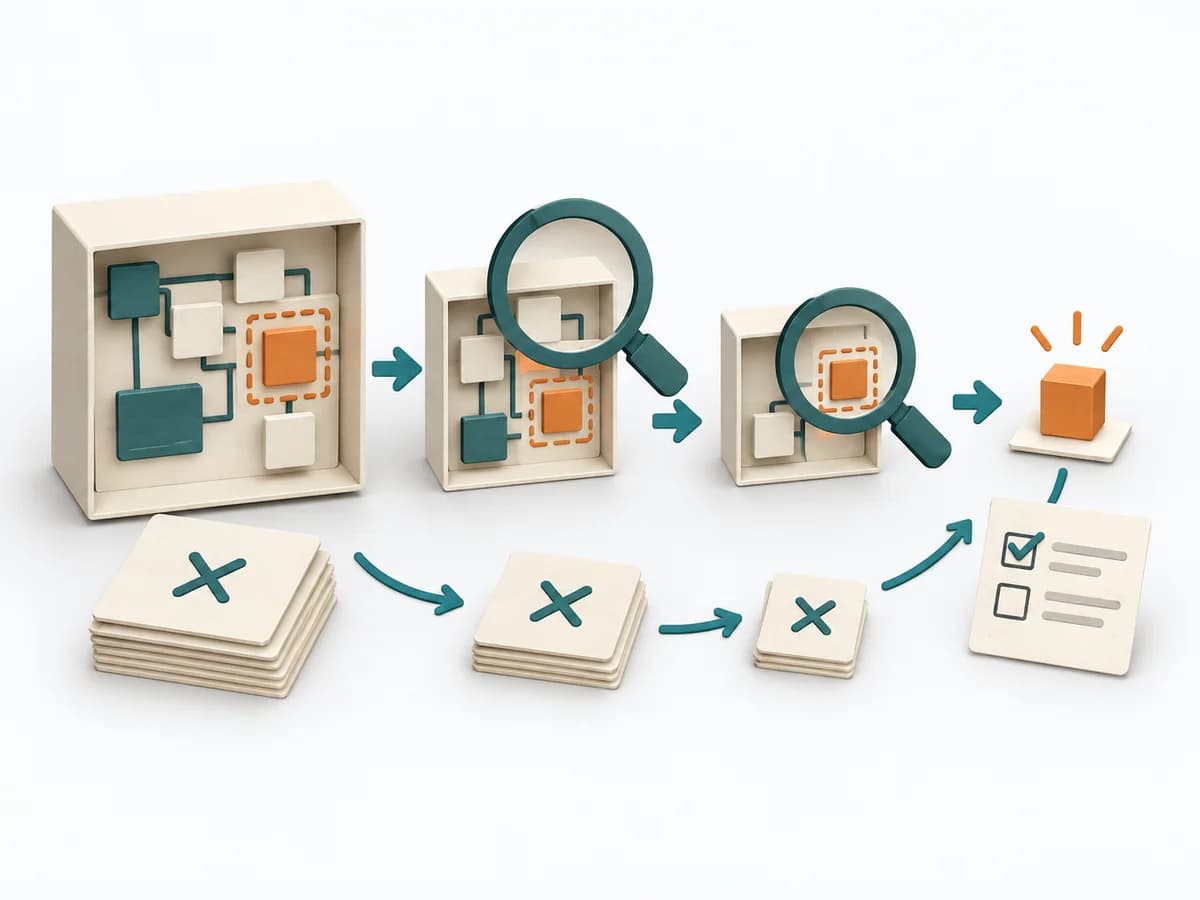 Engineering Fault Isolation |  Systems Thinking Intervention Mapping |
|---|---|---|---|---|
Purposedifferent | A Future Reality Tree shows how desired actions are meant to lead to a better system state. The method checks whether a path of change holds together logically before time flows into implementation. | When systems fail unexpectedly, spontaneous attempts often produce more noise than insight. Hypothesis-driven Troubleshooting translates symptoms into testable assumptions and makes troubleshooting learnable. | In technical failures, the visible symptom often gets mixed up with the actual cause. Fault Isolation narrows the fault space and progressively reduces which part of the system is truly affected. | Intervention Mapping translates a need for change into a planned, evaluable program. The method connects target group, determinants, actions, and measurement into a traceable chain. |
Complexitydifferent | High | Medium | Medium | High |
Timedifferent | 2-4 h | 30-240 min | 30-180 min | 1-5 Tage |
Participantsdifferent | 3-8 | 1-6 | 1-6 | 4-12 |
Formatdifferent | Workshop | Workshop + async | Workshop + async | Workshop + async |
Outputdifferent | Future Reality Tree, Negative Branches, Assumption List, Improved Injections | Hypothesis Log, Test Plan, Evidence Notes, Diagnosis Summary | Fault Isolation Map, Test Log, Excluded Hypotheses, Narrowed Fault Area | Logic Model, Change Objectives, Intervention Components, Evaluation Plan |
Tagsno overlap | Theory of ConstraintsSystems thinkingChange | TroubleshootingProblem solvingDiagnosis | TroubleshootingDiagnosisEngineering | ChangeSystems thinkingCapability |