View methods side by side.
Choose up to four methods. Add them using the search and share the comparison by copying its link.
| Criterion | 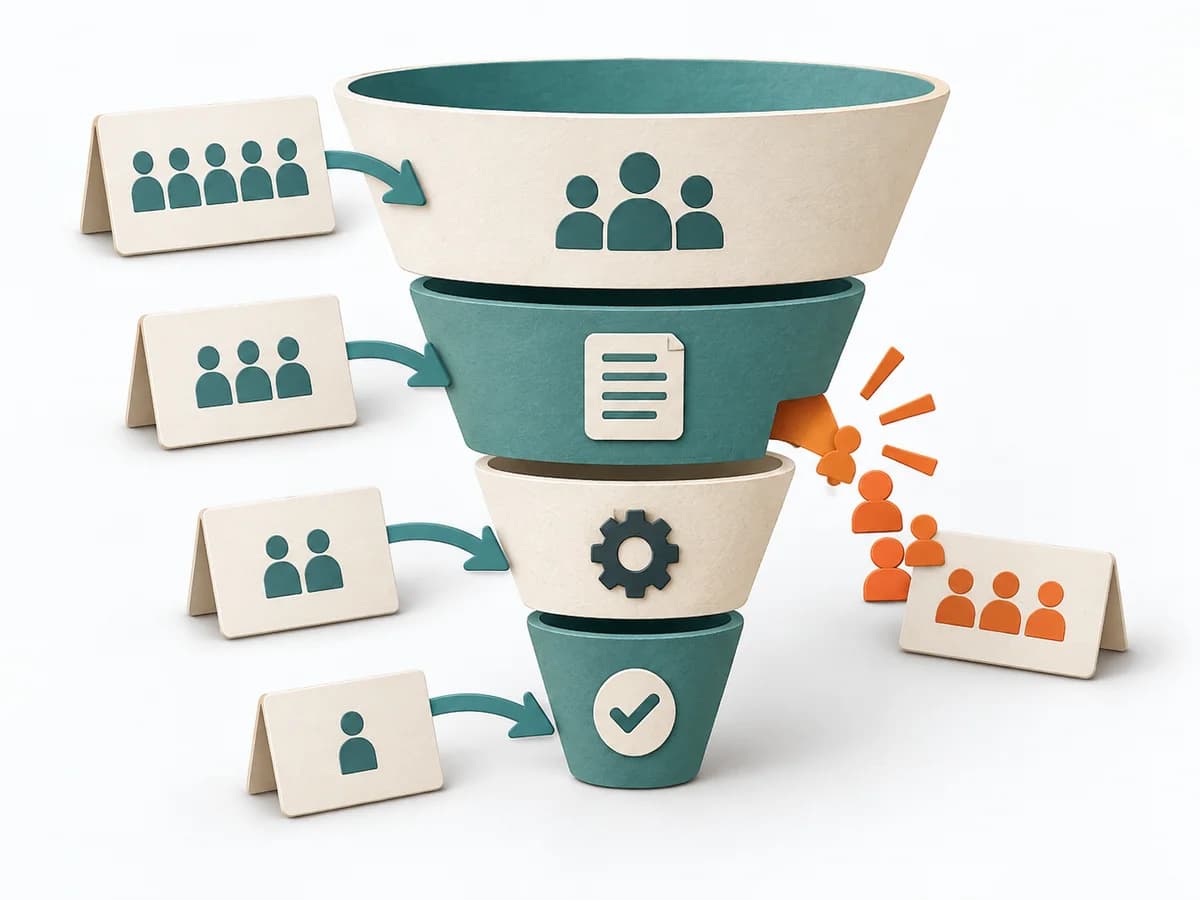 Growth Funnel Analysis | 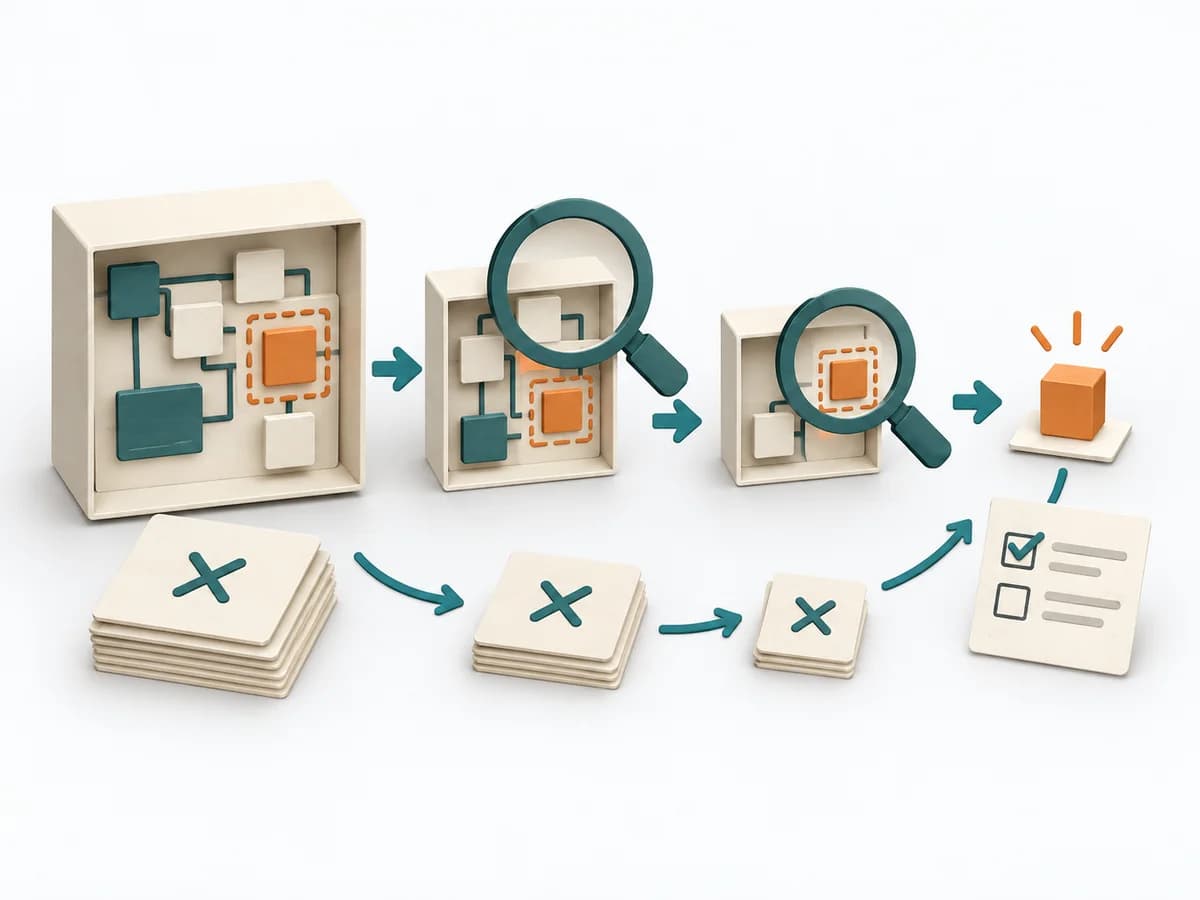 Engineering Fault Isolation | 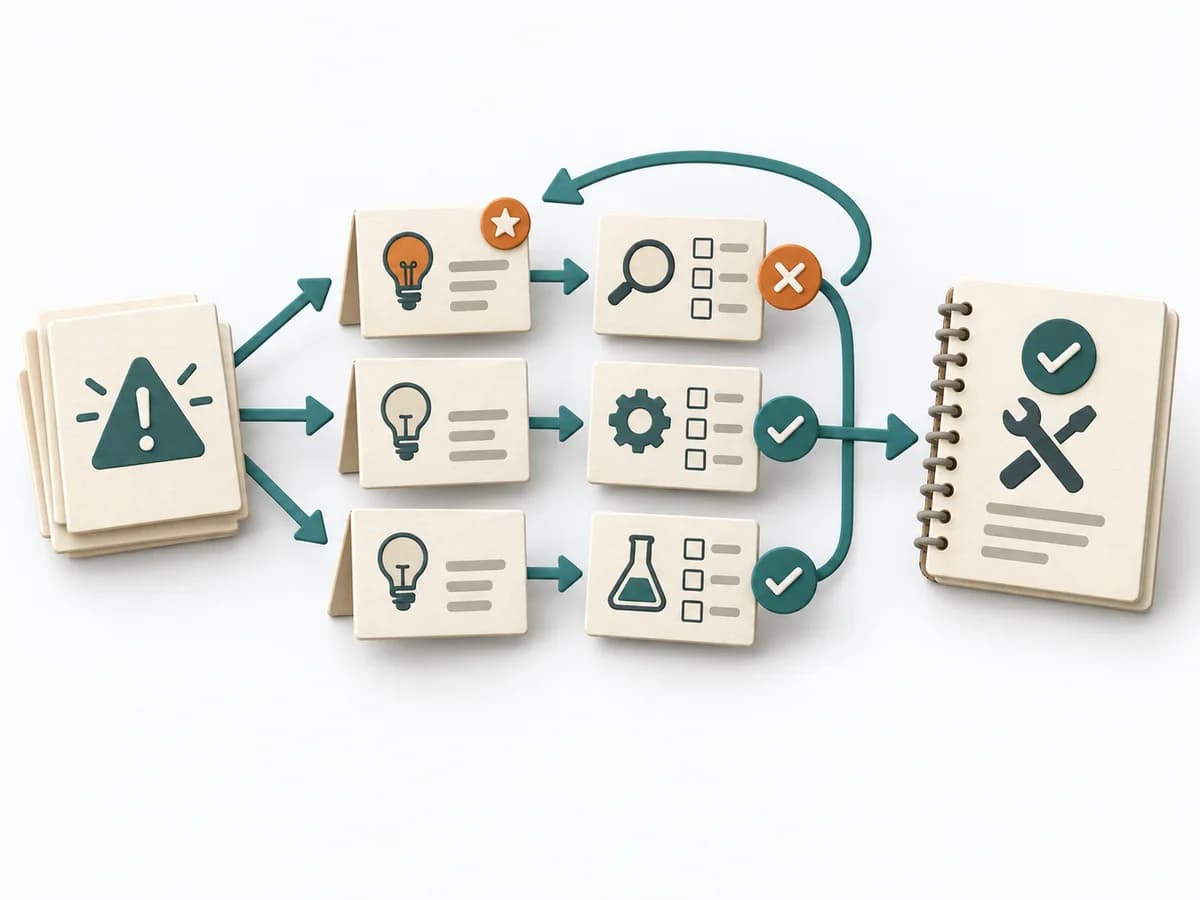 Engineering Hypothesis-Driven Troubleshooting | 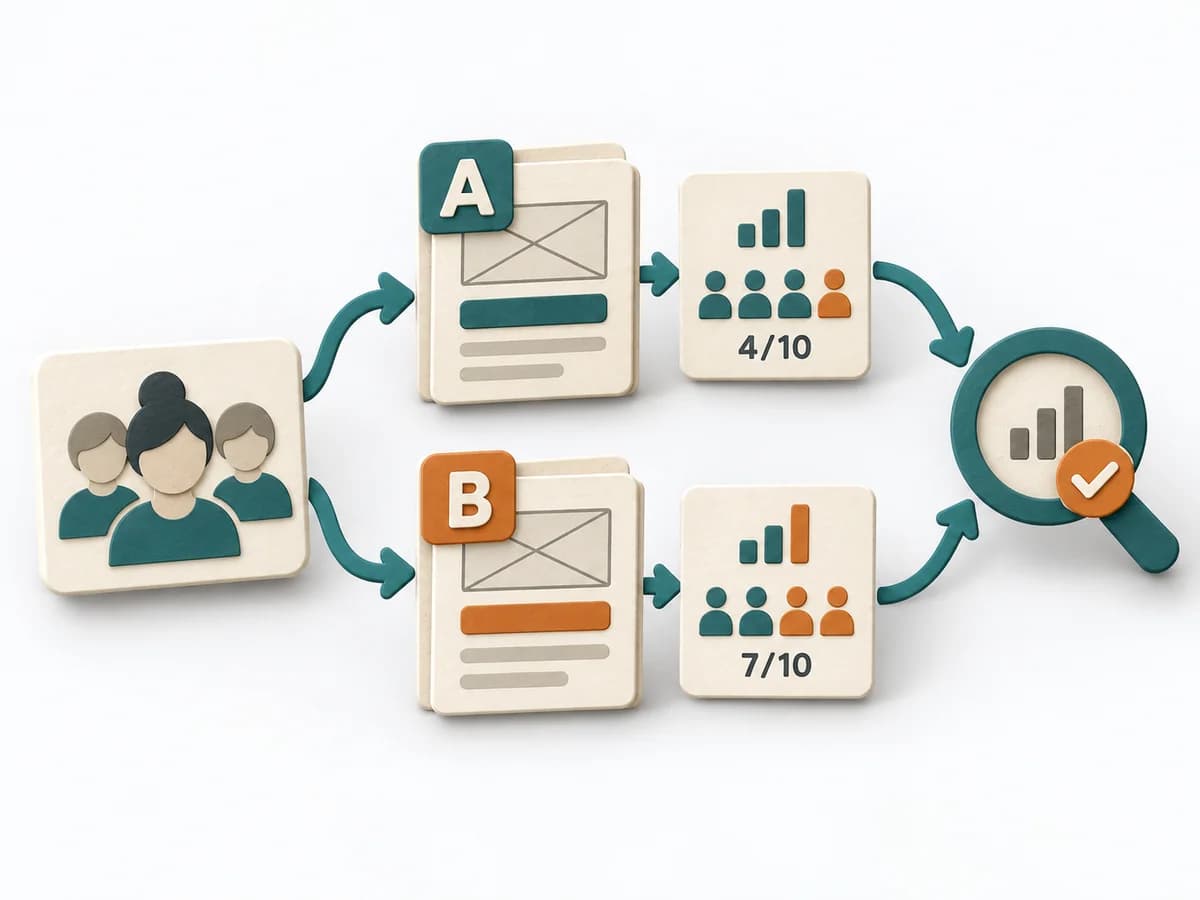 Growth A/B Testing |
|---|---|---|---|---|
Purposedifferent | When many visitors or users drop off along the way, the reason behind the number often stays hidden. Funnel Analysis exposes these transitions and makes visible exactly where the path collapses. | In technical failures, the visible symptom often gets mixed up with the actual cause. Fault Isolation narrows the fault space and progressively reduces which part of the system is truly affected. | When systems fail unexpectedly, spontaneous attempts often produce more noise than insight. Hypothesis-driven Troubleshooting translates symptoms into testable assumptions and makes troubleshooting learnable. | When two variants compete, discussions quickly decide by taste rather than effect. A/B Testing checks behavior under controlled conditions and separates real improvement from chance or expectation effects. |
Complexitydifferent | Medium | Medium | Medium | High |
Timedifferent | 1-3 h | 30-180 min | 30-240 min | 1-4 Wochen |
Participantsdifferent | 1-5 | 1-6 | 1-6 | 1-6 |
Formatdifferent | Async | Workshop + async | Workshop + async | Async |
Outputdifferent | Funnel report, Drop-off analysis, Optimization hypotheses | Fault Isolation Map, Test Log, Excluded Hypotheses, Narrowed Fault Area | Hypothesis Log, Test Plan, Evidence Notes, Diagnosis Summary | Experiment results, Decision log, Learning summary |
Tagsno overlap | AnalyticsConversionGrowth | TroubleshootingDiagnosisEngineering | TroubleshootingProblem solvingDiagnosis | ExperimentsGrowthAnalyticsValidation |