View methods side by side.
Choose up to four methods. Add them using the search and share the comparison by copying its link.
| Criterion | 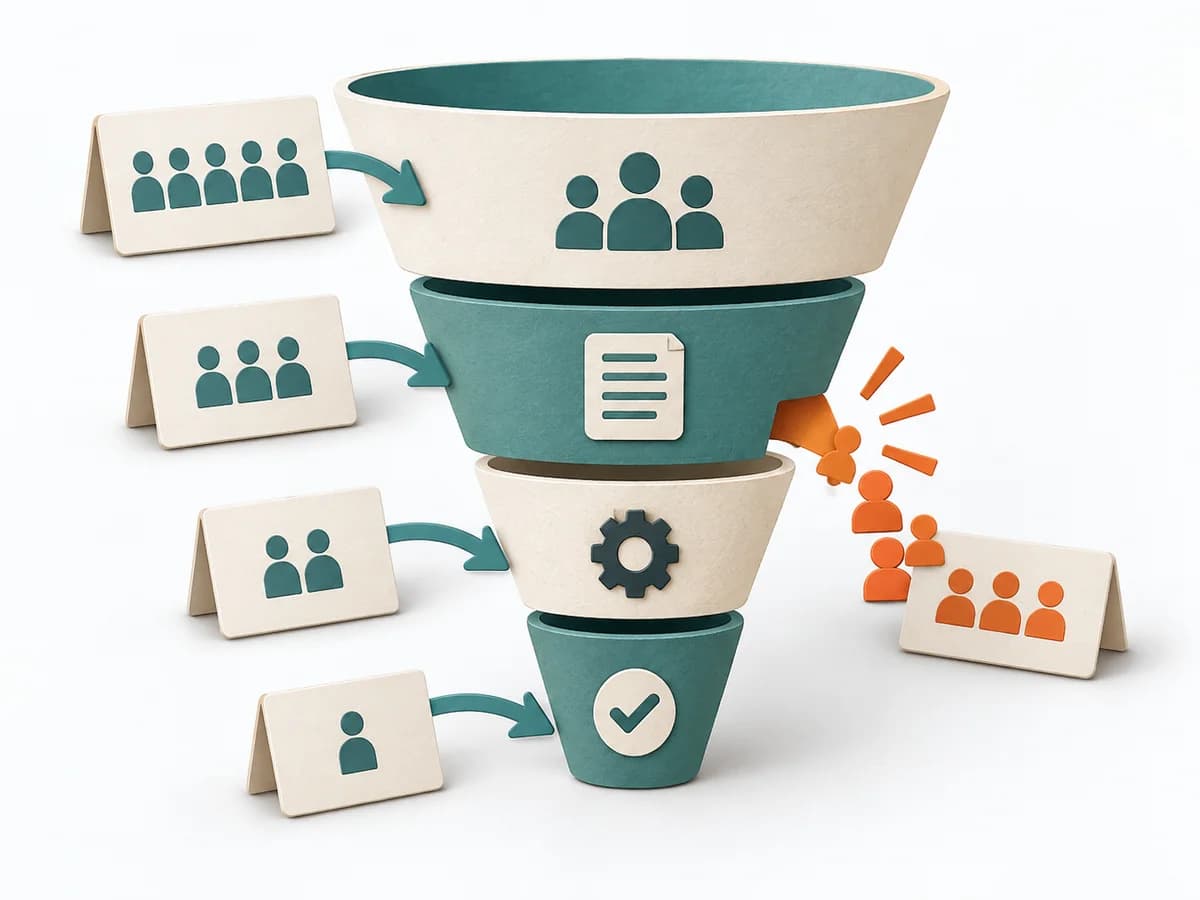 Growth Funnel Analysis |  Operations 5 Whys |  DevOps Incident Command |  Operations Root Cause Analysis |
|---|---|---|---|---|
Purposedifferent | When many visitors or users drop off along the way, the reason behind the number often stays hidden. Funnel Analysis exposes these transitions and makes visible exactly where the path collapses. | For a single, hard-to-explain deviation, the method exposes the causal chain behind the visible symptom. It keeps the cause open until a controllable condition emerges instead of a mere description. | During an acute incident with several people involved, the method creates a clear leadership and communication structure. It reduces chaos when fast coordination and clean situational awareness are both needed at once. | When a problem keeps recurring and the cause stays unclear, the method exposes the underlying mechanism. It separates symptom, guess, and robust explanation from one another. |
Complexitydifferent | Medium | Low | Medium | Medium |
Timedifferent | 1-3 h | 15-30 min | As needed | 1-4 h |
Participantsdifferent | 1-5 | 2-6 | 4-15 | 3-8 |
Formatdifferent | Async | Workshop | Workshop + async | Workshop + async |
Outputdifferent | Funnel report, Drop-off analysis, Optimization hypotheses | Root cause notes, Countermeasures | Incident Log, Action Tracker, Stakeholder Updates | Problem Statement, Cause Hypotheses, Confirmed Causes, Action Plan |
Tagsno overlap | AnalyticsConversionGrowth | Root causeIncidentLeanProblem solving | IncidentOperationsReliability | Root causeProblem solvingQualityIncident |