View methods side by side.
Choose up to four methods. Add them using the search and share the comparison by copying its link.
| Criterion |  Decision Making Force Field Analysis | 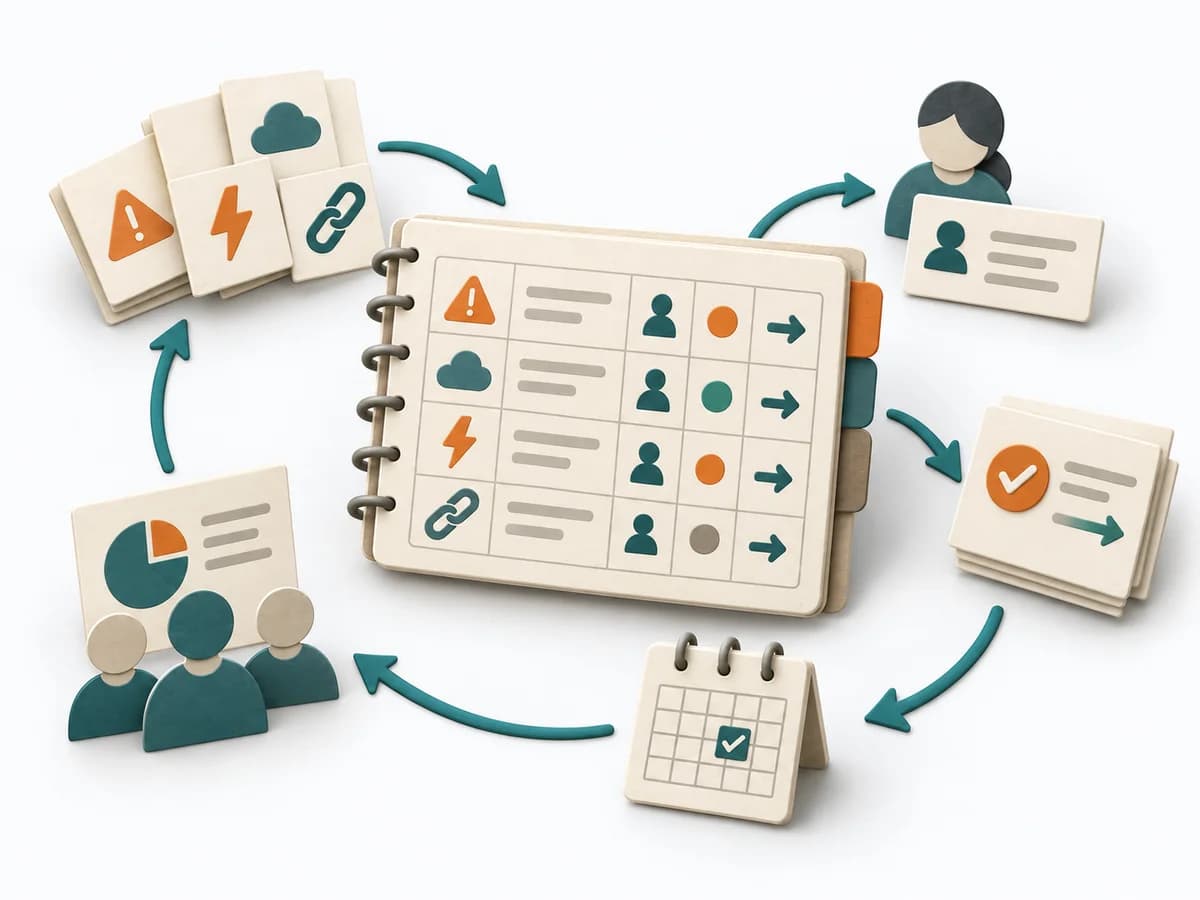 Delivery RAID Log |  Facilitation Stakeholder Mapping |  Decision Making Decision Rights Mapping |
|---|---|---|---|---|
Purposedifferent | In change initiatives, supporting and restraining forces sit at the table at the same time. Force Field Analysis makes these tensions explicit and shows where change can be pushed forward by strengthening or relieving. | Helps clarify scope, sequence, and delivery flow in concrete terms. It makes work, boundaries, and order steerable. The result is captured as a RAID Log and a source for status reporting. | When an initiative depends on many people, interests, and power dynamics, Stakeholder Mapping systematically orders the environment. It shows who influences, who is affected, and where relationship management or safeguarding matters first. | In organizations with many stakeholders, it often blurs who actually decides and who is merely consulted. It separates options, evaluation criteria, and open risks. The result is captured as a Decision Rights matrix and an agreement. |
Complexitydifferent | Low | Low | Low | Medium |
Timedifferent | 45-90 min | 30 min Setup, dann laufend | 60–90 min | 90-180 min |
Participantsdifferent | 3-12 | 1-3 maintaining, briefing for everyone | 2-8 | 4-12 |
Formatdifferent | Workshop | Async | Workshop + async | Workshop |
Outputdifferent | Force Field Map, Change Levers, Risk Notes | RAID Log, Status Report Source | Stakeholder Map, Engagement Plan, Risk Notes | Decision Rights Matrix, Agreement |
Tagsno overlap | ChangeDecisionStrategy | RiskTrackingStakeholdersGovernance | StakeholdersAlignmentFacilitationChange | DecisionGovernanceAlignmentResponsibility |