View methods side by side.
Choose up to four methods. Add them using the search and share the comparison by copying its link.
| Criterion |  Decision Making Force Field Analysis | 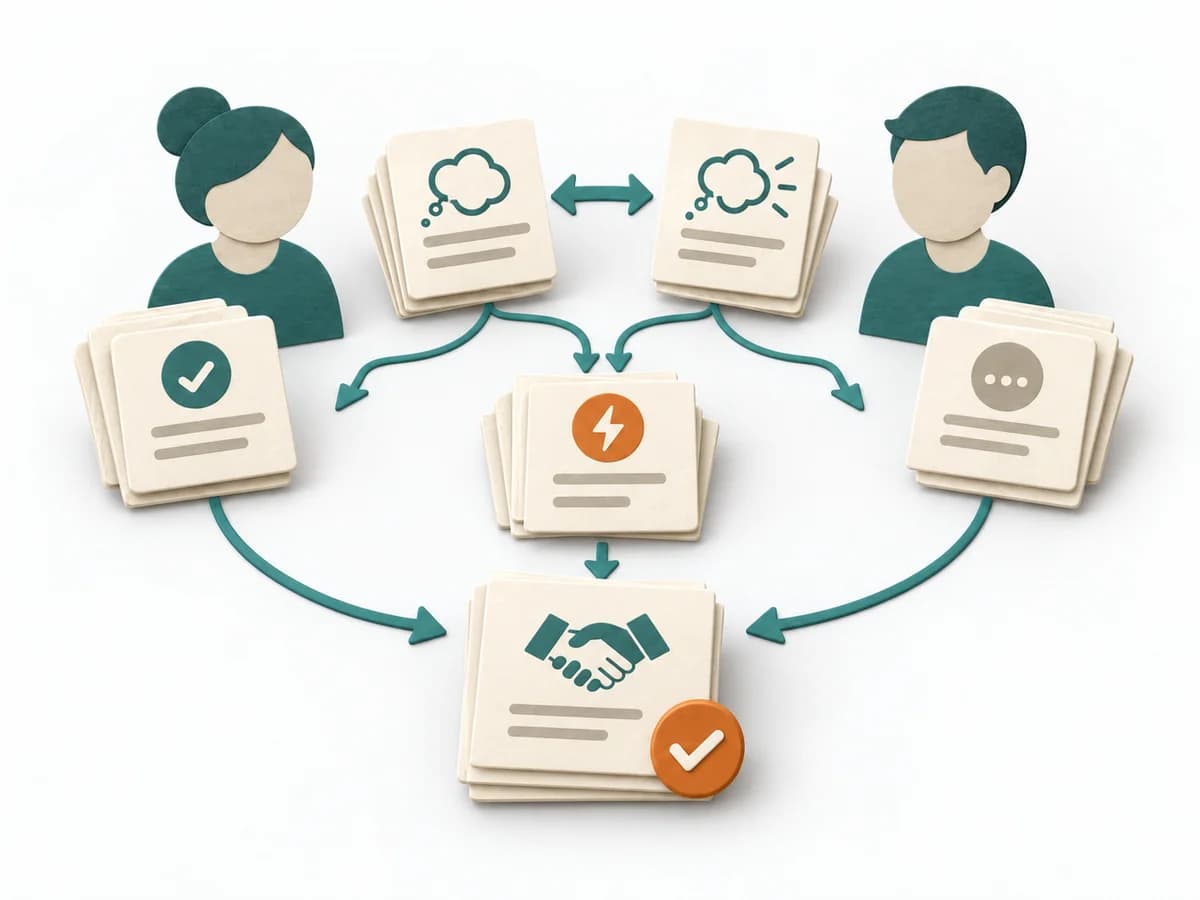 Facilitation Expectation Mapping | 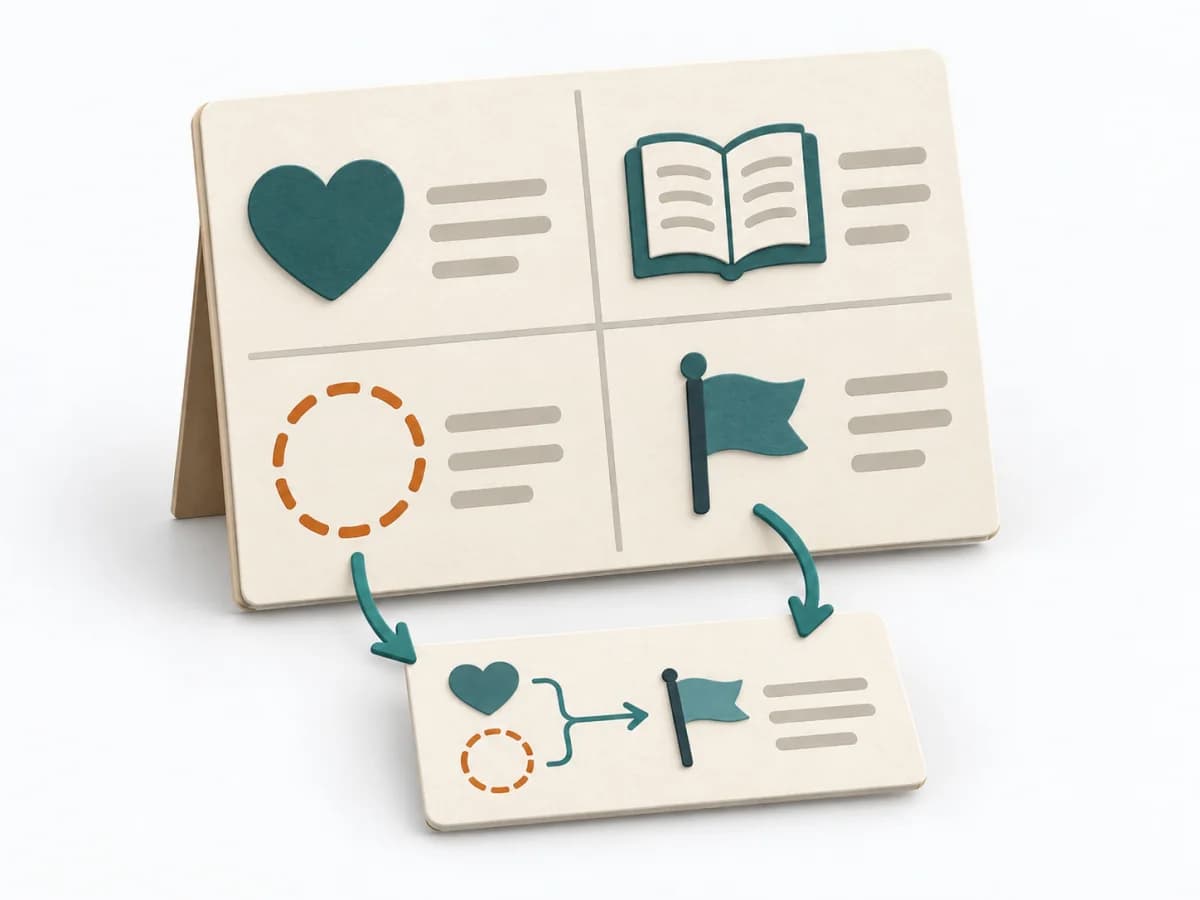 Agile 4Ls Retrospective |  Facilitation Alignment Mapping |
|---|---|---|---|---|
Purposedifferent | In change initiatives, supporting and restraining forces sit at the table at the same time. Force Field Analysis makes these tensions explicit and shows where change can be pushed forward by strengthening or relieving. | When roles, interfaces, or projects fail because of differing expectations, Expectation Mapping surfaces these differences. It shows what each side takes for granted and where the pictures diverge. | When a sprint should not only be assessed but also learned from, it captures experience in clear learning categories. It records what worked, what's missing, and what should run differently next time. | When several people work toward one goal but hold different mental maps, Alignment Mapping makes the discrepancies visible. It arranges goals, assumptions, and priorities so shared direction becomes verifiable. |
Complexitydifferent | Low | Low | Low | Medium |
Timedifferent | 45-90 min | 45-90 min | 45–75 min | 1-2 h |
Participantsdifferent | 3-12 | 3-12 | Team members involved | 4-12 |
Formatsame | Workshop | Workshop | Workshop | Workshop |
Outputdifferent | Force Field Map, Change Levers, Risk Notes | Expectation Map, Alignment Notes, Agreements | 4Ls Board, Learning Themes, Improvement Actions | Alignment Map, Open Issues, Decision Questions |
Tagsno overlap | ChangeDecisionStrategy | AlignmentStakeholdersTeam | RetrospectiveLearningReflectionTeam | AlignmentStakeholdersStrategyFacilitation |