View methods side by side.
Choose up to four methods. Add them using the search and share the comparison by copying its link.
| Criterion |  Decision Making Force Field Analysis |  Product Strategy DIBB | 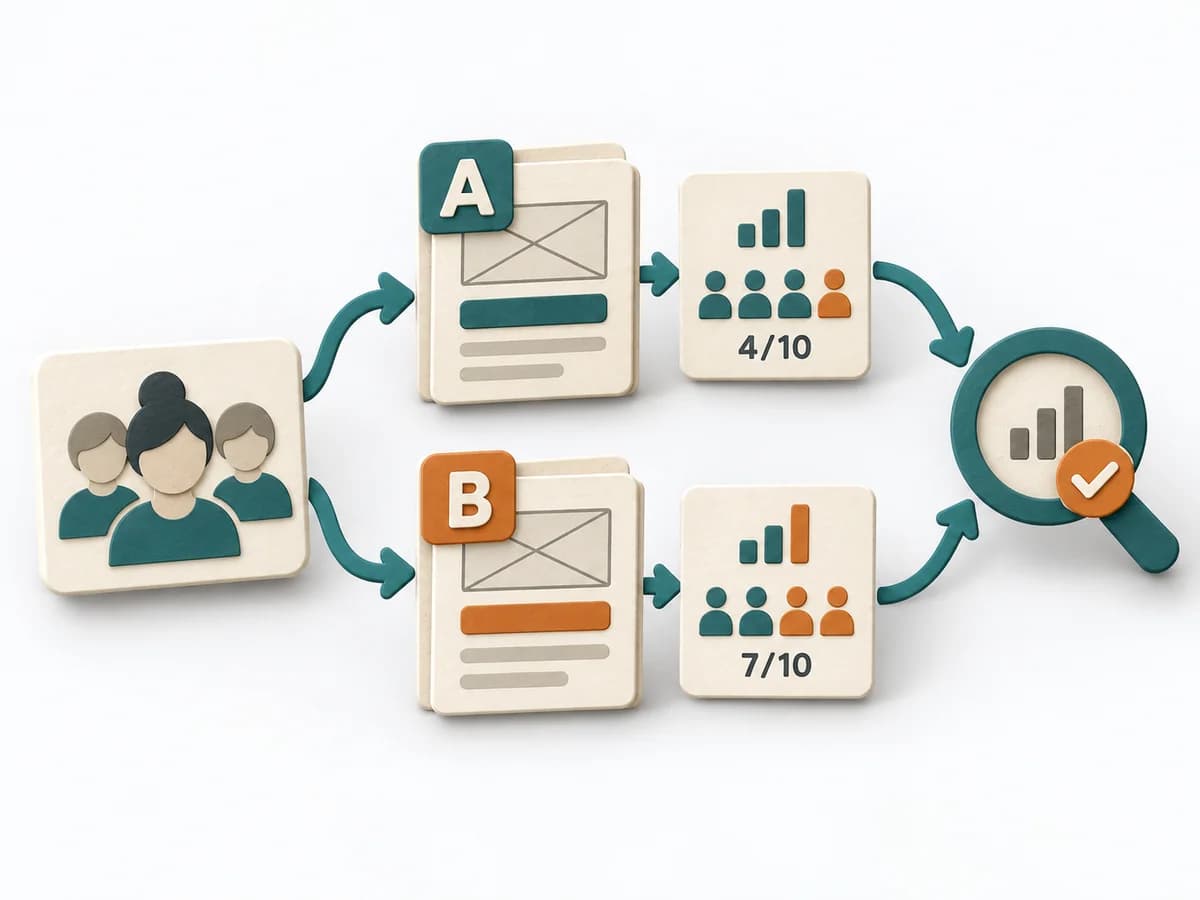 Growth A/B Testing | 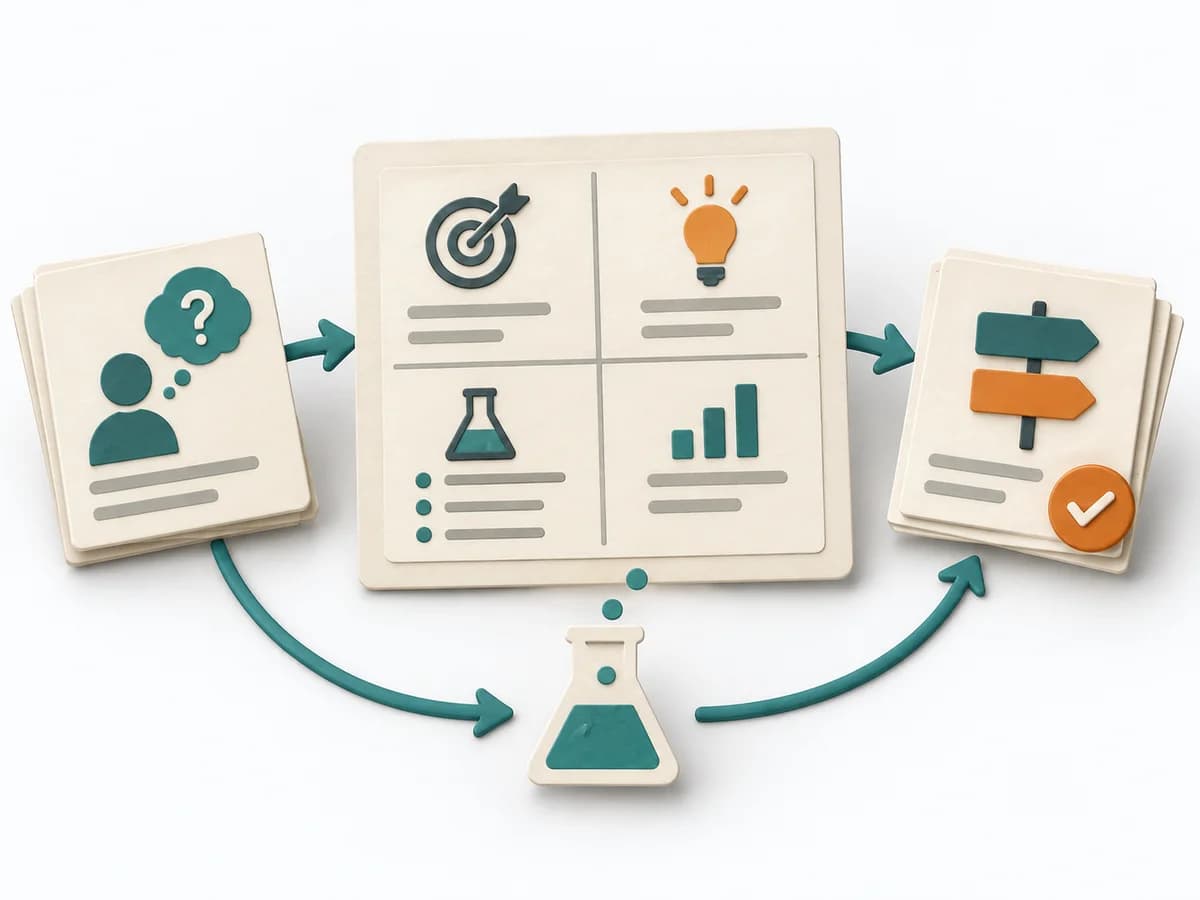 Product Discovery Experiment Canvas |
|---|---|---|---|---|
Purposedifferent | In change initiatives, supporting and restraining forces sit at the table at the same time. Force Field Analysis makes these tensions explicit and shows where change can be pushed forward by strengthening or relieving. | DIBB helps clarify target groups, value, goals, and priorities by making the logic behind a decision explicit. It captures results as a DIBB document, belief list, bet list, and learning report. | When two variants compete, discussions quickly decide by taste rather than effect. A/B Testing checks behavior under controlled conditions and separates real improvement from chance or expectation effects. | When experiments become unreadable after the fact, it arranges hypothesis, signal, and learning goal on a single canvas. It separates problem, assumption, solution, and evidence. The result is captured as a Completed Experiment Canvas and a Success Metric. |
Complexitydifferent | Low | Low | High | Low |
Timedifferent | 45-90 min | 1-2 h | 1-4 Wochen | 30-60 min |
Participantsdifferent | 3-12 | 2-8 | 1-6 | 1-5 |
Formatdifferent | Workshop | Workshop + async | Async | Workshop + async |
Outputdifferent | Force Field Map, Change Levers, Risk Notes | DIBB document, Belief list, Bet list, Learning report | Experiment results, Decision log, Learning summary | Completed Experiment Canvas, Success Metric |
Tagsno overlap | ChangeDecisionStrategy | StrategyDecisionAssumptionsHypothesis | ExperimentsGrowthAnalyticsValidation | ExperimentsValidationDiscoveryHypothesis |