View methods side by side.
Choose up to four methods. Add them using the search and share the comparison by copying its link.
| Criterion |  Decision Making Force Field Analysis | 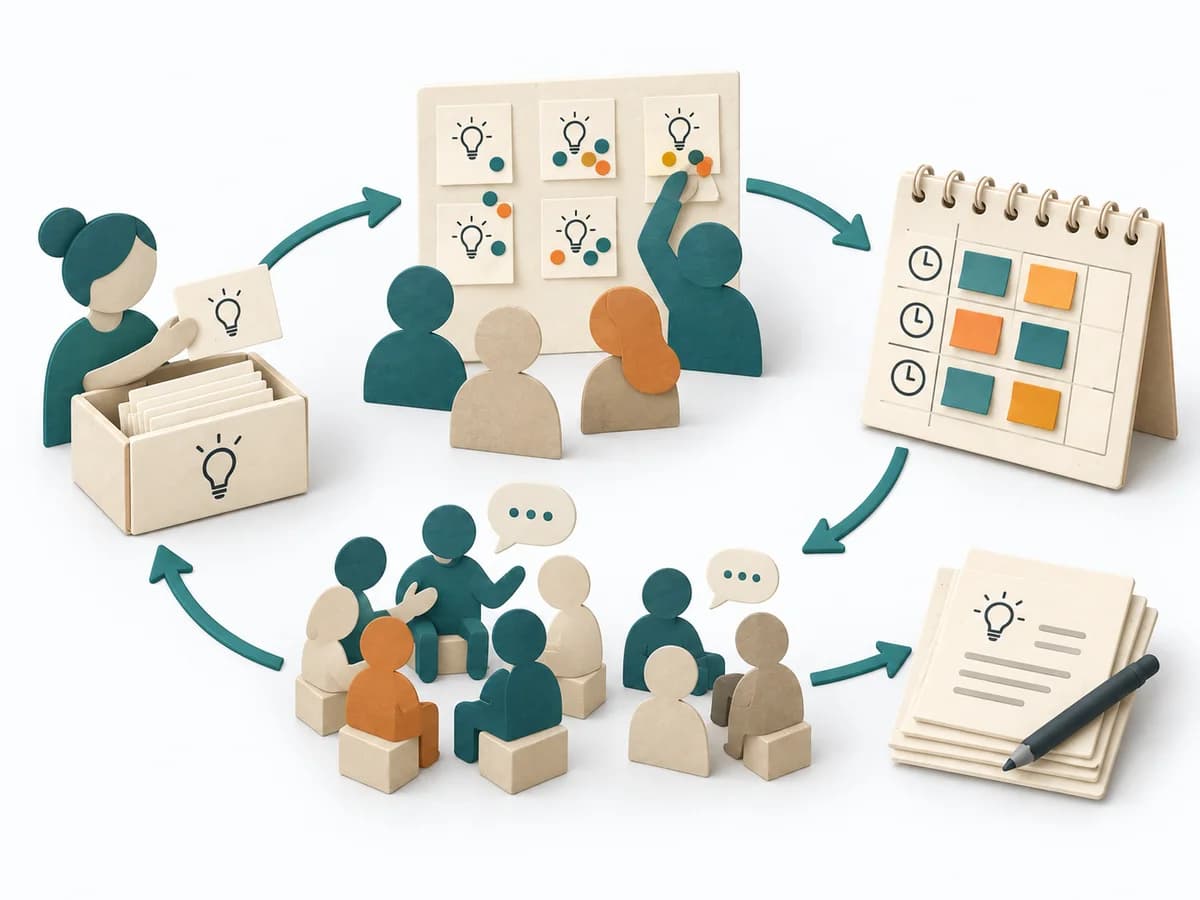 Facilitation Barcamp | 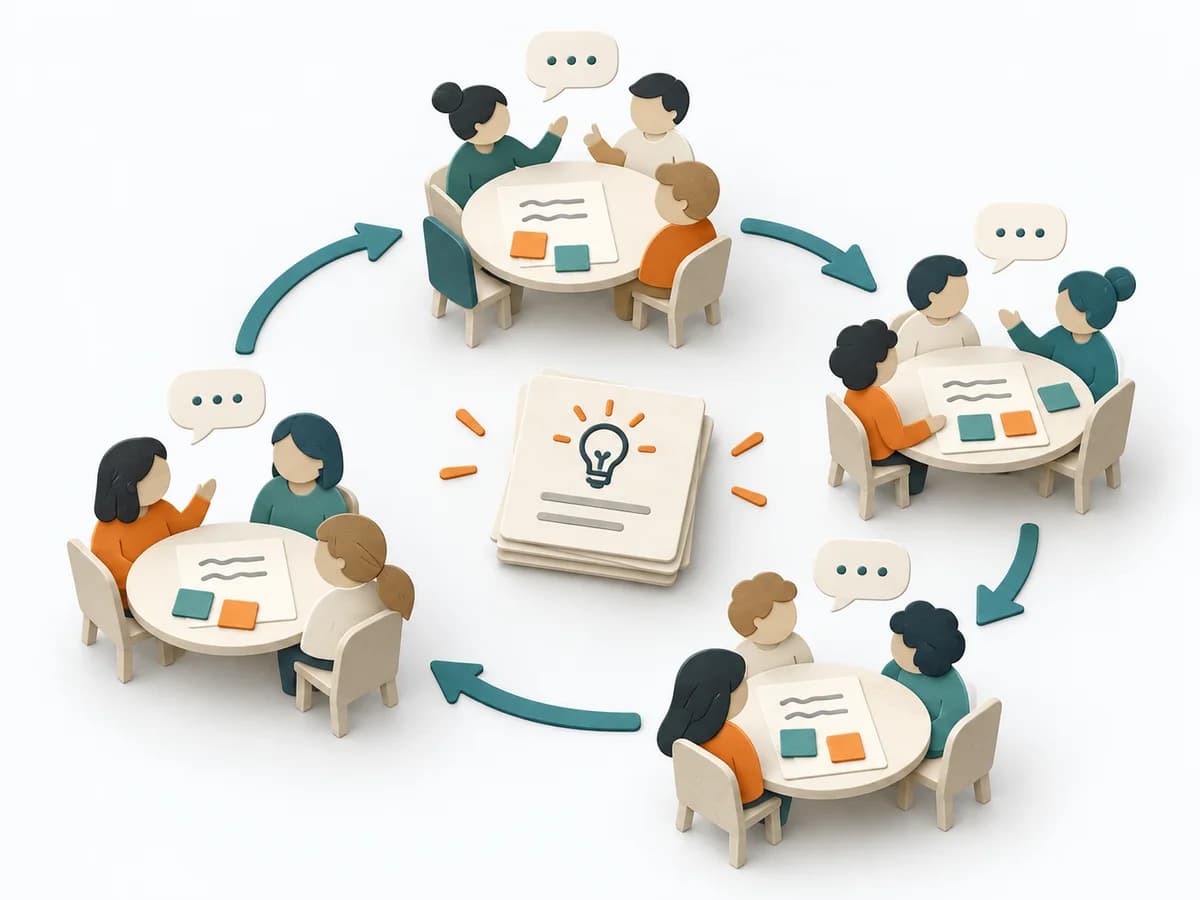 Facilitation World Café |  Knowledge Modeling Peer Instruction |
|---|---|---|---|---|
Purposedifferent | In change initiatives, supporting and restraining forces sit at the table at the same time. Force Field Analysis makes these tensions explicit and shows where change can be pushed forward by strengthening or relieving. | When many people can contribute knowledge and the flow should stay open, Barcamp provides a framework for self-organized sessions. The format channels energy without defining the content too narrowly in advance. | When a group needs to connect many viewpoints in a short time, World Café creates a calm alternation between closeness and rotation. It sets thinking in motion without forcing the conversation into full-plenary rigidity. | Peer Instruction uses group thinking to clarify difficult terms or concepts faster. The method combines individual reflection with social correction and shared precision. |
Complexitydifferent | Low | Medium | Medium | Medium |
Timedifferent | 45-90 min | Halber Tag bis 2 Tage | 60-180 min | 10-20 min je Frage |
Participantsdifferent | 3-12 | 15-200 | 12-100+ | 6-50 |
Formatsame | Workshop | Workshop | Workshop | Workshop |
Outputdifferent | Force Field Map, Change Levers, Risk Notes | Session Board, Session Notes, Community Learnings | Table Notes, Emergent Themes, Shared Questions | Concept Questions, Vote Results, Learning Notes |
Tagsno overlap | ChangeDecisionStrategy | FacilitationLarge groupLearning | FacilitationDialogueLarge groupSensemaking | LearningDialogueFacilitation |