View methods side by side.
Choose up to four methods. Add them using the search and share the comparison by copying its link.
| Criterion |  Decision Making Force Field Analysis | 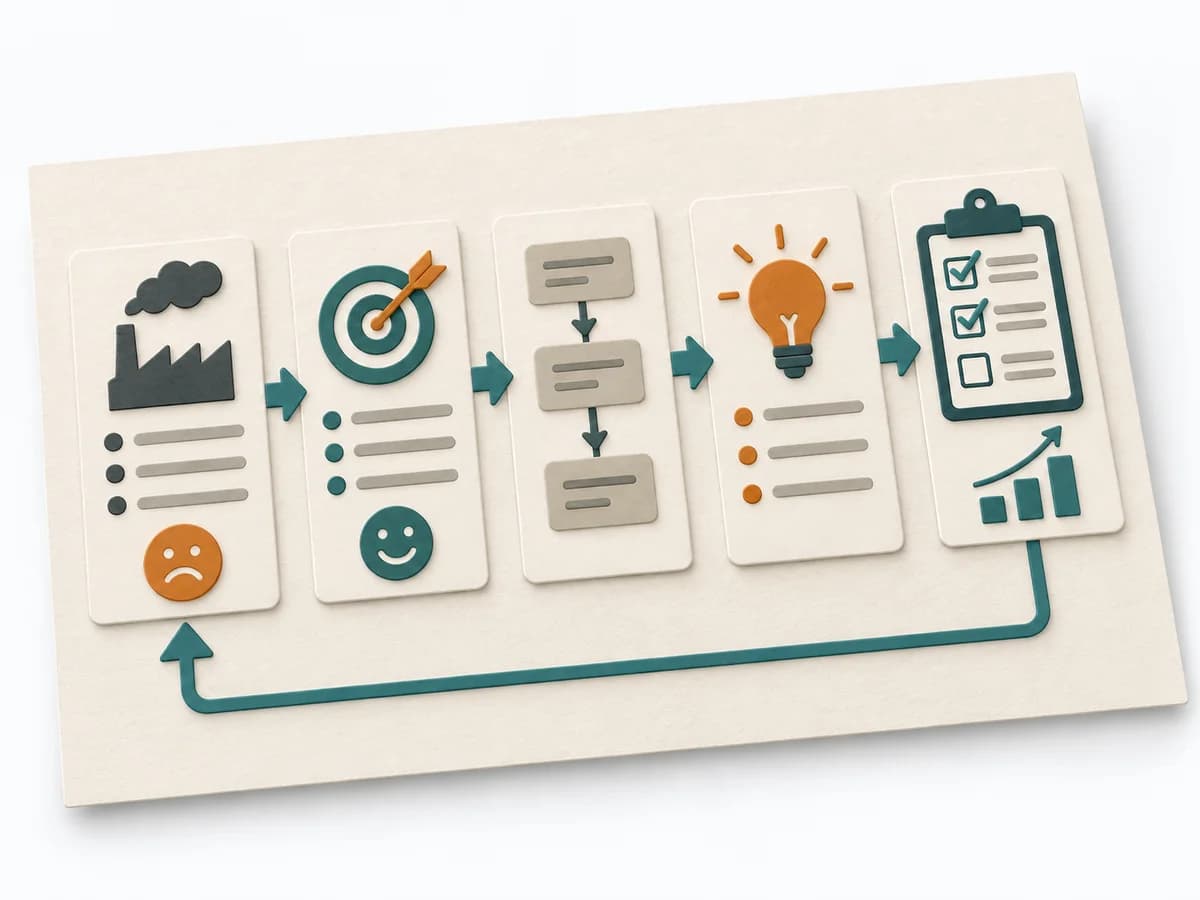 Operations A3 Problem Solving | 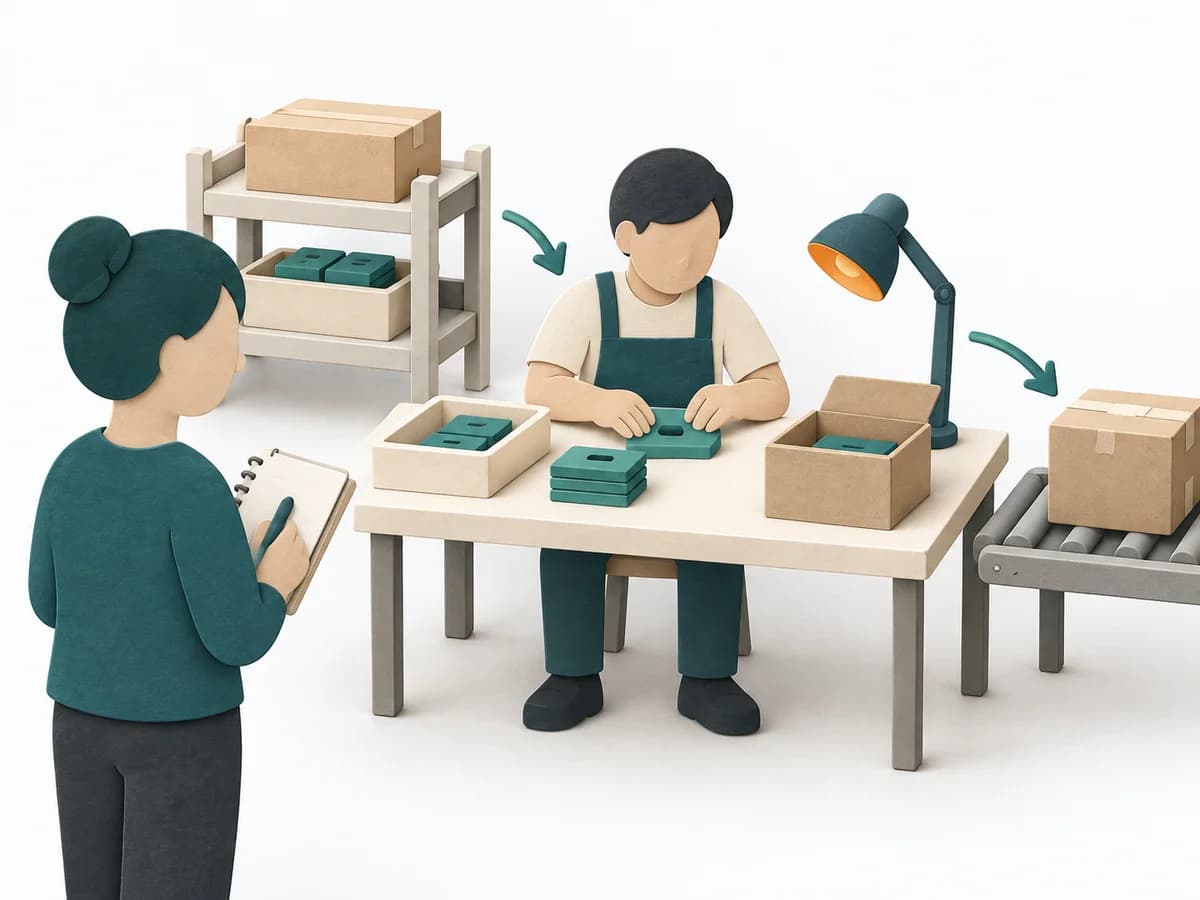 Operations Gemba Walk | 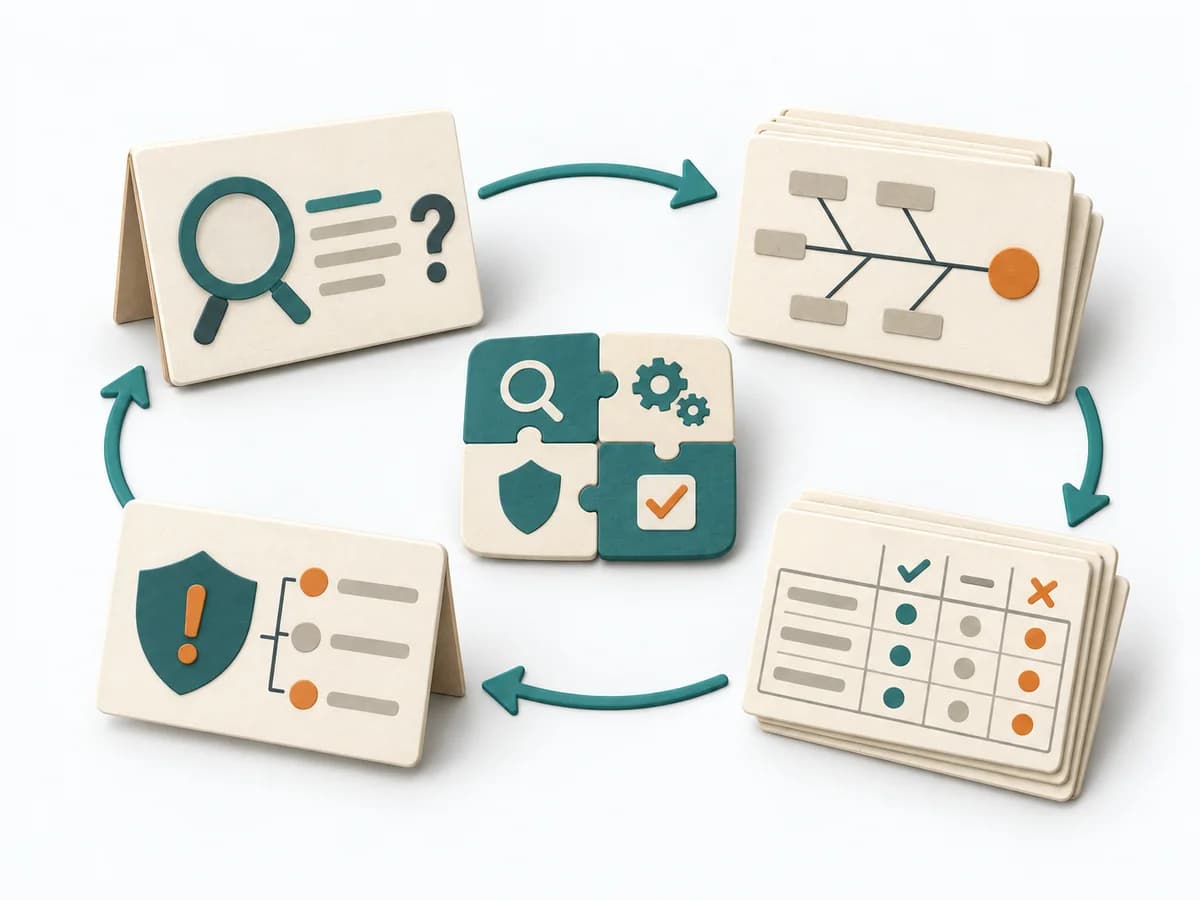 Operations Kepner-Tregoe |
|---|---|---|---|---|
Purposedifferent | In change initiatives, supporting and restraining forces sit at the table at the same time. Force Field Analysis makes these tensions explicit and shows where change can be pushed forward by strengthening or relieving. | For a complex deviation with several people involved, the method bundles problem, analysis, and decision onto one page. It creates a shared working space where causes, countermeasures, and follow-up fit together. | When there is uncertainty about the real course of a process, the method brings observation to the place where work happens. It combines perception, follow-up questions, and process knowledge so decisions rest on actual workflows instead of assumptions. | For a disturbance that's hard to pin down, the method cleanly separates problem, cause, and decision. It reduces mixing when symptoms allow several interpretations. |
Complexitydifferent | Low | Medium | Low | High |
Timedifferent | 45-90 min | 45-90 min | 30-120 min | 2-8 h |
Participantsdifferent | 3-12 | 2-5 | 2-6 | 2-8 |
Formatdifferent | Workshop | Workshop + async | Workshop | Workshop + async |
Outputdifferent | Force Field Map, Change Levers, Risk Notes | A3 Report, Action Plan, Root Cause Analysis | Observation Notes, Improvement Ideas | Problem Analysis, Decision Analysis, Risk Plan |
Tagsno overlap | ChangeDecisionStrategy | LeanProblem solvingCoachingOperations | LeanObservationProcessOperations | Problem solvingRoot causeDecisionOperations |