View methods side by side.
Choose up to four methods. Add them using the search and share the comparison by copying its link.
| Criterion |  Operations Failure Mode and Effects Analysis | 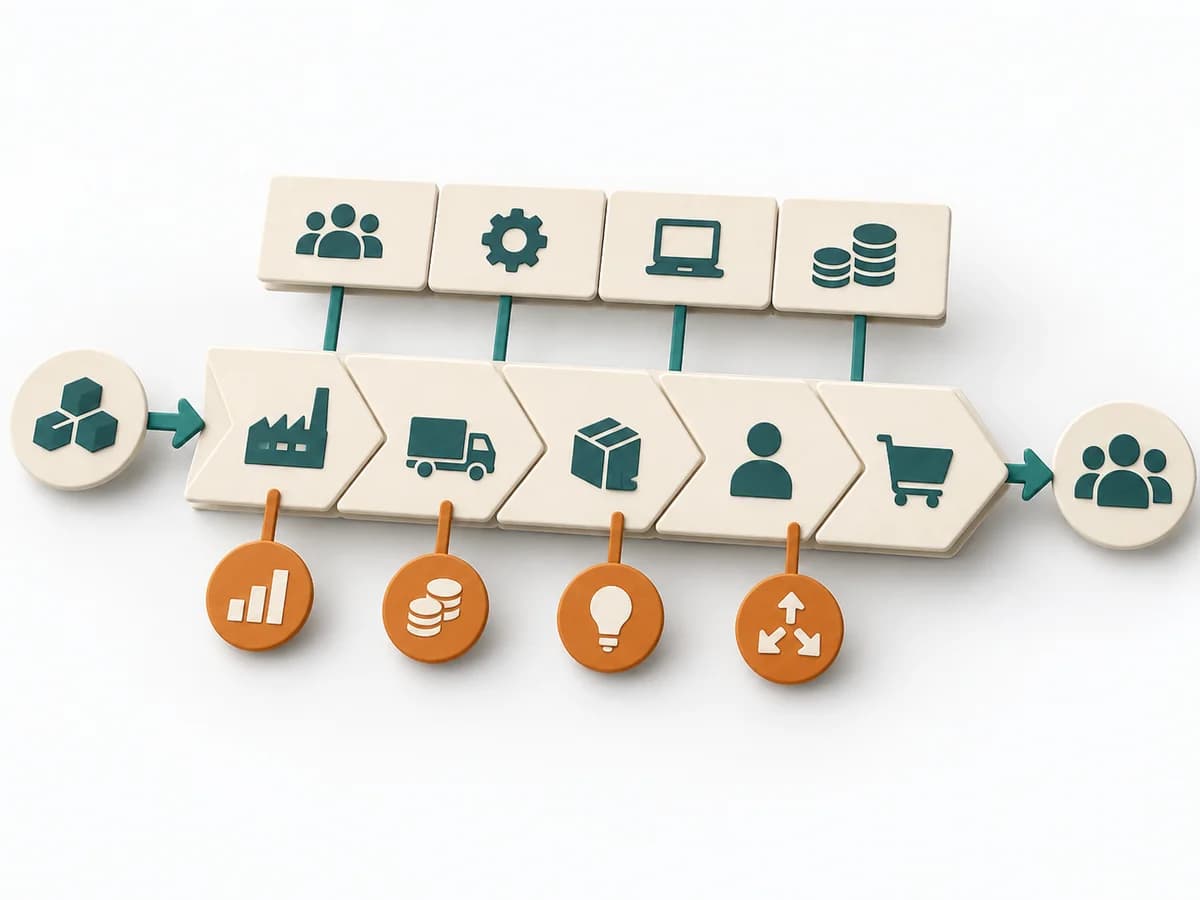 Business Strategy Value Chain Analysis | 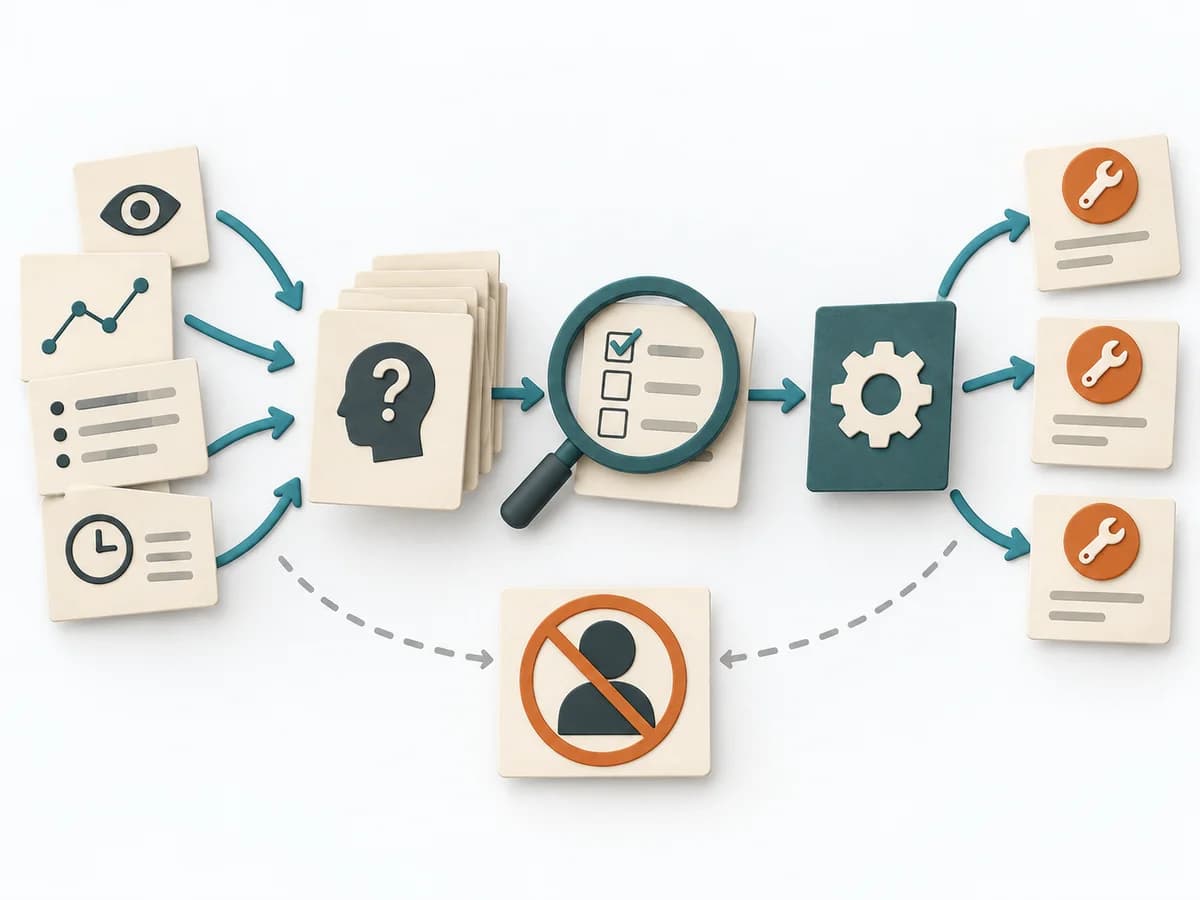 Operations Root Cause Analysis |  Operations 5 Whys |
|---|---|---|---|---|
Purposedifferent | For a process, product, or service with noticeable failure risks, the method assesses possible failure modes in advance. It directs attention to combinations of occurrence, effect, and detectability. | Value Chain Analysis shows where value is created, costs accrue, and differentiation becomes possible along the process. It compares strengths, risks, market logic, and courses of action. The result is captured as a value-chain map and lever list. | When a problem keeps recurring and the cause stays unclear, the method exposes the underlying mechanism. It separates symptom, guess, and robust explanation from one another. | For a single, hard-to-explain deviation, the method exposes the causal chain behind the visible symptom. It keeps the cause open until a controllable condition emerges instead of a mere description. |
Complexitydifferent | High | High | Medium | Low |
Timedifferent | 2-6 h | Half day | 1-4 h | 15-30 min |
Participantsdifferent | 3-10 | 3-8 | 3-8 | 2-6 |
Formatdifferent | Workshop | Workshop | Workshop + async | Workshop |
Outputdifferent | FMEA Table, Risk Priority, Mitigation Actions | Value Chain Map, Lever List | Problem Statement, Cause Hypotheses, Confirmed Causes, Action Plan | Root cause notes, Countermeasures |
Tagsno overlap | RiskQualityOperationsRoot cause | StrategyBusiness modelDiagnosisAnalysis | Root causeProblem solvingQualityIncident | Root causeIncidentLeanProblem solving |