View methods side by side.
Choose up to four methods. Add them using the search and share the comparison by copying its link.
Selected:Failure Mode and Effects AnalysisStart Stop ContinueSailboat RetrospectiveStarfish Retrospective
| Criterion | 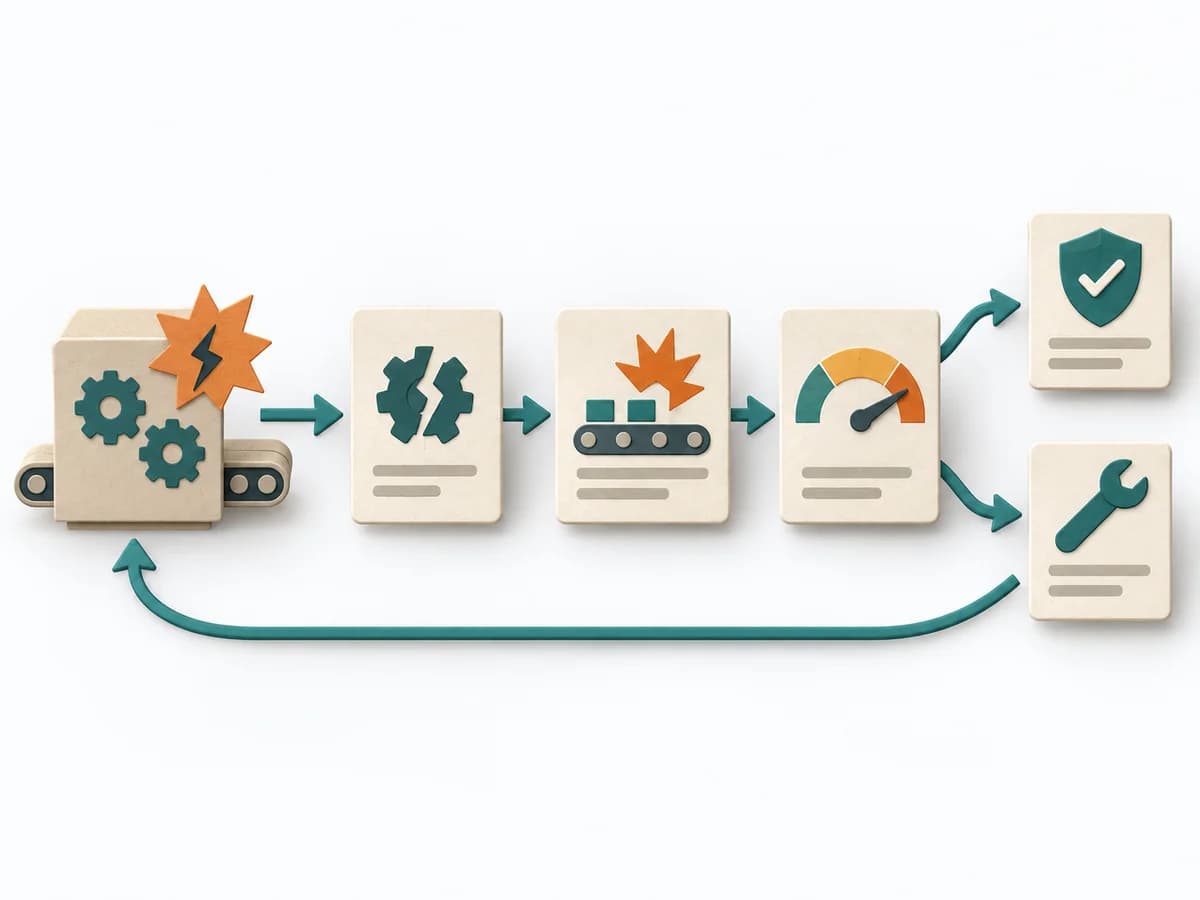 Operations Failure Mode and Effects Analysis | 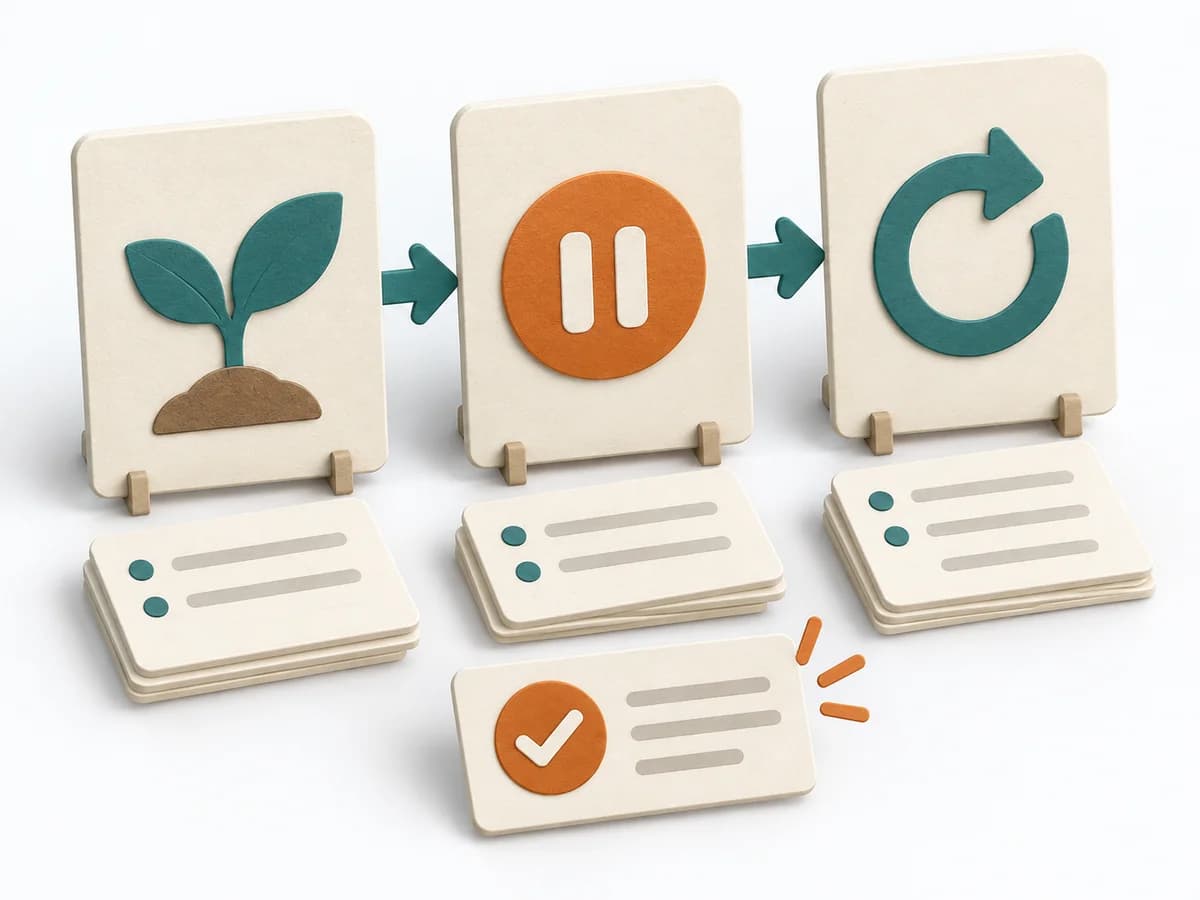 Agile Start Stop Continue | 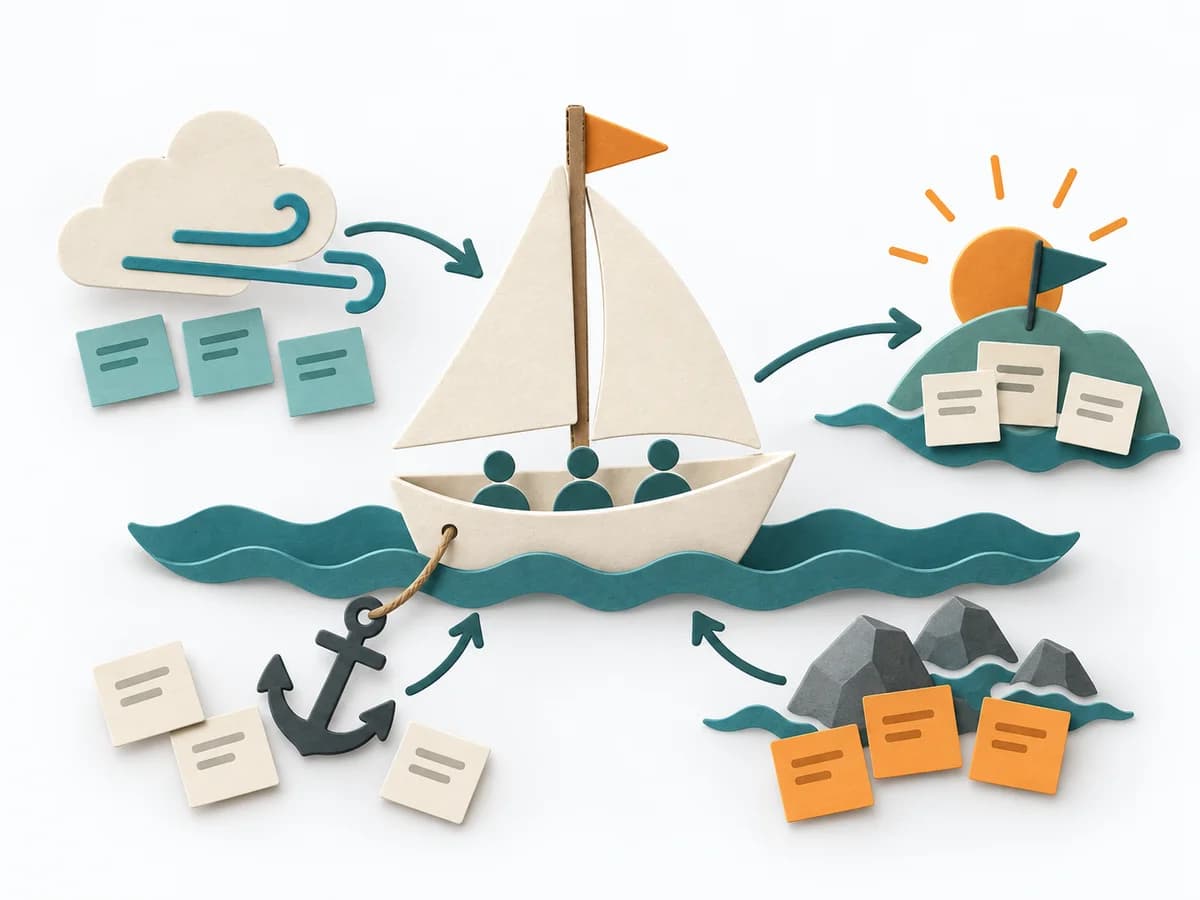 Agile Sailboat Retrospective | 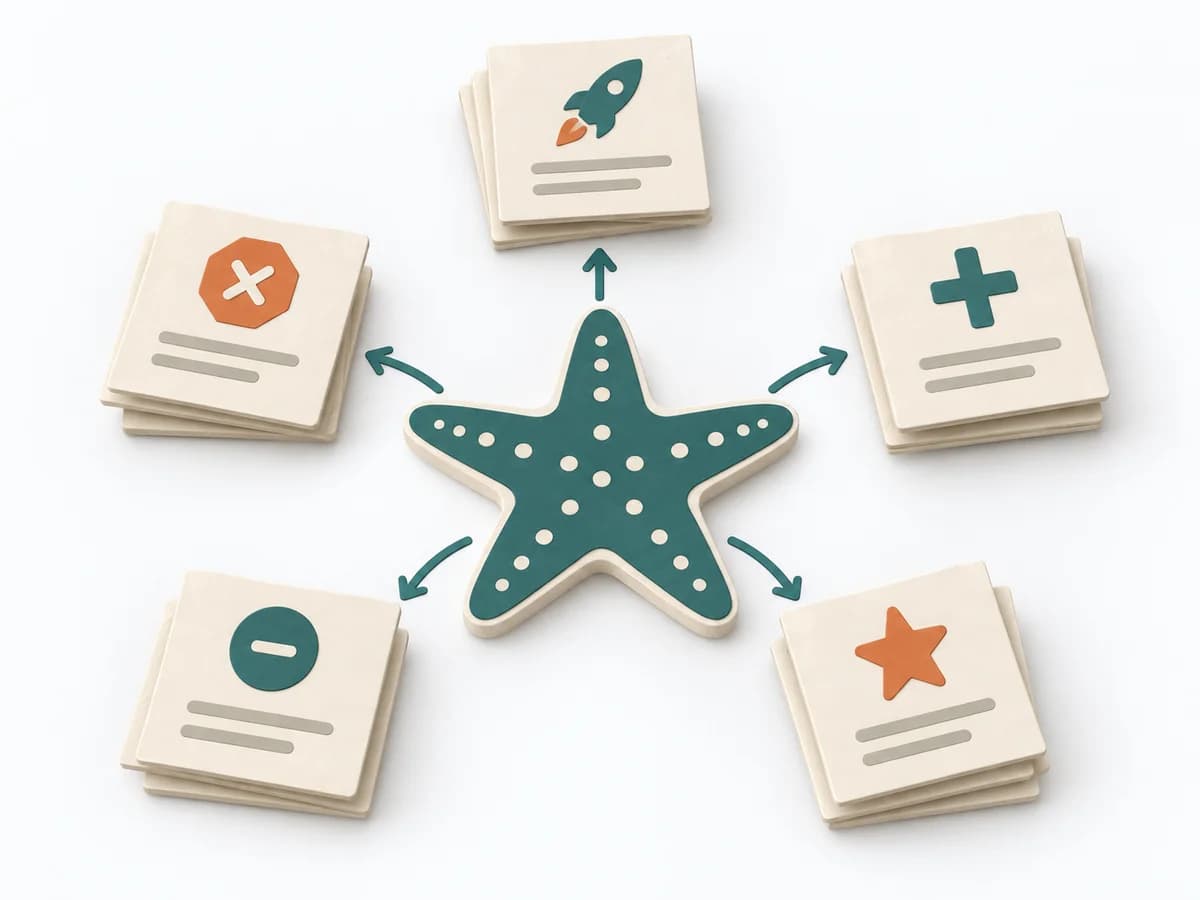 Agile Starfish Retrospective |
|---|---|---|---|---|
Purposedifferent | For a process, product, or service with noticeable failure risks, the method assesses possible failure modes in advance. It directs attention to combinations of occurrence, effect, and detectability. | When a team wants to deliberately adjust its working behavior, it makes habits visible and assessable. It focuses on concrete changes instead of diffuse mood. | When a team wants to read momentum, brakes, and risks together, it offers an easily understandable picture of the situation. It makes drive, obstacles, and headwind visible in the same picture. | When improvement options need to be sorted more finely than just start and stop, it brings observations into clear kinds of action. This makes visible what should be done more, less, newly, or continued. |
Complexitydifferent | High | Low | Low | Low |
Timedifferent | 2-6 h | 30-60 min | 45-90 min | 45-90 min |
Participantsdifferent | 3-10 | 3-12 | 4-12 | 4-12 |
Formatsame | Workshop | Workshop | Workshop | Workshop |
Outputdifferent | FMEA Table, Risk Priority, Mitigation Actions | Start Stop Continue Board, Improvement Actions | Sailboat Board, Risks, Improvement Actions | Starfish Board, Practice Changes, Experiments |
Tagsno overlap | RiskQualityOperationsRoot cause | RetrospectiveImprovementTeamReflection | RetrospectiveTeamImprovement | RetrospectiveImprovementExperimentsTeam |