View methods side by side.
Choose up to four methods. Add them using the search and share the comparison by copying its link.
| Criterion |  Growth Flywheel |  Agile Start Stop Continue | 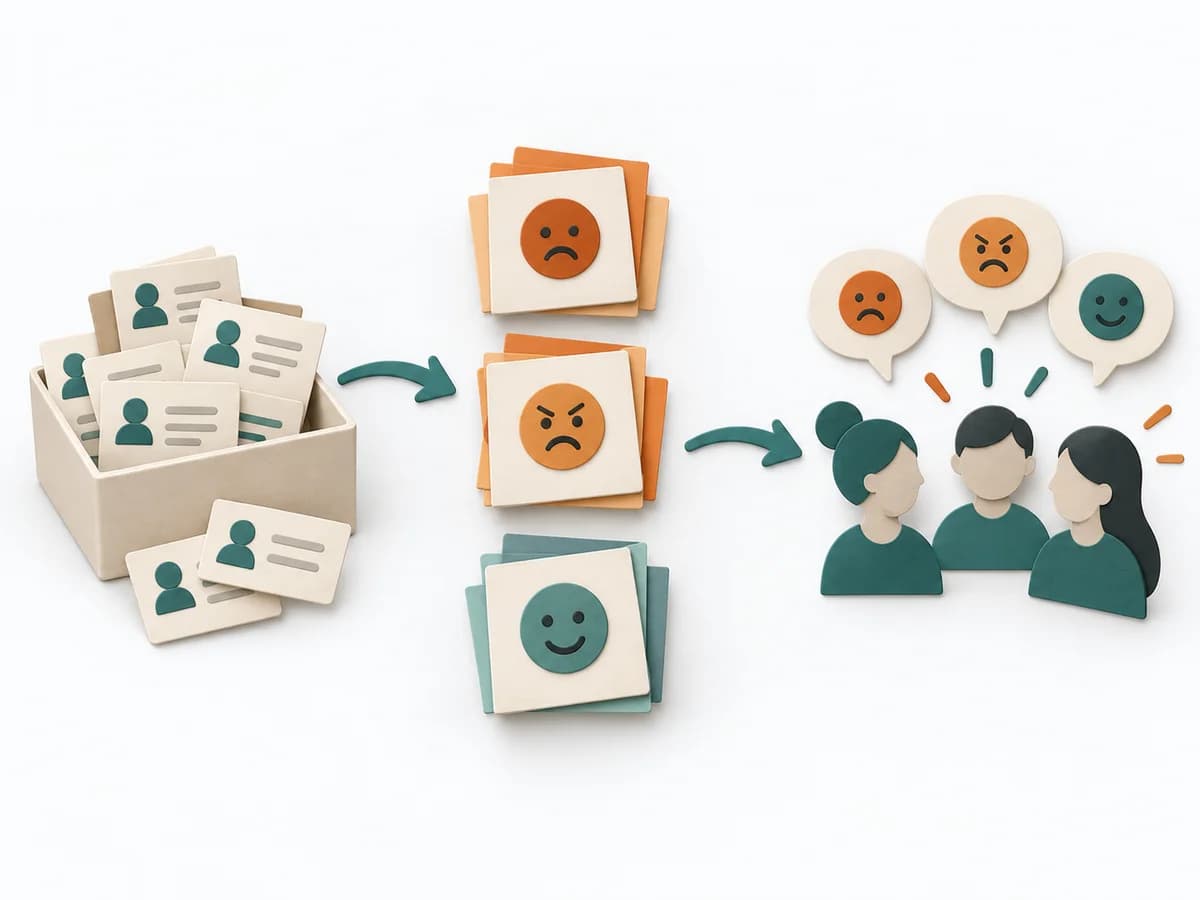 Agile Mad Sad Glad | 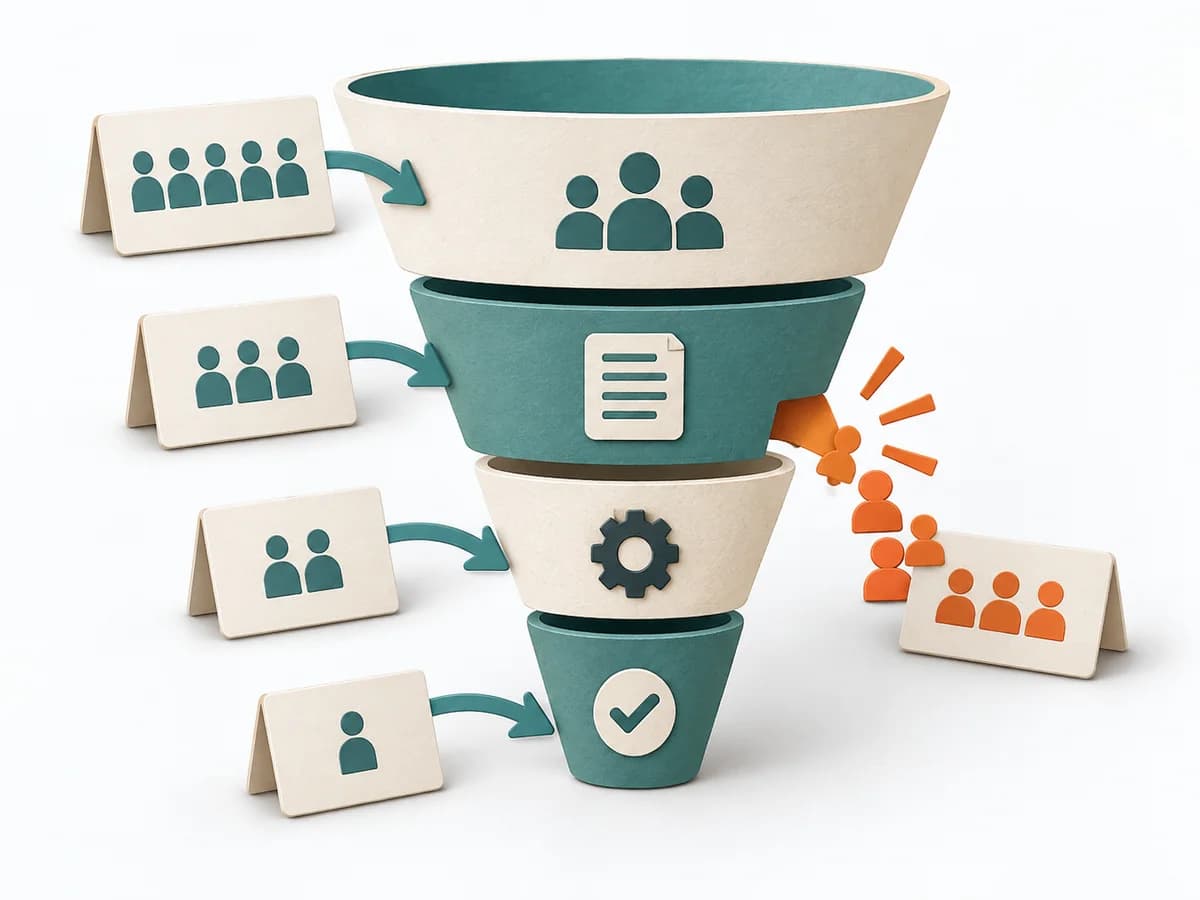 Growth Funnel Analysis |
|---|---|---|---|---|
Purposedifferent | Growth often breaks down where a reinforcing mechanism builds up too much friction. A Flywheel shows the cycle of value, repetition, and reinforcement meant to sustain growth. | When a team wants to deliberately adjust its working behavior, it makes habits visible and assessable. It focuses on concrete changes instead of diffuse mood. | When a team's or workshop's mood needs to become readable, it structures emotional signals with little setup. It makes strain, relief, and sources of energy tangible. | When many visitors or users drop off along the way, the reason behind the number often stays hidden. Funnel Analysis exposes these transitions and makes visible exactly where the path collapses. |
Complexitydifferent | Medium | Low | Low | Medium |
Timedifferent | 60-120 min | 30-60 min | 30-60 min | 1-3 h |
Participantsdifferent | 3-8 | 3-12 | 3-10 | 1-5 |
Formatdifferent | Workshop | Workshop | Workshop | Async |
Outputdifferent | Flywheel Map, Friction Points, Growth Levers, Experiment Backlog | Start Stop Continue Board, Improvement Actions | Emotion Board, Themes, Action Items | Funnel report, Drop-off analysis, Optimization hypotheses |
Tagsno overlap | GrowthRetentionConversion | RetrospectiveImprovementTeamReflection | RetrospectiveTeamReflection | AnalyticsConversionGrowth |