View methods side by side.
Choose up to four methods. Add them using the search and share the comparison by copying its link.
| Criterion |  Growth Flywheel | 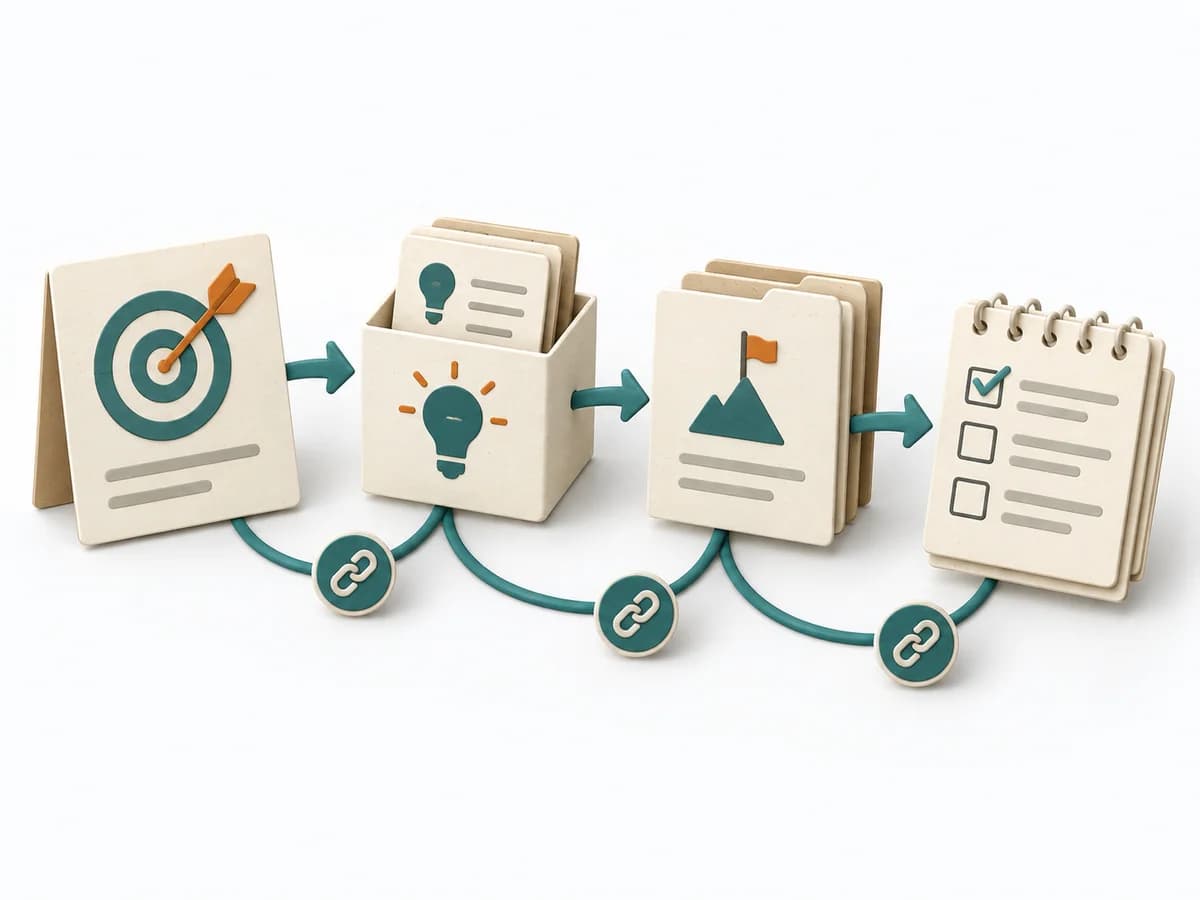 Product Strategy GIST Planning | 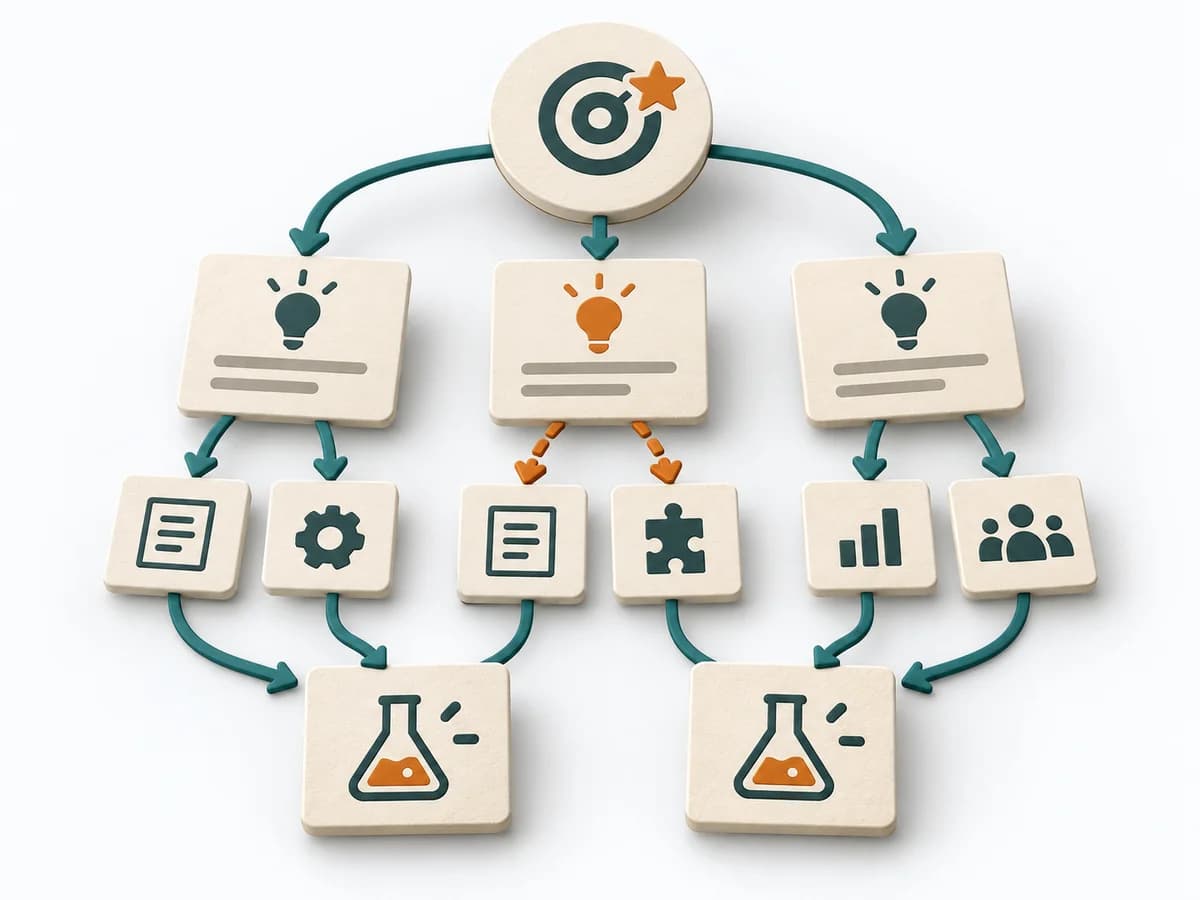 Product Discovery Opportunity Solution Tree |  Growth Funnel Analysis |
|---|---|---|---|---|
Purposedifferent | Growth often breaks down where a reinforcing mechanism builds up too much friction. A Flywheel shows the cycle of value, repetition, and reinforcement meant to sustain growth. | GIST Planning helps clarify target groups, value, goals, and priorities. It links customer value, product logic, and decision priorities, and captures the result as goals, an idea bank, and a step-project list. | When discovery keeps swinging between goals, ideas, and learning loops, it creates clear steering logic. It connects the desired outcome, opportunities, and experiments into a legible structure. | When many visitors or users drop off along the way, the reason behind the number often stays hidden. Funnel Analysis exposes these transitions and makes visible exactly where the path collapses. |
Complexitysame | Medium | Medium | Medium | Medium |
Timedifferent | 60-120 min | Wochen bis Monate je Goal | 1-2 h Setup, laufend | 1-3 h |
Participantsdifferent | 3-8 | 3-10 | 2-6 | 1-5 |
Formatdifferent | Workshop | Workshop + async | Workshop + async | Async |
Outputdifferent | Flywheel Map, Friction Points, Growth Levers, Experiment Backlog | Goals, Idea bank, Step-project list, Tasks, Learning reports | Opportunity Solution Tree, Experiment Backlog, Learning Log | Funnel report, Drop-off analysis, Optimization hypotheses |
Tagsno overlap | GrowthRetentionConversion | RoadmapOutcomesPlanningExperiments | DiscoveryOutcomesExperimentsOpportunity | AnalyticsConversionGrowth |