View methods side by side.
Choose up to four methods. Add them using the search and share the comparison by copying its link.
| Criterion |  Growth Flywheel | 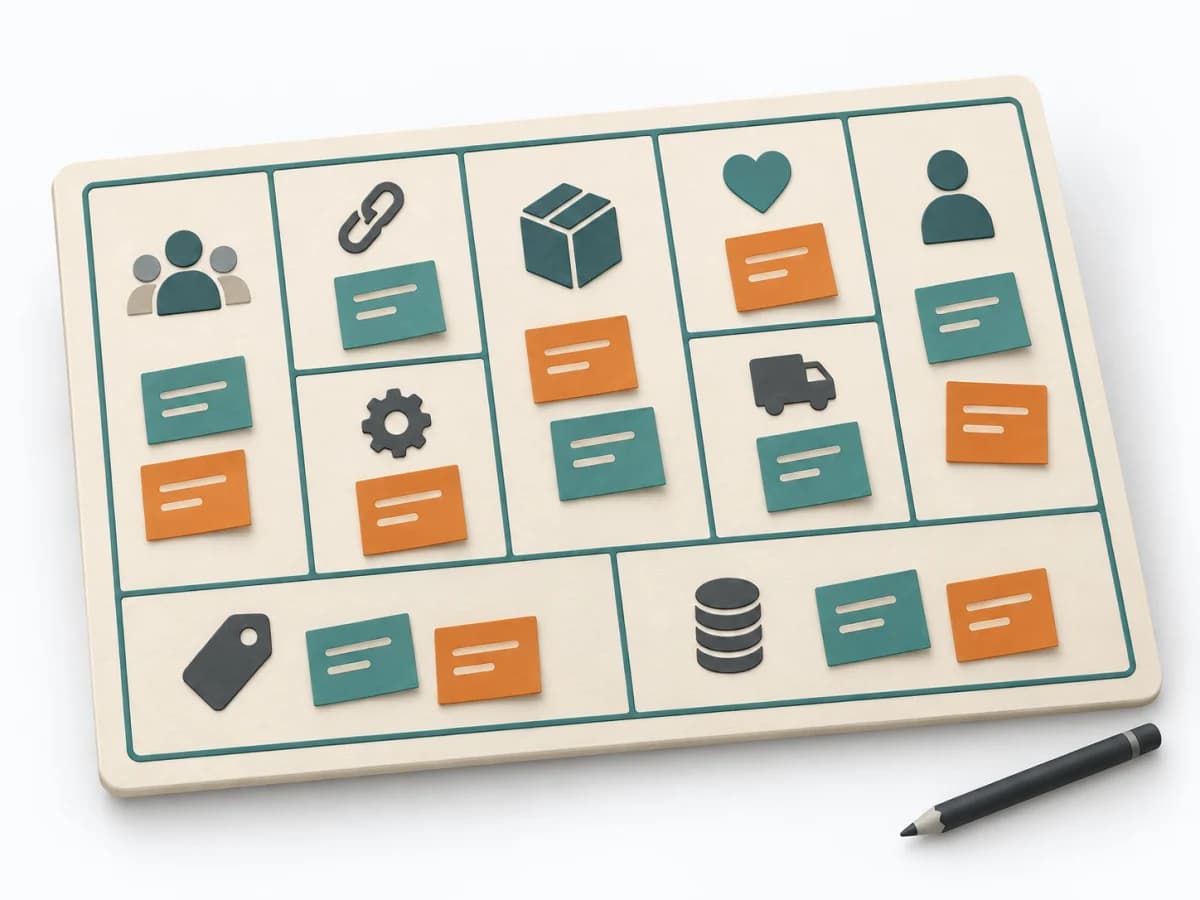 Business Strategy Business Model Canvas |  Product Strategy DIBB | 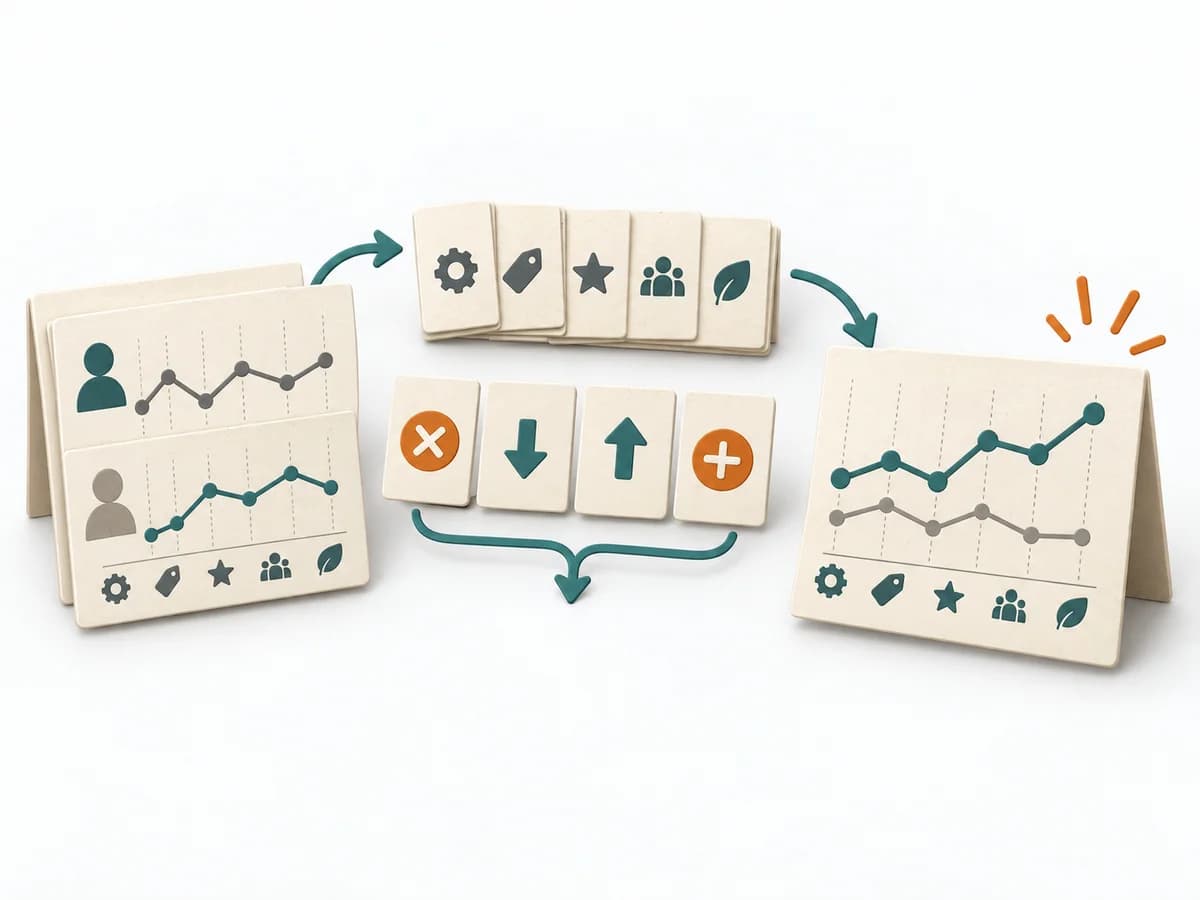 Business Strategy Blue Ocean Strategy Canvas |
|---|---|---|---|---|
Purposedifferent | Growth often breaks down where a reinforcing mechanism builds up too much friction. A Flywheel shows the cycle of value, repetition, and reinforcement meant to sustain growth. | The Business Model Canvas condenses a business model to its key building blocks and assumptions. It makes variants quickly comparable and reveals gaps before validation or implementation begins. | DIBB helps clarify target groups, value, goals, and priorities by making the logic behind a decision explicit. It captures results as a DIBB document, belief list, bet list, and learning report. | The Blue Ocean Strategy Canvas shows how an offering is positioned relative to the market. Differentiation thereby becomes tangible in value factors instead of merely being claimed. |
Complexitydifferent | Medium | Medium | Low | Medium |
Timedifferent | 60-120 min | 1-2 h | 1-2 h | 2-4 h |
Participantsdifferent | 3-8 | 2-8 | 2-8 | 3-10 |
Formatdifferent | Workshop | Workshop + async | Workshop + async | Workshop |
Outputdifferent | Flywheel Map, Friction Points, Growth Levers, Experiment Backlog | Business Model Canvas, Assumption List, Business Hypotheses | DIBB document, Belief list, Bet list, Learning report | Strategy Canvas, Value Curve, ERRC Actions |
Tagsno overlap | GrowthRetentionConversion | Business modelStrategyValueInnovation | StrategyDecisionAssumptionsHypothesis | StrategyPositioningInnovationValue |