View methods side by side.
Choose up to four methods. Add them using the search and share the comparison by copying its link.
| Criterion | 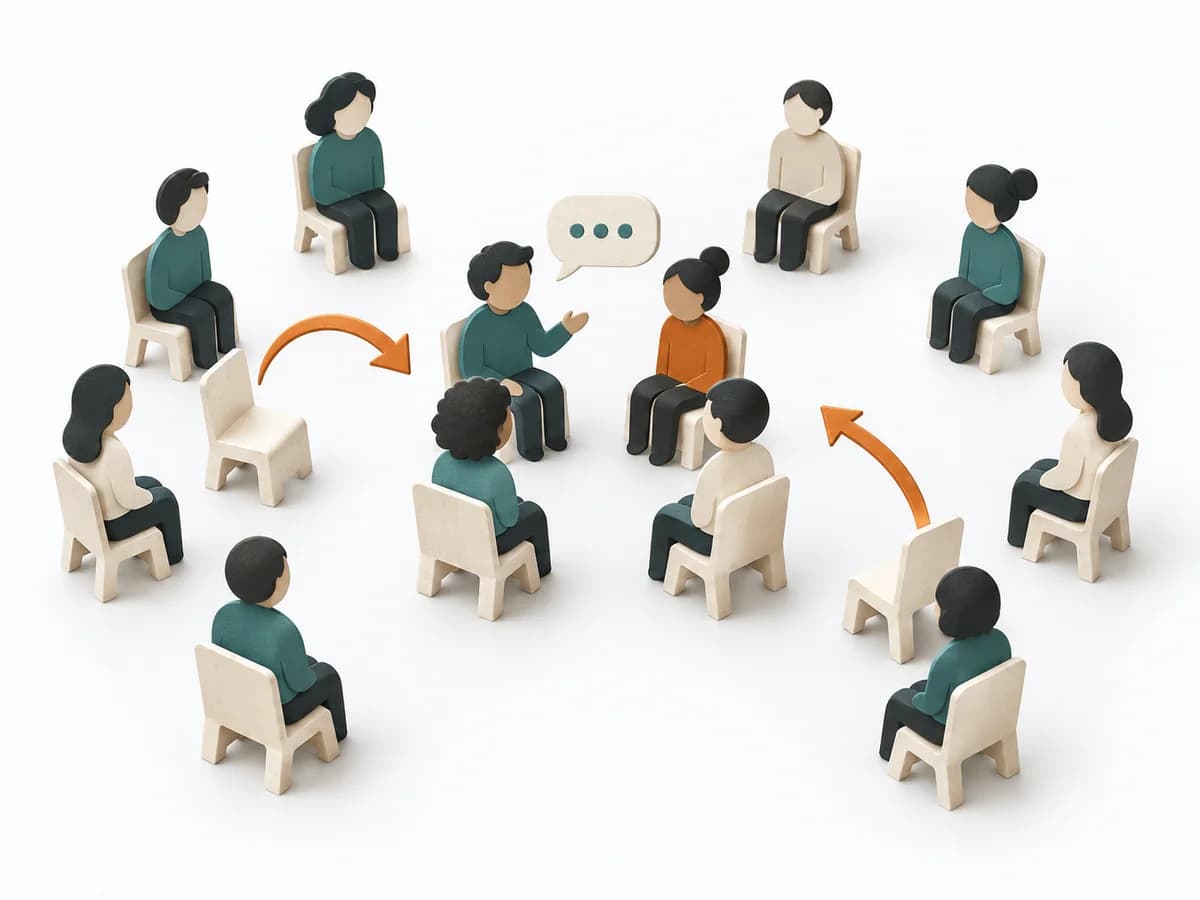 Facilitation Fishbowl Discussion |  Facilitation Power Interest Grid |  Facilitation Nominal Group Technique |  Facilitation Alignment Mapping |
|---|---|---|---|---|
Purposedifferent | When a controversial topic needs depth and discipline at the same time, Fishbowl Discussion makes the structure of the conversation transparent. The format keeps the core small enough for real dialogue and open enough for controlled turnover. | When many stakeholders compete for attention at once, the Power Interest Grid sorts them by influence and stake. It turns individual contributions into a visible selection. The result is captured as a Power Interest Grid and a stakeholder-specific strategy. | When loud voices could dominate a round, Nominal Group Technique protects individual thinking time from group effects. It collects ideas separately first and only then enables shared weighting. | When several people work toward one goal but hold different mental maps, Alignment Mapping makes the discrepancies visible. It arranges goals, assumptions, and priorities so shared direction becomes verifiable. |
Complexitydifferent | Medium | Low | Medium | Medium |
Timedifferent | 45-90 min | 30-60 min | 60-120 min | 1-2 h |
Participantsdifferent | 8-80 | 2-8 | 5-12 | 4-12 |
Formatsame | Workshop | Workshop | Workshop | Workshop |
Outputdifferent | Discussion Insights, Observed Tensions, Follow-up Questions | Power Interest Grid, Strategy per Stakeholder | Ranked Ideas, Clarified Options, Group Priority | Alignment Map, Open Issues, Decision Questions |
Tags1 shared | FacilitationDialogueLarge group | StakeholdersFacilitationAlignmentPlanning | FacilitationPrioritizationVotingInclusion | AlignmentStakeholdersStrategyFacilitation |