View methods side by side.
Choose up to four methods. Add them using the search and share the comparison by copying its link.
| Criterion | 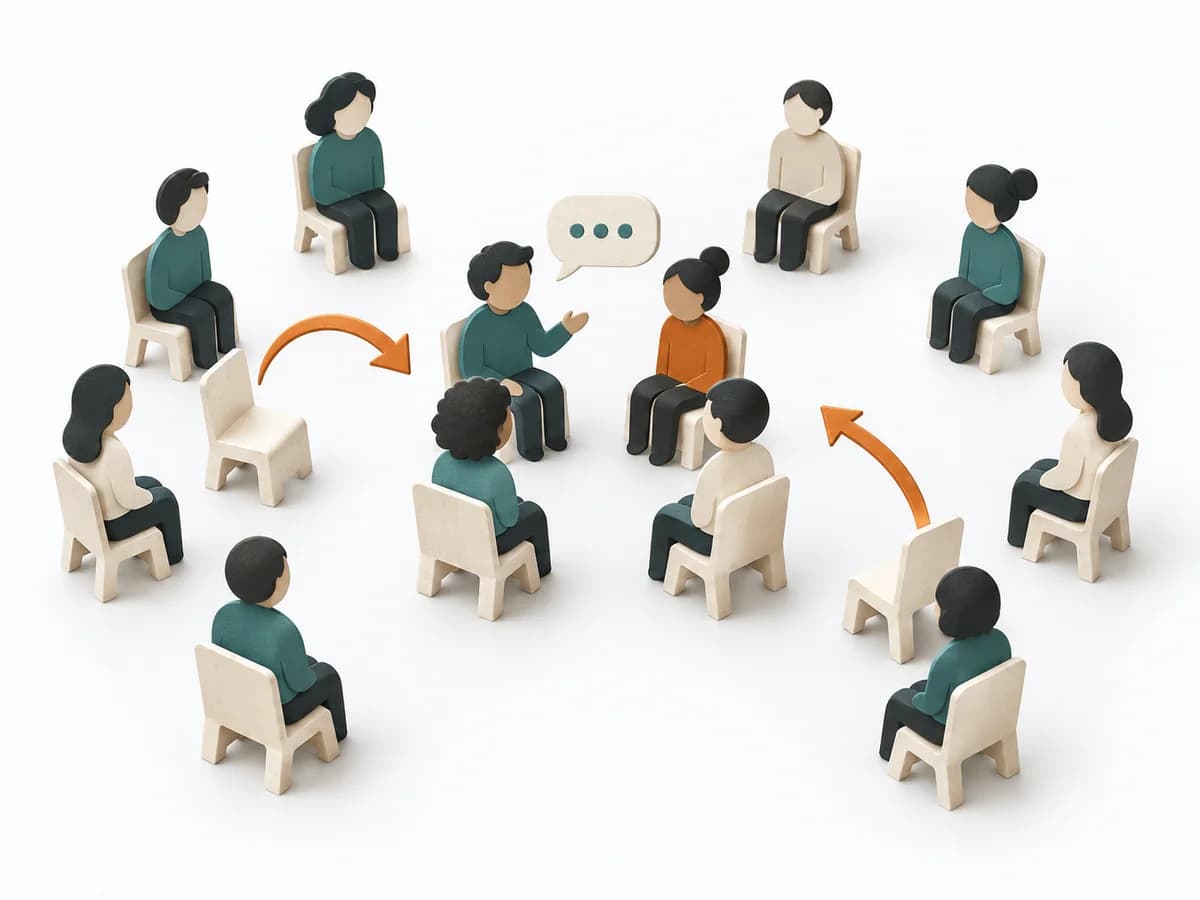 Facilitation Fishbowl Discussion | 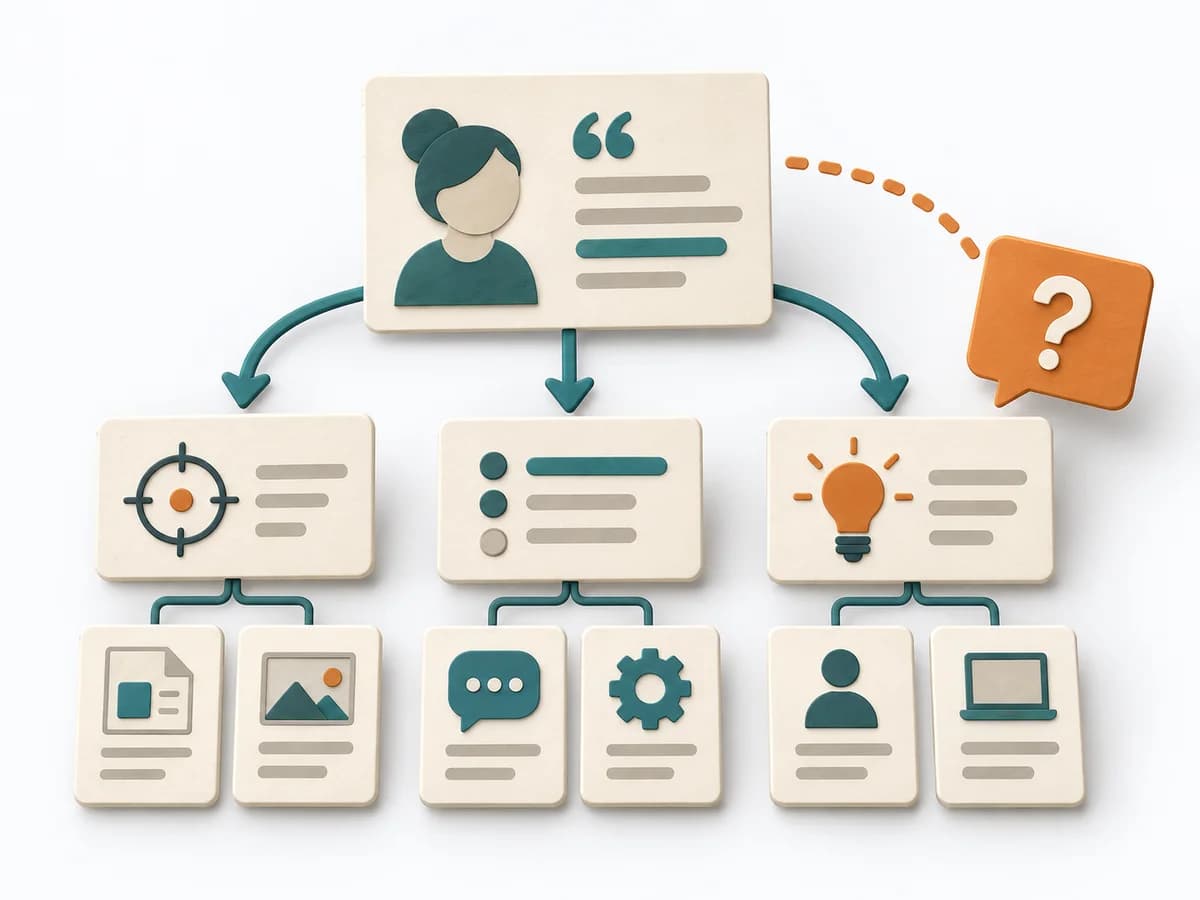 Agile Example Mapping | 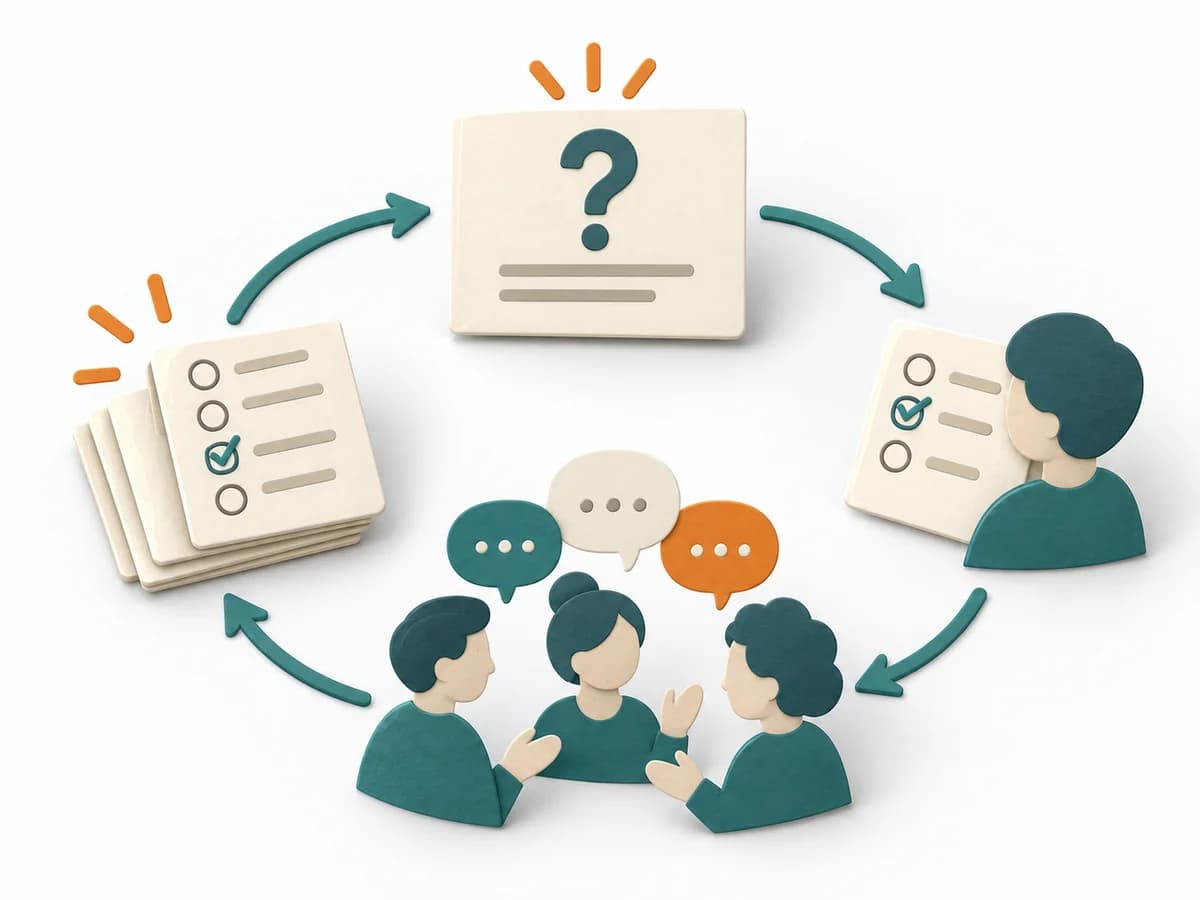 Knowledge Modeling Peer Instruction | 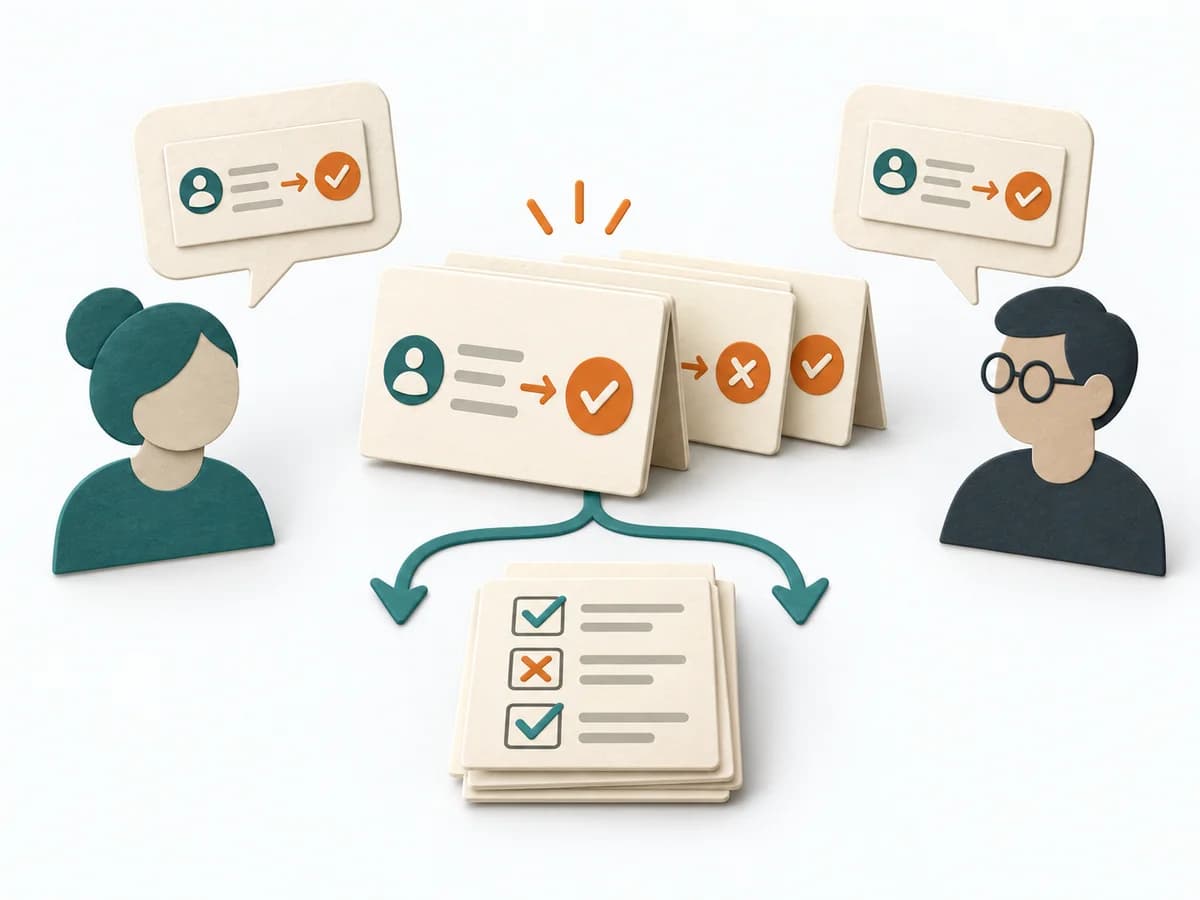 Agile Specification by Example |
|---|---|---|---|---|
Purposedifferent | When a controversial topic needs depth and discipline at the same time, Fishbowl Discussion makes the structure of the conversation transparent. The format keeps the core small enough for real dialogue and open enough for controlled turnover. | When a story carries business rules and exceptions, it brings clarity before implementation. It makes examples, open questions, and boundaries visible enough that the logic becomes jointly sound. | Peer Instruction uses group thinking to clarify difficult terms or concepts faster. The method combines individual reflection with social correction and shared precision. | When business rules need to become precise, it ties language, example, and test together. It sorts work by value, risk, and delivery ability. The result is captured as an Example Table and Acceptance Tests. |
Complexitydifferent | Medium | Low | Medium | Medium |
Timedifferent | 45-90 min | 30-60 min | 10-20 min je Frage | 60-90 min pro Feature |
Participantsdifferent | 8-80 | 3-7 | 6-50 | 3-6 |
Formatsame | Workshop | Workshop | Workshop | Workshop |
Outputdifferent | Discussion Insights, Observed Tensions, Follow-up Questions | Example Map, Acceptance Criteria, Open Questions | Concept Questions, Vote Results, Learning Notes | Example Table, Acceptance Tests |
Tagsno overlap | FacilitationDialogueLarge group | Behavior-Driven DevelopmentRequirementsExamplesRefinement | LearningDialogueFacilitation | AgileRequirementsExamplesBehavior-Driven Development |