View methods side by side.
Choose up to four methods. Add them using the search and share the comparison by copying its link.
| Criterion |  UX Research First-click Testing | 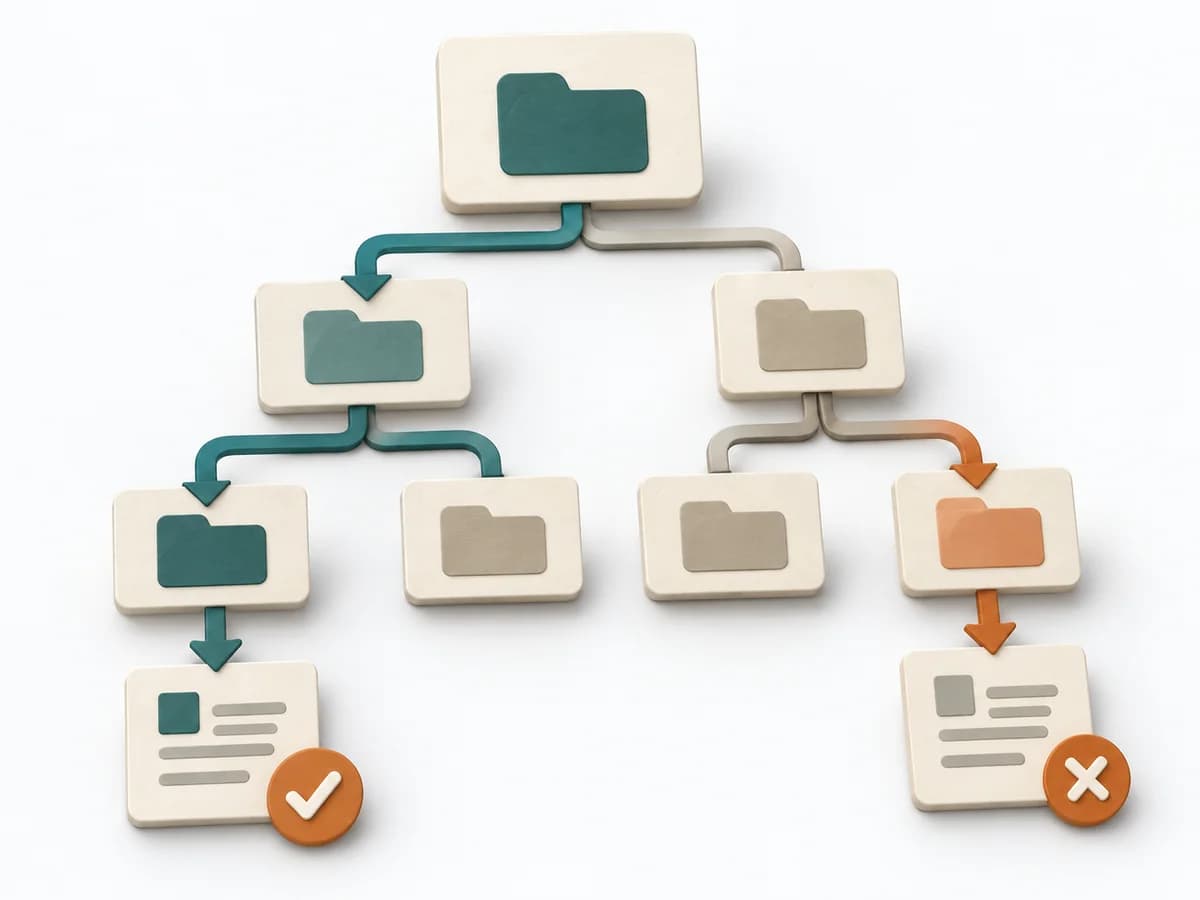 UX Research Tree Testing |  Operations Root Cause Analysis |  Operations Barrier Analysis |
|---|---|---|---|---|
Purposedifferent | When users immediately turn the wrong way on a screen or wireframe, first click testing checks initial orientation at high speed. The first click shows early whether expectation, labeling, and wayfinding fit together. | When a navigation exists but search paths still fail, tree testing checks findability without visual distraction. The method shows whether labels, levels, and paths really lead to the intended destination. | When a problem keeps recurring and the cause stays unclear, the method exposes the underlying mechanism. It separates symptom, guess, and robust explanation from one another. | For a risk that can only be managed through multiple layers of protection, the method examines the effectiveness of each barrier. It shows where safeguards are missing, too weak, or fail under real conditions. |
Complexitydifferent | Low | Medium | Medium | Medium |
Timedifferent | 1-2 Tage | 1-2 Tage | 1-4 h | 2-4 h |
Participantsdifferent | 10-30 | Based on research question | 3-8 | 2-6 |
Formatdifferent | Async | Async | Workshop + async | Workshop + async |
Outputdifferent | Click Heatmap, Success Rate, Design Recommendations | Findability Metrics, Path Analysis, Revised IA | Problem Statement, Cause Hypotheses, Confirmed Causes, Action Plan | Barrier Inventory, Failure Analysis per Barrier, Action Backlog |
Tagsno overlap | UXNavigationFindabilityValidation | Information architectureNavigationFindability | Root causeProblem solvingQualityIncident | Root causeSafetyIncident |