View methods side by side.
Choose up to four methods. Add them using the search and share the comparison by copying its link.
| Criterion |  Knowledge Modeling Feynman Technique | 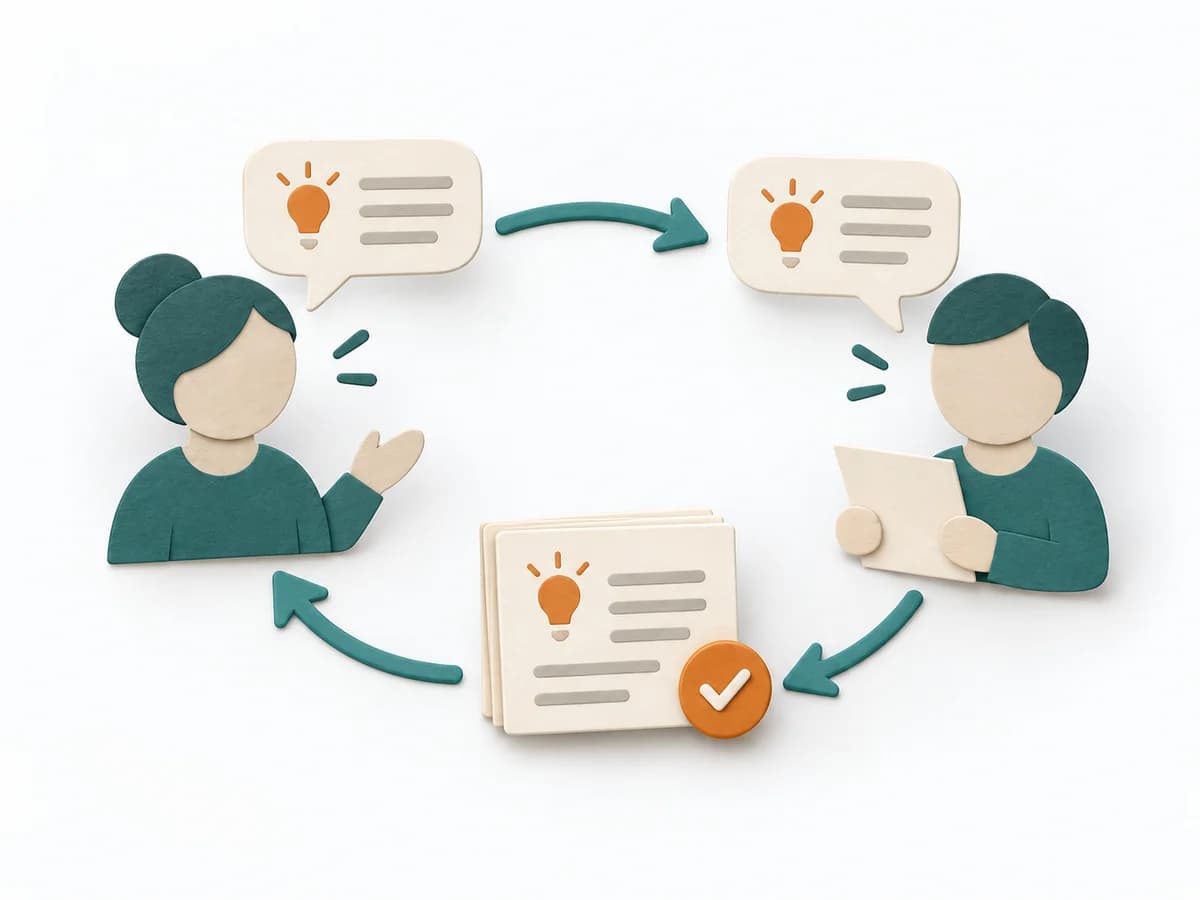 Knowledge Modeling Teach-back | 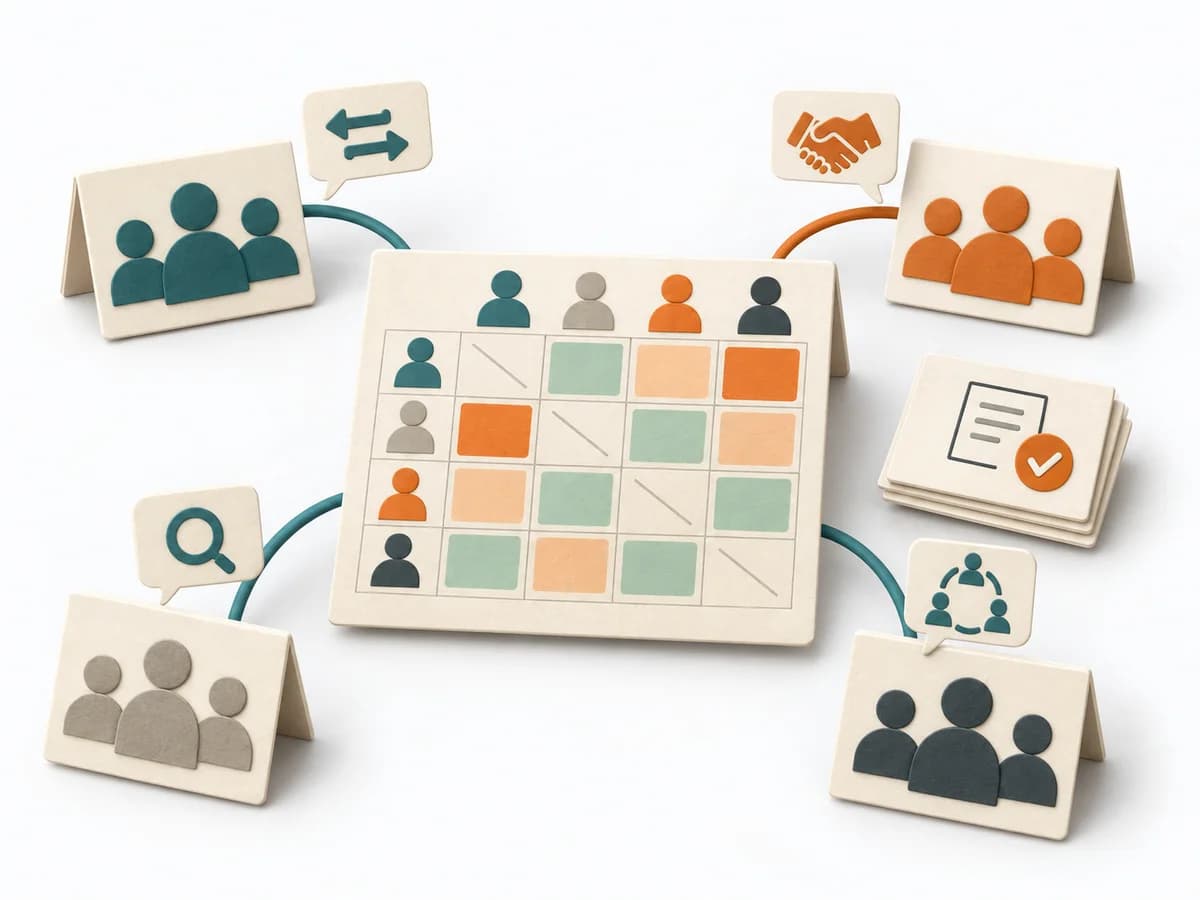 Team Design Team Topologies Interaction Modes | 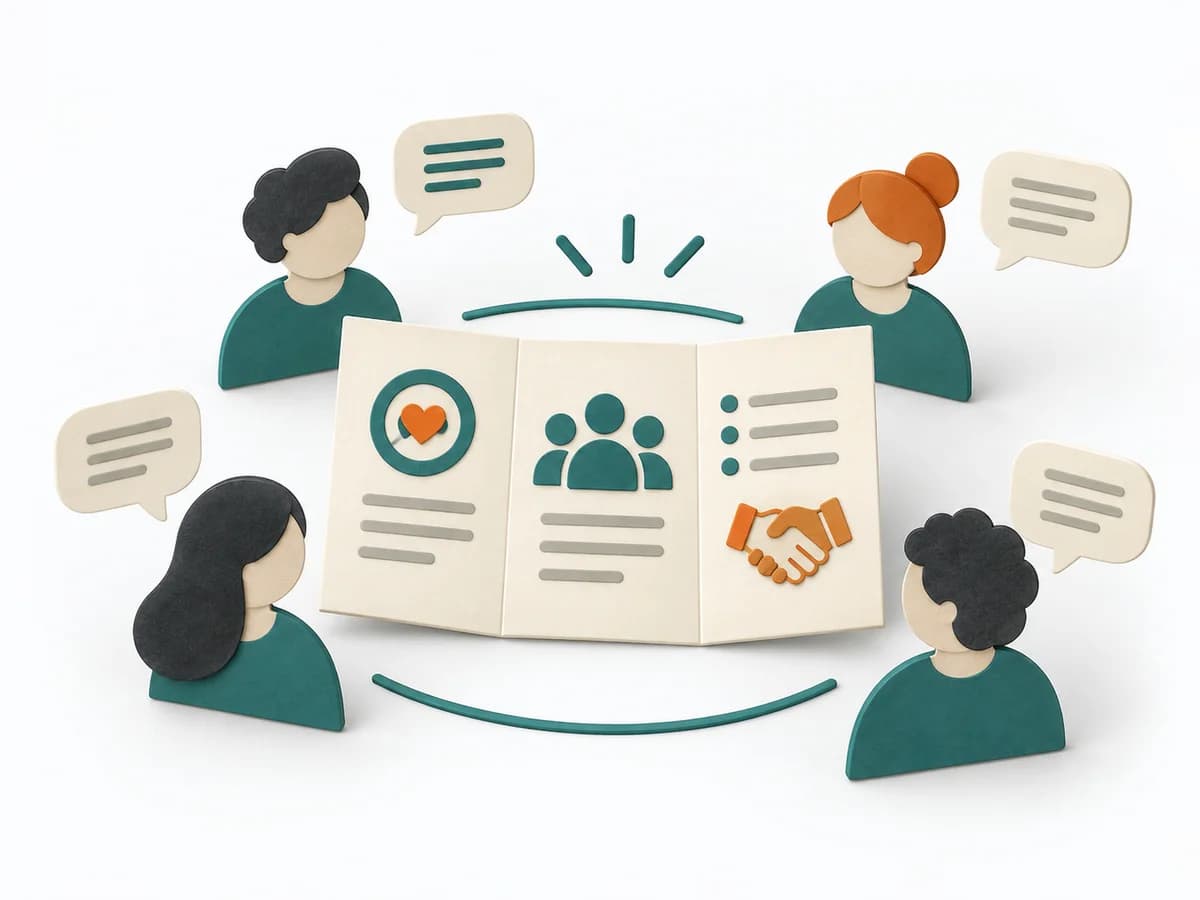 Facilitation Team Charter |
|---|---|---|---|---|
Purposedifferent | The Feynman Technique checks understanding by explaining a topic so that it stays easy for others to understand. It makes knowledge gaps visible before they become costly in everyday work. | Teach-back checks whether an explanation actually got through to the other person. The method makes misunderstandings visible early and strengthens shared understanding in advisory and learning situations. | When several teams collaborate repeatedly, it describes the right interaction mode for each interface between them. It clarifies responsibility, interaction, and load between teams. The result is captured as an interaction heat map and pairwise agreements. | When a team is starting fresh or working past each other, Team Charter clarifies the shared working basis. It visibly sets out how collaboration, decision paths, and mutual conduct should work day to day. |
Complexitydifferent | Low | Low | Medium | Medium |
Timedifferent | 20-60 min | 5-20 min | Half day | 2-4 h |
Participantsdifferent | 1 | 2-8 | Team-Leads plus Architecture | 3-12 |
Formatdifferent | Async | Workshop + async | Workshop | Workshop |
Outputdifferent | Plain-language Explanation, Knowledge Gaps, Study Notes | Understanding Check, Clarification Notes, Learning Gaps | Interaction Heat Map, Agreements per Pair | Team Charter, Working Norms, Role Notes |
Tagsno overlap | LearningKnowledgeUnderstanding | LearningUnderstandingCommunication | TeamAlignmentCollaborationOrganization | TeamAlignmentCollaboration |