View methods side by side.
Choose up to four methods. Add them using the search and share the comparison by copying its link.
| Criterion |  Knowledge Modeling Feynman Technique | 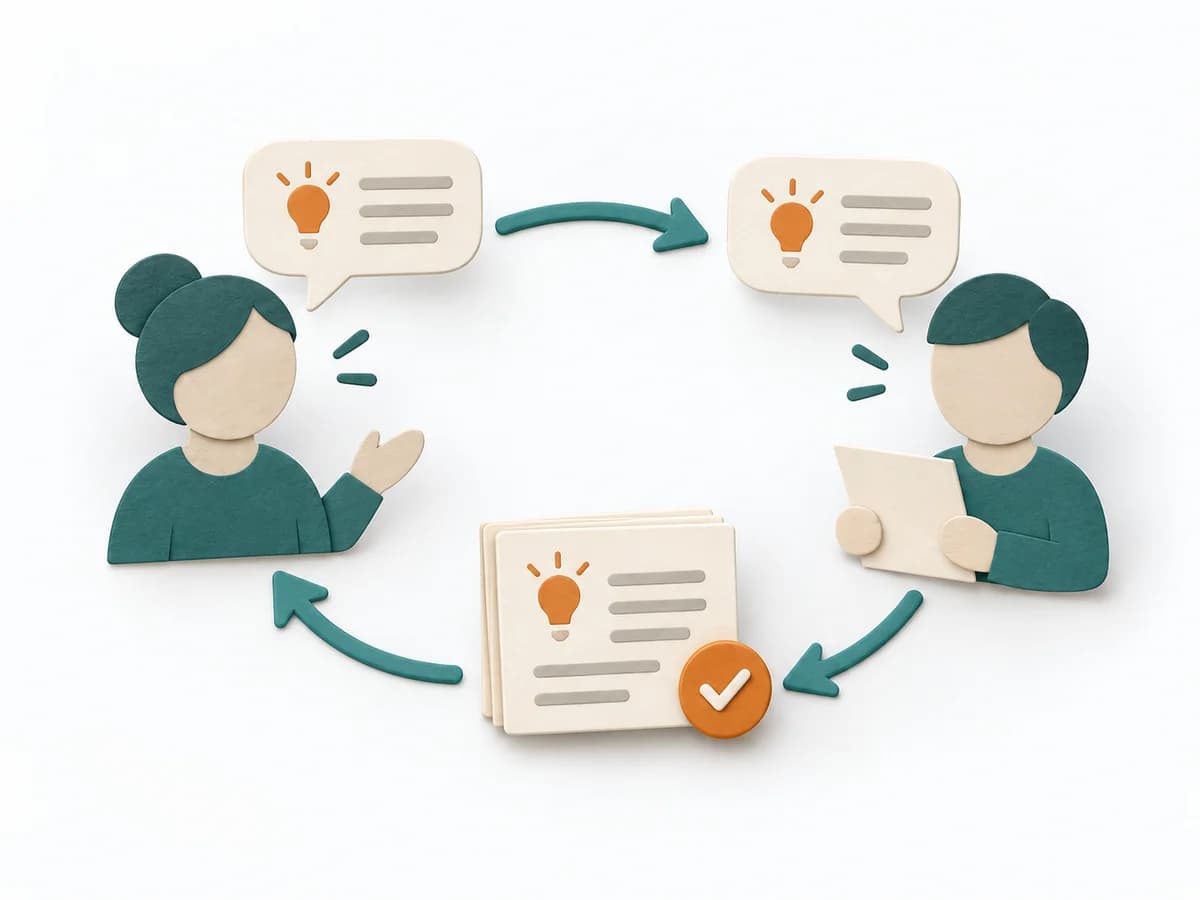 Knowledge Modeling Teach-back |  Growth A/B Testing | 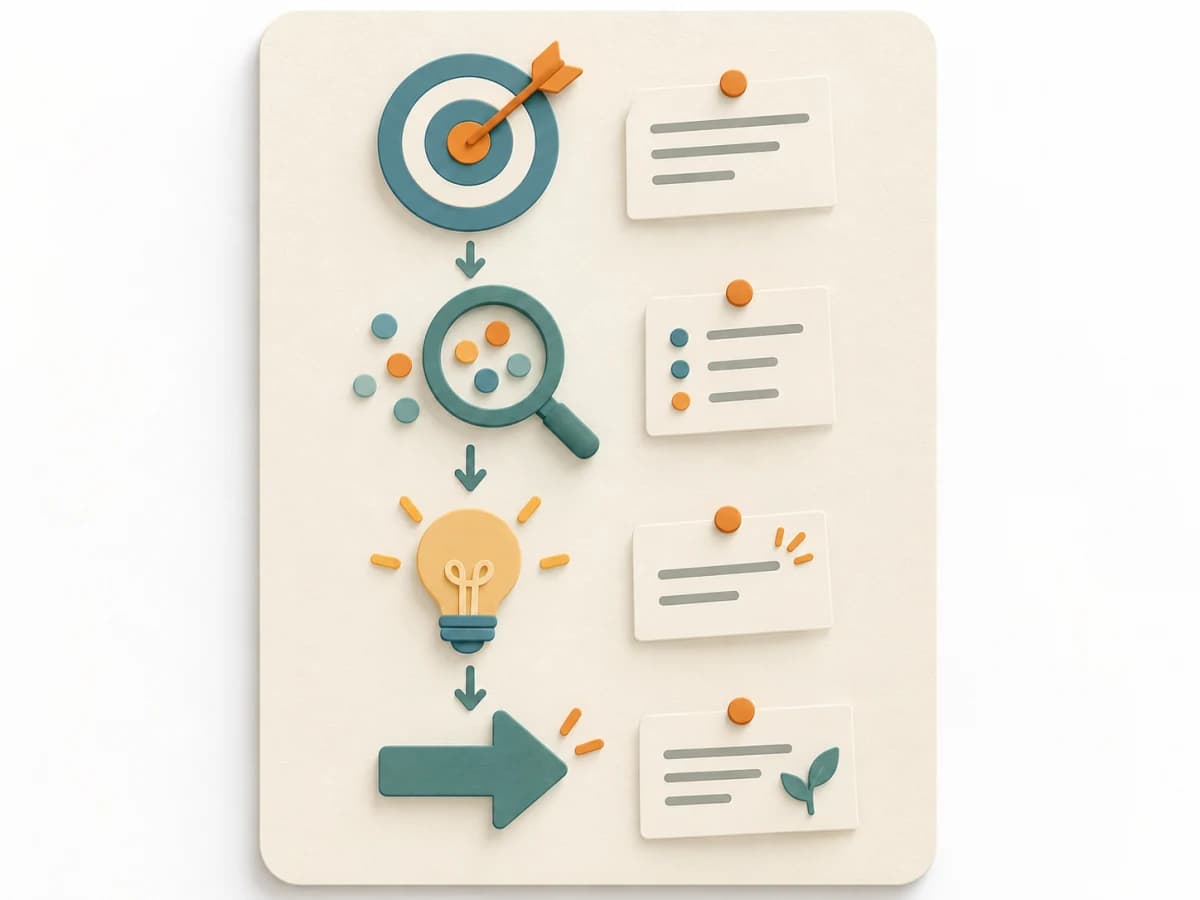 Product Discovery Learning Card |
|---|---|---|---|---|
Purposedifferent | The Feynman Technique checks understanding by explaining a topic so that it stays easy for others to understand. It makes knowledge gaps visible before they become costly in everyday work. | Teach-back checks whether an explanation actually got through to the other person. The method makes misunderstandings visible early and strengthens shared understanding in advisory and learning situations. | When two variants compete, discussions quickly decide by taste rather than effect. A/B Testing checks behavior under controlled conditions and separates real improvement from chance or expectation effects. | The Learning Card connects traceable test results to a reasoned next action while keeping the limits of the insight visible. |
Complexitydifferent | Low | Low | High | Low |
Timedifferent | 20-60 min | 5-20 min | 1-4 Wochen | 25-40 min |
Participantsdifferent | 1 | 2-8 | 1-6 | 1-5 |
Formatdifferent | Async | Workshop + async | Async | Workshop + async |
Outputdifferent | Plain-language Explanation, Knowledge Gaps, Study Notes | Understanding Check, Clarification Notes, Learning Gaps | Experiment results, Decision log, Learning summary | Learning Card with evidence and next action |
Tagsno overlap | LearningKnowledgeUnderstanding | LearningUnderstandingCommunication | ExperimentsGrowthAnalyticsValidation | ExperimentsValidationDiscoveryLearning |