View methods side by side.
Choose up to four methods. Add them using the search and share the comparison by copying its link.
| Criterion |  Knowledge Modeling Feynman Technique | 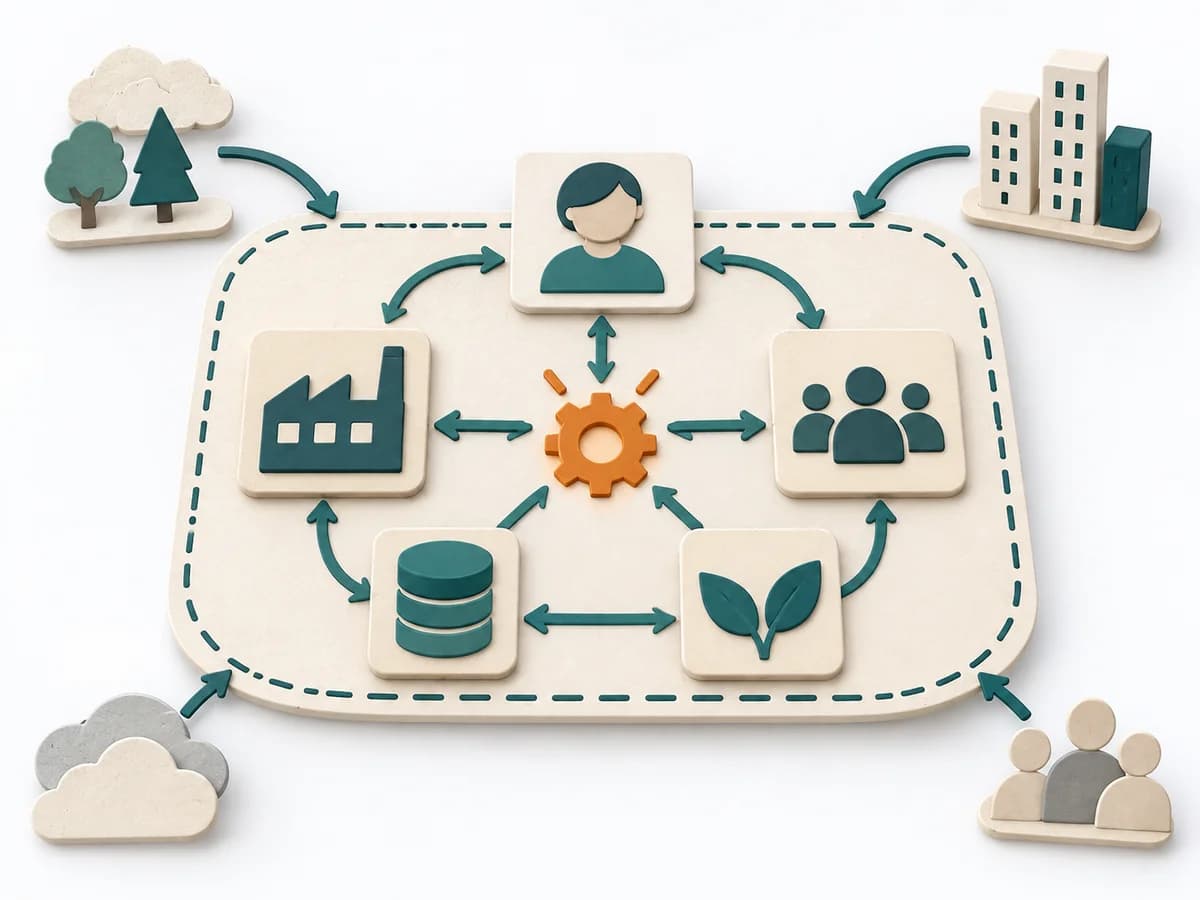 Systems Thinking Systems Mapping |  Domain Modeling Context Map | 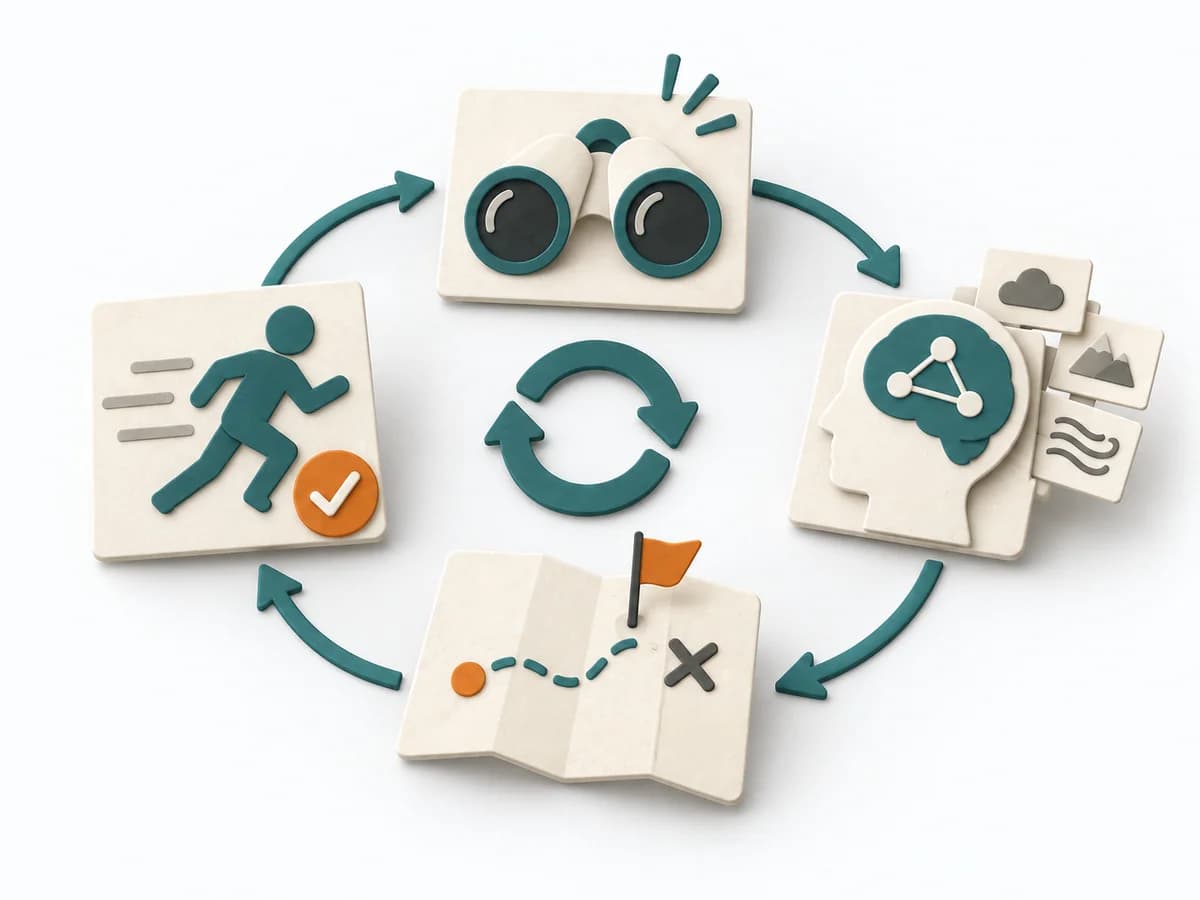 Decision Making OODA Loop |
|---|---|---|---|---|
Purposedifferent | The Feynman Technique checks understanding by explaining a topic so that it stays easy for others to understand. It makes knowledge gaps visible before they become costly in everyday work. | Systems Mapping arranges elements, relationships, and boundaries so a complex field becomes legible at a glance. The overview stabilizes the overall picture before detail work or steering begins. | When several contexts need to talk to each other, it makes their relationships and dependencies legible. It helps sort integration pressure and responsibilities across system boundaries. | In dynamic situations, decisions become outdated faster than they can be prepared. The OODA Loop holds observing, orienting, deciding, and acting together as a recurring rhythm so reaction does not slide into inertia. |
Complexitydifferent | Low | Medium | Medium | Medium |
Timedifferent | 20-60 min | 1-3 h | 1-3 h | 15-60 min je Zyklus |
Participantsdifferent | 1 | 3-12 | 2-8 | 1-8 |
Formatdifferent | Async | Workshop + async | Workshop + async | Workshop + async |
Outputdifferent | Plain-language Explanation, Knowledge Gaps, Study Notes | System Map, Dependencies, Leverage Points | Context Map, Integration Patterns, Boundary Notes | Situation Assessment, Decision Loop, Action Updates |
Tagsno overlap | LearningKnowledgeUnderstanding | Systems thinkingMappingBoundariesChange | Domain-Driven DesignBoundariesStrategy | DecisionChangeLearningStrategy |