View methods side by side.
Choose up to four methods. Add them using the search and share the comparison by copying its link.
| Criterion |  Knowledge Modeling Feynman Technique |  Facilitation Power Interest Grid | 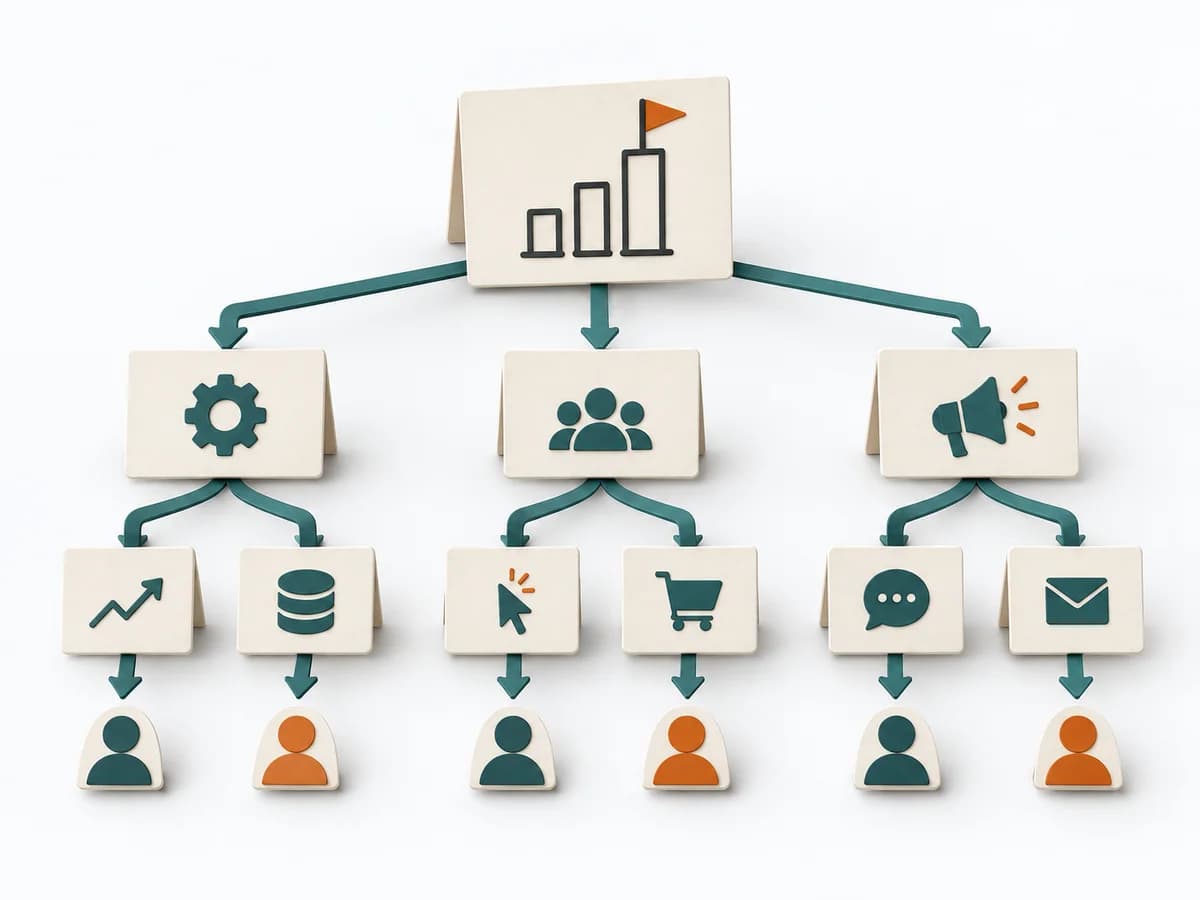 Product Strategy KPI Tree |
|---|---|---|---|
Purposedifferent | The Feynman Technique checks understanding by explaining a topic so that it stays easy for others to understand. It makes knowledge gaps visible before they become costly in everyday work. | When many stakeholders compete for attention at once, the Power Interest Grid sorts them by influence and stake. It turns individual contributions into a visible selection. The result is captured as a Power Interest Grid and a stakeholder-specific strategy. | When metrics across the organization drift apart, it arranges drivers and effects under one shared logic. It connects customer value, product logic, and decision priorities. The result is captured as a KPI tree and owner list. |
Complexitydifferent | Low | Low | Medium |
Timedifferent | 20-60 min | 30-60 min | 90-180 min initial, dann laufend |
Participantsdifferent | 1 | 2-8 | 3-8 |
Formatdifferent | Async | Workshop | Workshop + async |
Outputdifferent | Plain-language Explanation, Knowledge Gaps, Study Notes | Power Interest Grid, Strategy per Stakeholder | KPI Tree, Owner List |
Tagsno overlap | LearningKnowledgeUnderstanding | StakeholdersFacilitationAlignmentPlanning | MetricsStrategyAlignmentMeasurement |
Often compared together
Methods with strong topical overlap with the current selection, not yet in the comparison.