View methods side by side.
Choose up to four methods. Add them using the search and share the comparison by copying its link.
| Criterion |  Knowledge Modeling Feynman Technique |  Knowledge Modeling PARA Method | 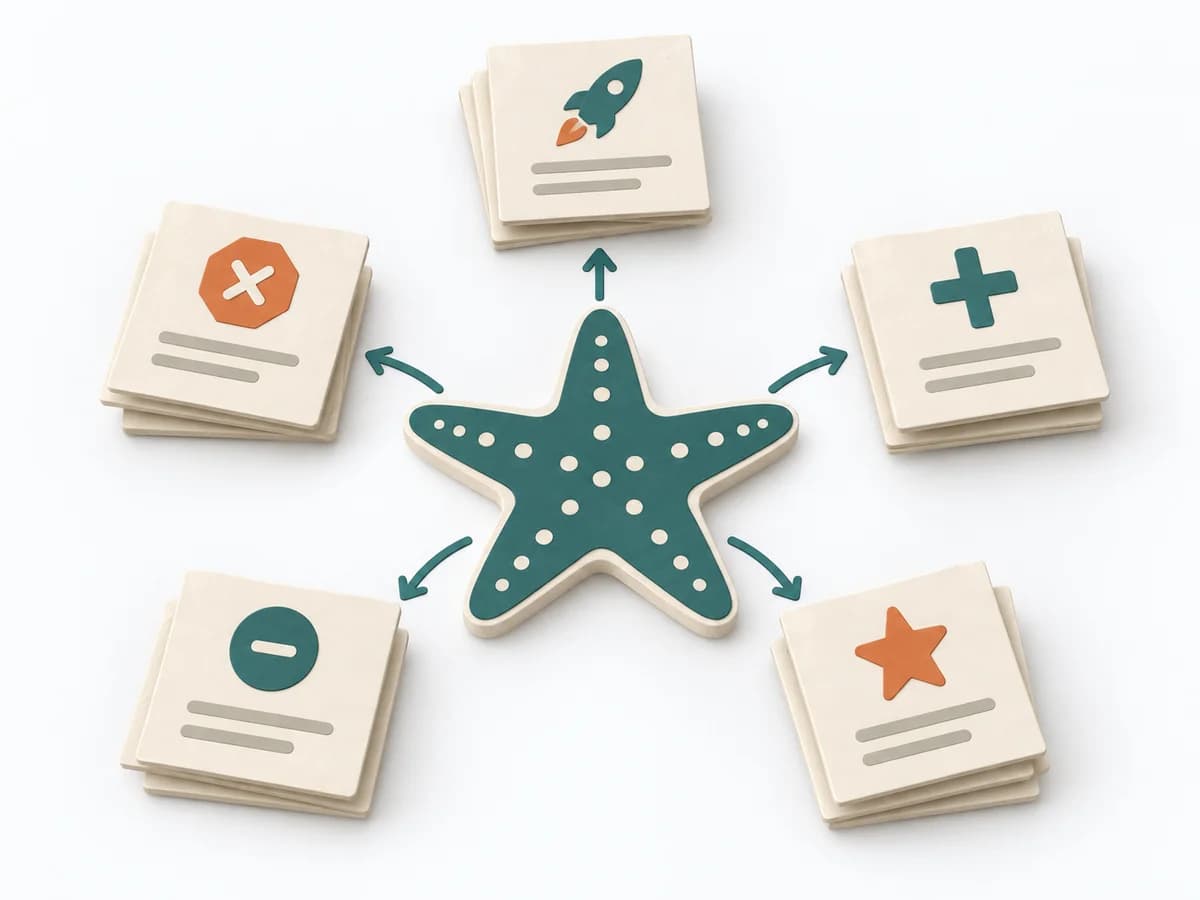 Agile Starfish Retrospective | 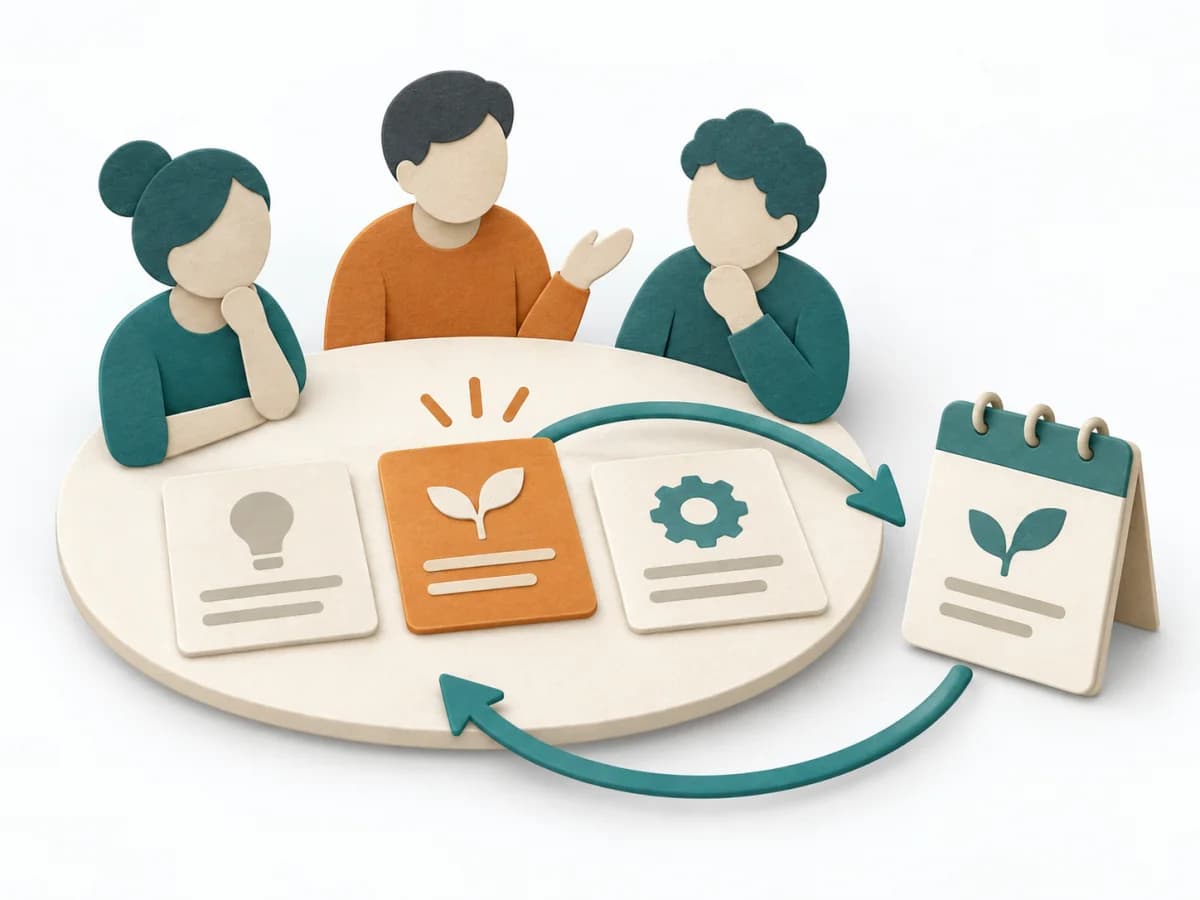 Agile Sprint Retrospective |
|---|---|---|---|---|
Purposedifferent | The Feynman Technique checks understanding by explaining a topic so that it stays easy for others to understand. It makes knowledge gaps visible before they become costly in everyday work. | The PARA Method organizes knowledge into Projects, Areas, Resources, and Archives. It creates order when digital notes, files, and tasks no longer cleanly fit current work. | When improvement options need to be sorted more finely than just start and stop, it brings observations into clear kinds of action. This makes visible what should be done more, less, newly, or continued. | When a sprint is over and friction shouldn't simply be carried forward, it opens the view onto collaboration and patterns. It creates space to see causes and changes together. |
Complexitydifferent | Low | Medium | Low | Low |
Timedifferent | 20-60 min | 1-3 h Setup, laufend | 45-90 min | Up to 3 hours for a one-month Sprint; shorter Sprints are usually shorter |
Participantsdifferent | 1 | 1 | 4-12 | Scrum Team |
Formatdifferent | Async | Async | Workshop | Workshop |
Outputdifferent | Plain-language Explanation, Knowledge Gaps, Study Notes | PARA Structure, Project Notes, Knowledge Archive | Starfish Board, Practice Changes, Experiments | Improvement actions, Team agreements |
Tagsno overlap | LearningKnowledgeUnderstanding | KnowledgeProductivityOrganization | RetrospectiveImprovementExperimentsTeam | RetrospectiveImprovementLearning |