View methods side by side.
Choose up to four methods. Add them using the search and share the comparison by copying its link.
| Criterion |  Knowledge Modeling Feynman Technique | 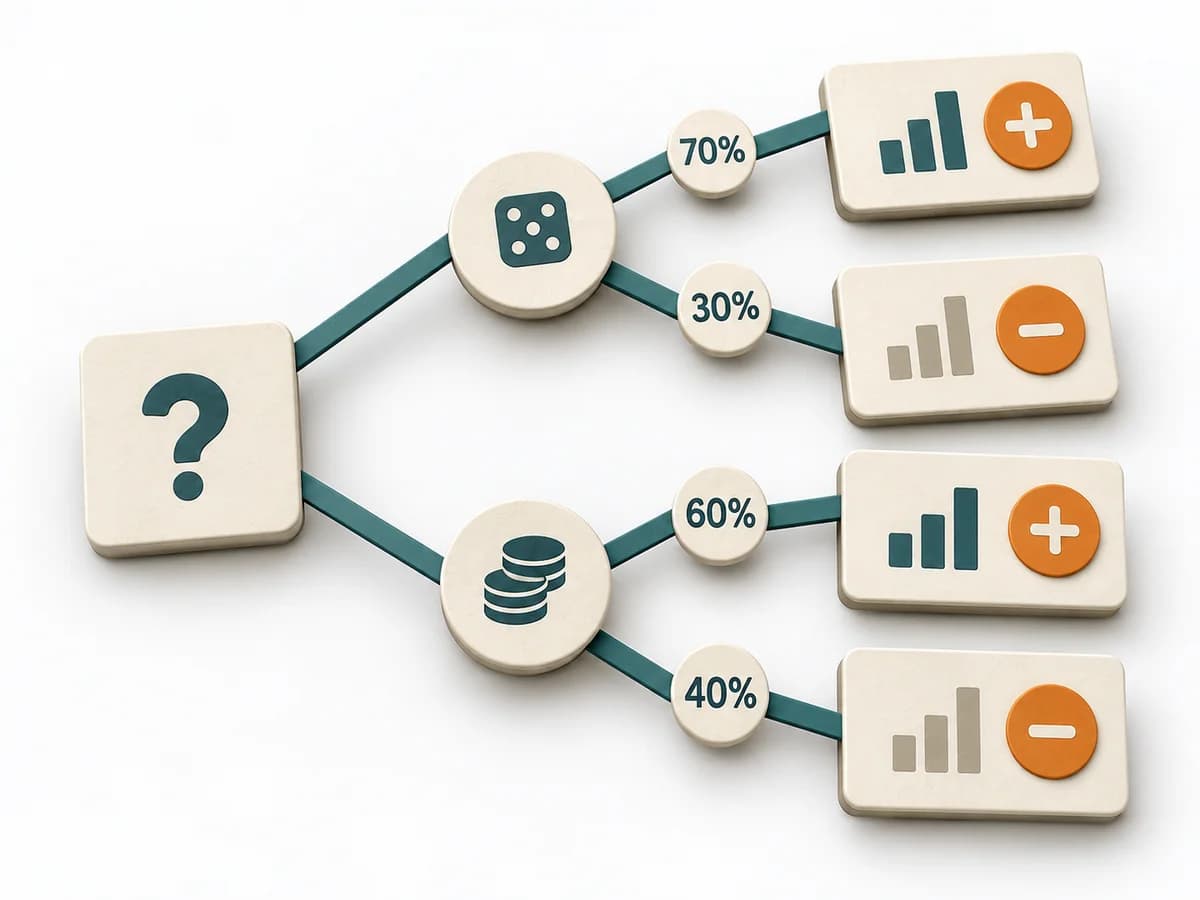 Decision Making Decision Tree | 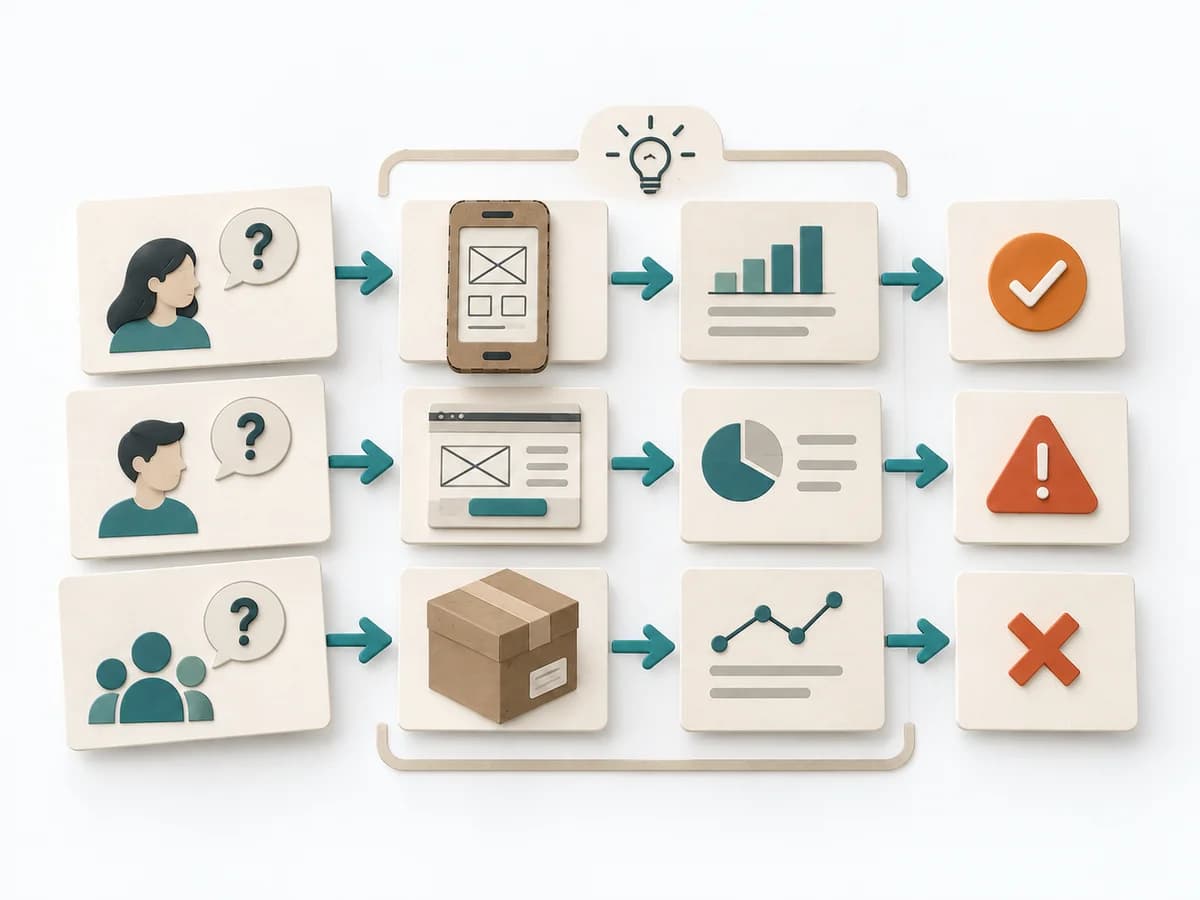 Product Discovery MVP Test Matrix |  Product Discovery Experiment Canvas |
|---|---|---|---|---|
Purposedifferent | The Feynman Technique checks understanding by explaining a topic so that it stays easy for others to understand. It makes knowledge gaps visible before they become costly in everyday work. | For decisions with follow-on paths and dependencies, a linear comparison is often not enough. A Decision Tree shows how options branch under conditions and which consequences hang on each branch. | When several minimal variants compete to answer the same question, it makes comparing and choosing between them cleaner. It separates problem, assumption, solution, and evidence. The result is captured as a Test Matrix and a Test Plan. | When experiments become unreadable after the fact, it arranges hypothesis, signal, and learning goal on a single canvas. It separates problem, assumption, solution, and evidence. The result is captured as a Completed Experiment Canvas and a Success Metric. |
Complexitydifferent | Low | Medium | Medium | Low |
Timedifferent | 20-60 min | 30-90 min | 45-75 min | 30-60 min |
Participantsdifferent | 1 | 1-6 | 2-8 | 1-5 |
Formatdifferent | Async | Workshop + async | Workshop | Workshop + async |
Outputdifferent | Plain-language Explanation, Knowledge Gaps, Study Notes | Decision Tree, Option Map, Assumption List | Test Matrix, Test Plan | Completed Experiment Canvas, Success Metric |
Tagsno overlap | LearningKnowledgeUnderstanding | DecisionTreeOptions | ExperimentsValidationDiscoveryOptions | ExperimentsValidationDiscoveryHypothesis |