View methods side by side.
Choose up to four methods. Add them using the search and share the comparison by copying its link.
| Criterion |  Operations Fault Tree Analysis | 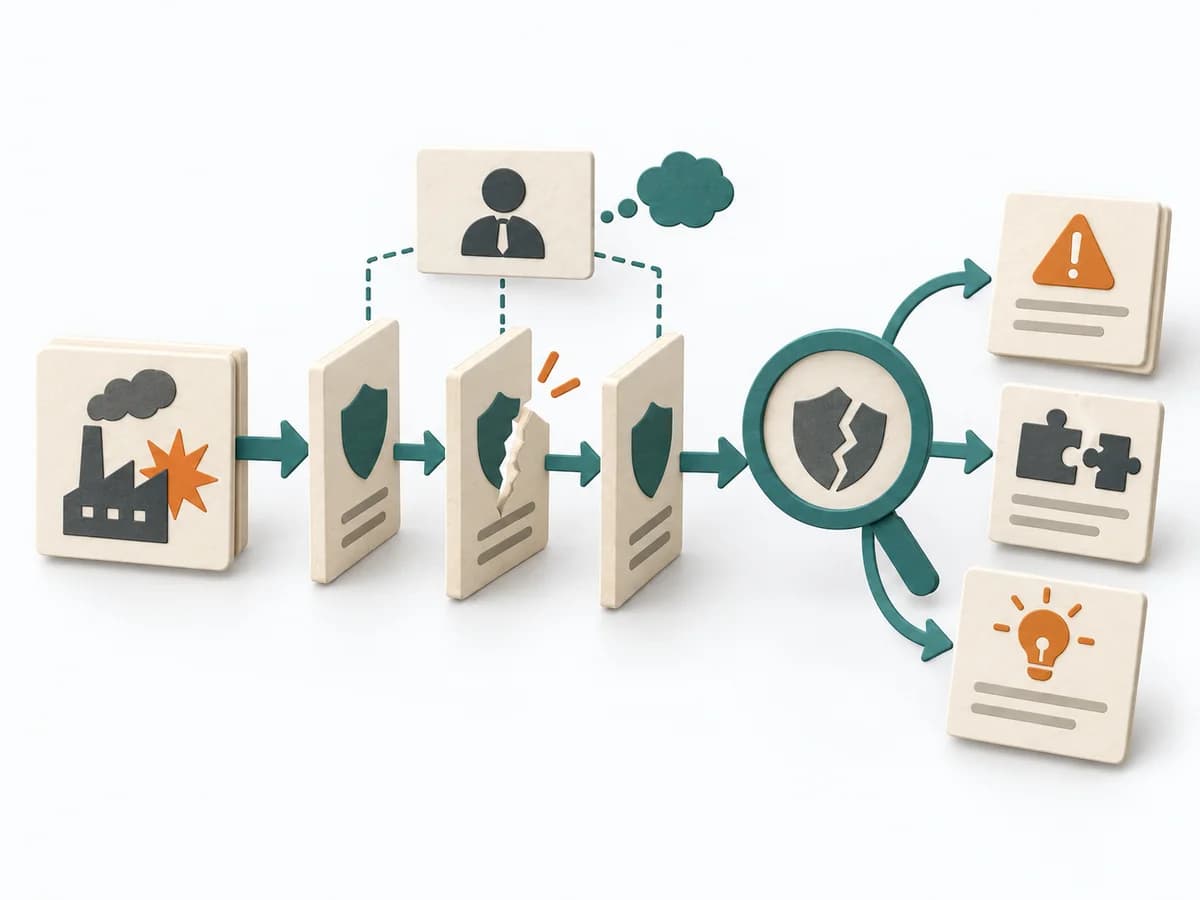 Operations MORT Analysis |  Innovation Reverse Brainstorming | 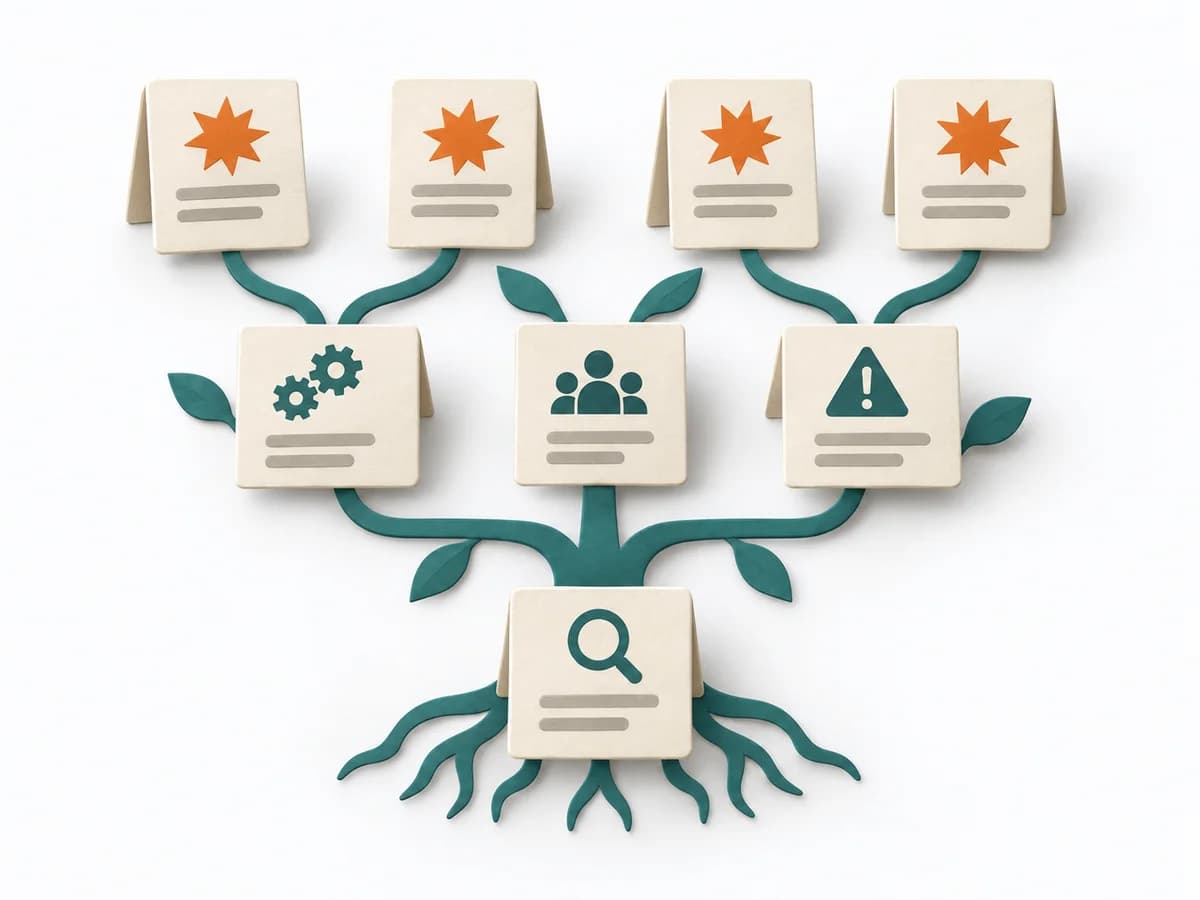 Operations Family Tree Analysis |
|---|---|---|---|---|
Purposedifferent | For a critical top event with several possible triggers, the method logically models failure paths. It makes visible which combinations of conditions can lead to damage. | For a safety-relevant event or a system with high protection requirements, the method examines where controls failed. It exposes both technical and organizational gaps. | For persistent errors or blockages, the method shifts the view to the opposite of the desired effect. It exposes the mechanics of failure and makes hidden causes easier to grasp. This makes improvement more concrete and the problem clearer. | For a series of incidents with a similar pattern, the method arranges individual events as branches of a common origin. It makes visible which conditions keep recurring. |
Complexitydifferent | High | High | Low | Medium |
Timedifferent | 2-6 h | Mehrere Tage bis Wochen | 30-60 min | 2-4 h |
Participantsdifferent | 3-8 | 2-6 | 3-12 | 2-6 |
Formatdifferent | Workshop + async | Workshop + async | Workshop | Workshop + async |
Outputdifferent | Fault Tree, Critical Paths, Cause Hypotheses, Control Actions | MORT Worksheets, Findings per Branch, Corrective Actions, Systemic Recommendations | Reverse Ideas, Risk Themes, Solution Ideas | Family Tree Diagram, Pattern Notes, Systemic Measures |
Tagsno overlap | RiskRoot causeSafety | Root causeSafetySystemicIncident | BrainstormingIdeationCreativityRisk | Root causePatternsIncidentSystemic |