View methods side by side.
Choose up to four methods. Add them using the search and share the comparison by copying its link.
Selected:Fault Tree AnalysisExample MappingSpecification by ExampleFailure Mode and Effects Analysis
| Criterion | 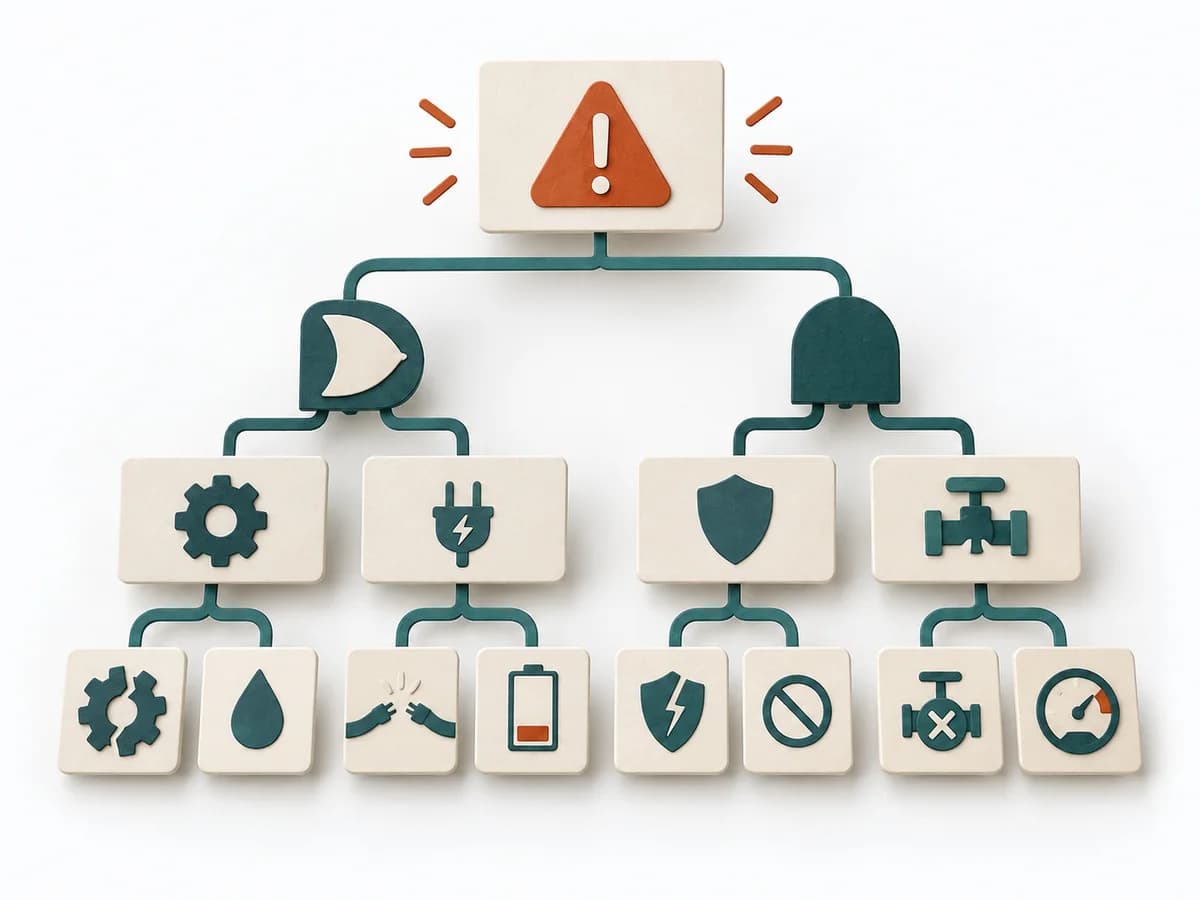 Operations Fault Tree Analysis |  Agile Example Mapping | 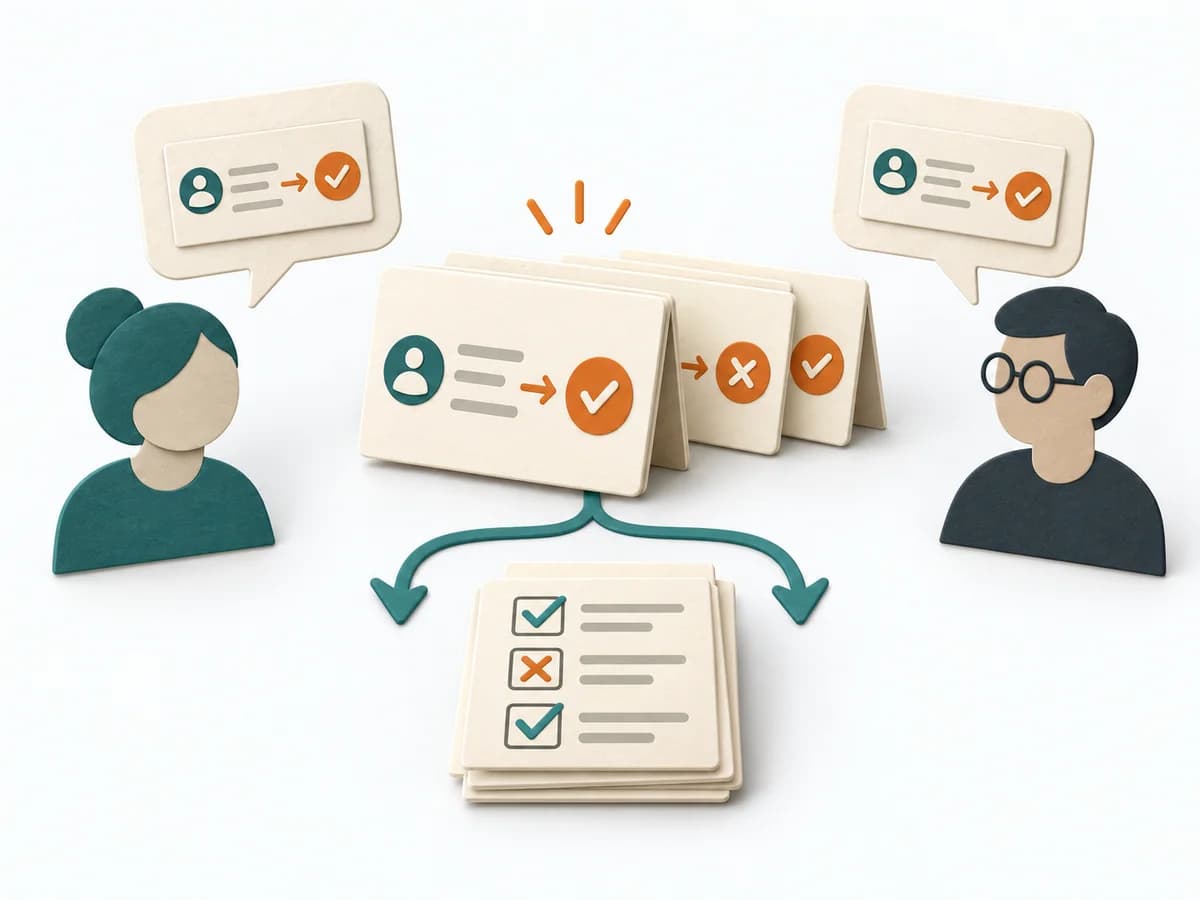 Agile Specification by Example | 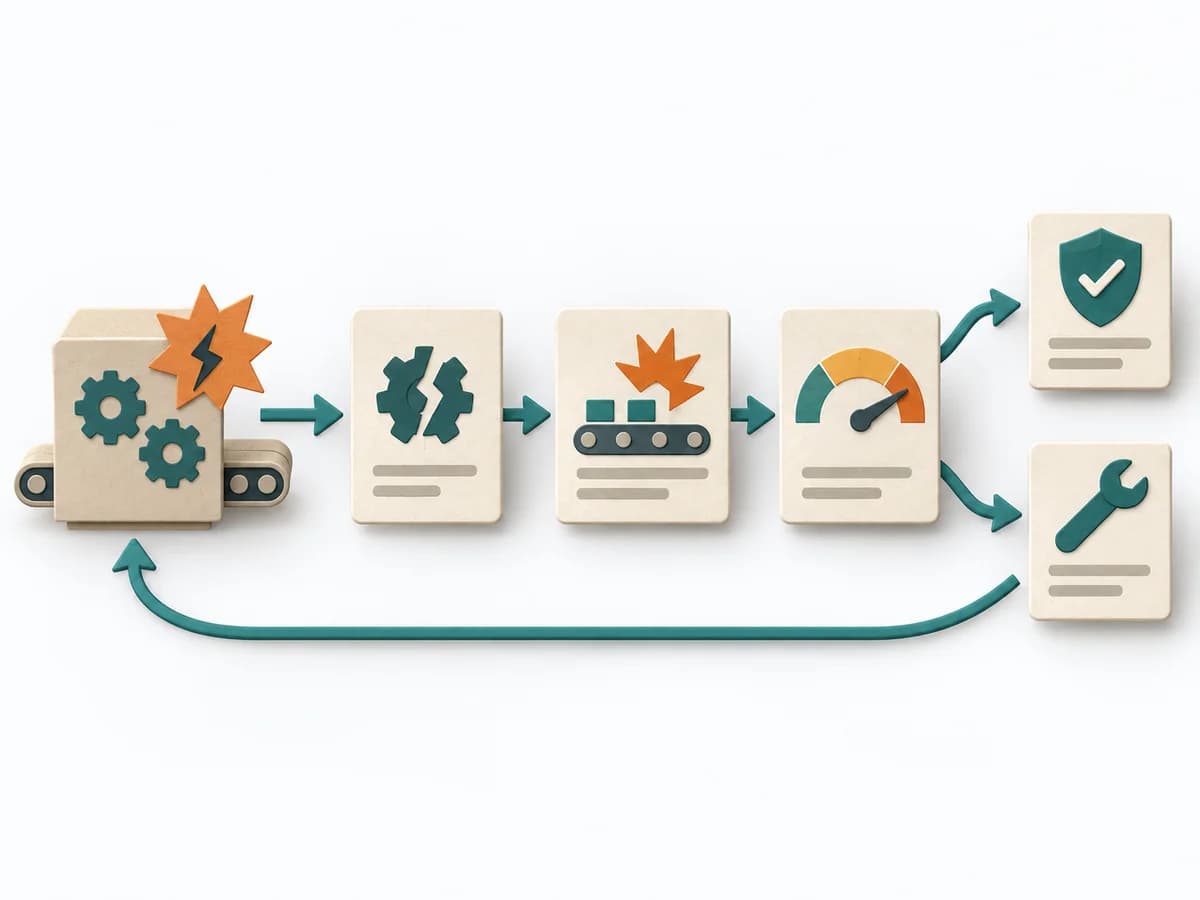 Operations Failure Mode and Effects Analysis |
|---|---|---|---|---|
Purposedifferent | For a critical top event with several possible triggers, the method logically models failure paths. It makes visible which combinations of conditions can lead to damage. | When a story carries business rules and exceptions, it brings clarity before implementation. It makes examples, open questions, and boundaries visible enough that the logic becomes jointly sound. | When business rules need to become precise, it ties language, example, and test together. It sorts work by value, risk, and delivery ability. The result is captured as an Example Table and Acceptance Tests. | For a process, product, or service with noticeable failure risks, the method assesses possible failure modes in advance. It directs attention to combinations of occurrence, effect, and detectability. |
Complexitydifferent | High | Low | Medium | High |
Timedifferent | 2-6 h | 30-60 min | 60-90 min pro Feature | 2-6 h |
Participantsdifferent | 3-8 | 3-7 | 3-6 | 3-10 |
Formatdifferent | Workshop + async | Workshop | Workshop | Workshop |
Outputdifferent | Fault Tree, Critical Paths, Cause Hypotheses, Control Actions | Example Map, Acceptance Criteria, Open Questions | Example Table, Acceptance Tests | FMEA Table, Risk Priority, Mitigation Actions |
Tagsno overlap | RiskRoot causeSafety | Behavior-Driven DevelopmentRequirementsExamplesRefinement | AgileRequirementsExamplesBehavior-Driven Development | RiskQualityOperationsRoot cause |