View methods side by side.
Choose up to four methods. Add them using the search and share the comparison by copying its link.
| Criterion | 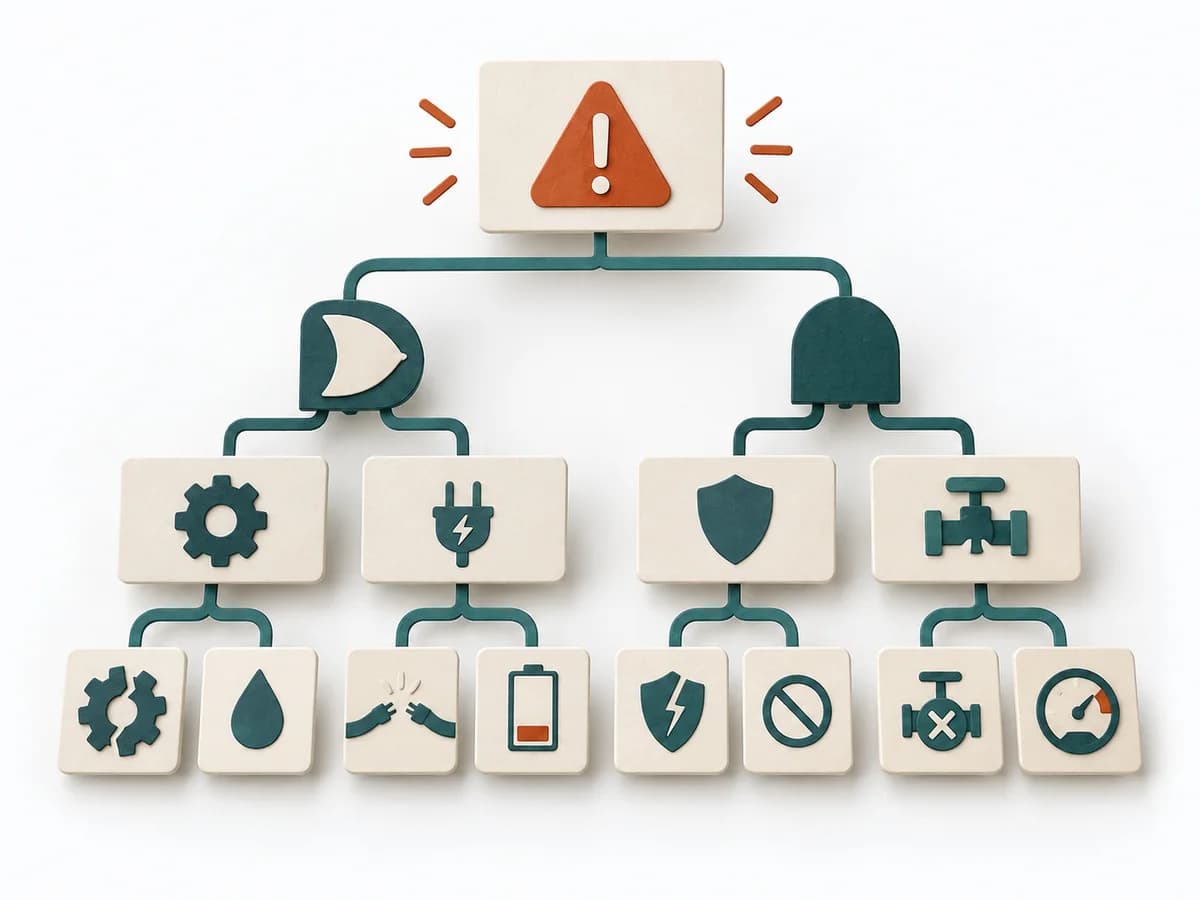 Operations Fault Tree Analysis |  Decision Making Assumption Surfacing |  Operations Failure Mode and Effects Analysis |  Product Discovery Assumption Mapping |
|---|---|---|---|---|
Purposedifferent | For a critical top event with several possible triggers, the method logically models failure paths. It makes visible which combinations of conditions can lead to damage. | Plans often contain assumptions that were never openly stated and remain dangerous precisely because of that. Assumption Surfacing makes these silent premises visible and prioritizes which of them carry the initiative or could sink it. | For a process, product, or service with noticeable failure risks, the method assesses possible failure modes in advance. It directs attention to combinations of occurrence, effect, and detectability. | When assumptions still sit unordered in the room, it weighs uncertainty against leverage. It makes visible which hypotheses should be checked first. |
Complexitydifferent | High | Low | High | Medium |
Timedifferent | 2-6 h | 45-90 min | 2-6 h | 45-60 min |
Participantsdifferent | 3-8 | 2-8 | 3-10 | 2-8 |
Formatdifferent | Workshop + async | Workshop + async | Workshop | Workshop + async |
Outputdifferent | Fault Tree, Critical Paths, Cause Hypotheses, Control Actions | Assumption List, Critical Assumptions, Learning Plan | FMEA Table, Risk Priority, Mitigation Actions | Assumption map, Test backlog, Risk ranking |
Tags1 shared | RiskRoot causeSafety | AssumptionsRiskDecisionDiscovery | RiskQualityOperationsRoot cause | AssumptionsRiskExperimentsValidation |