View methods side by side.
Choose up to four methods. Add them using the search and share the comparison by copying its link.
| Criterion | 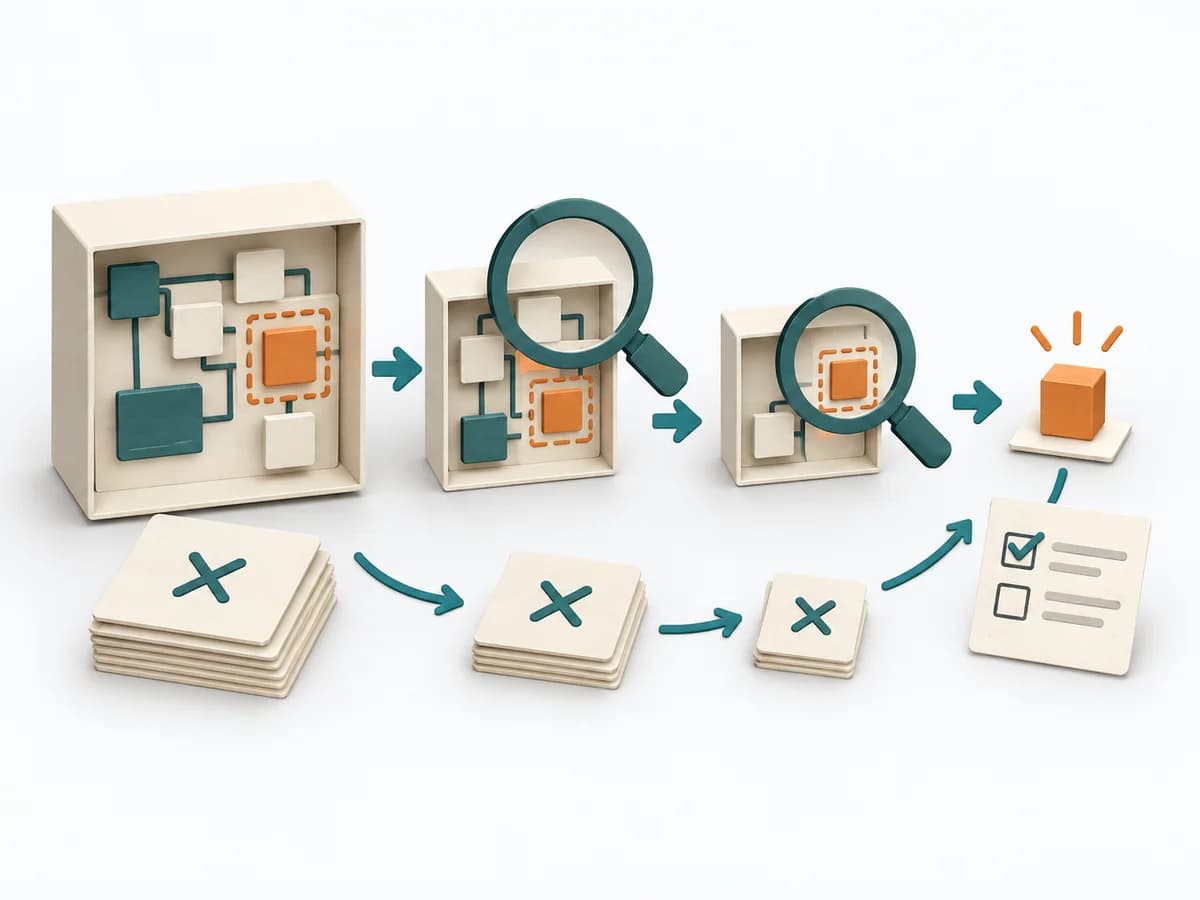 Engineering Fault Isolation |  Operations Standard Work Analysis | 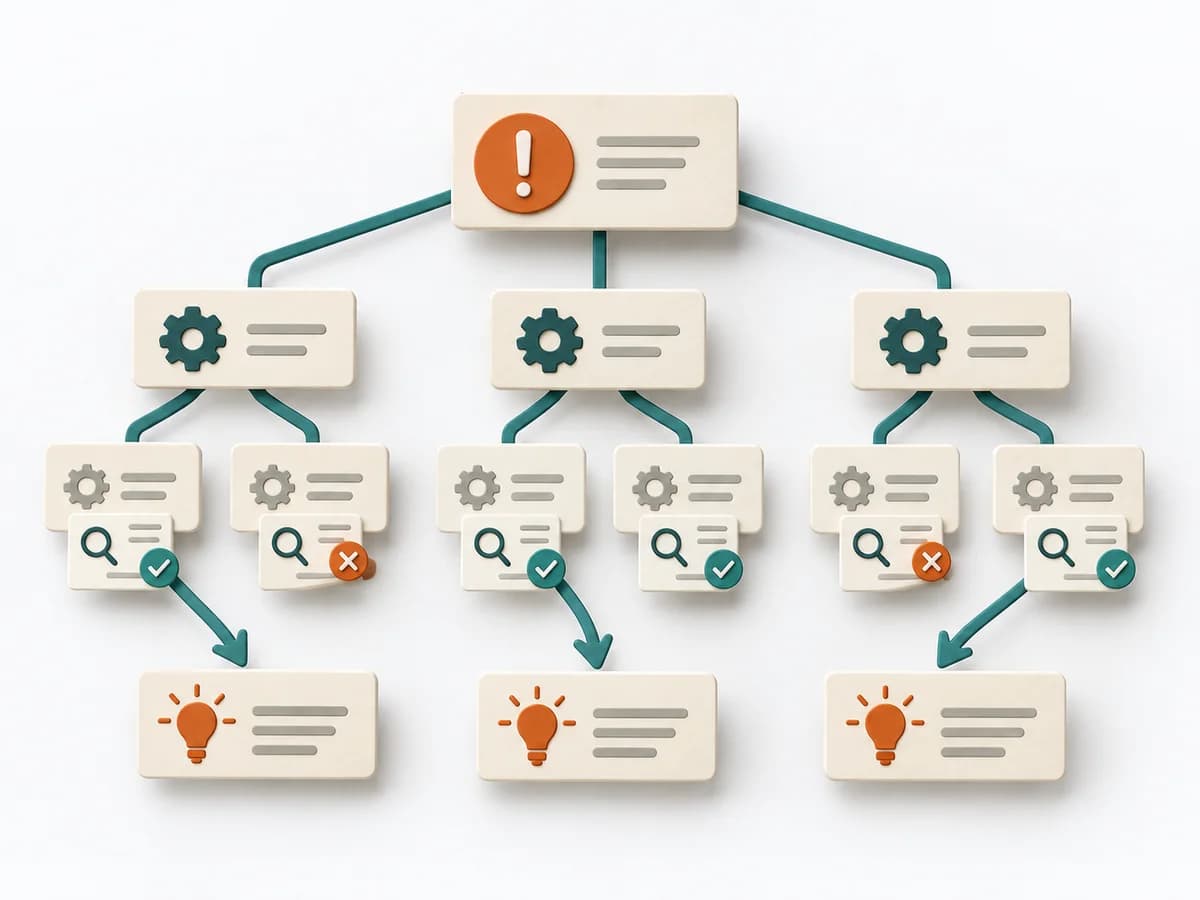 Operations Root Cause Tree Analysis |  Operations Barrier Analysis |
|---|---|---|---|---|
Purposedifferent | In technical failures, the visible symptom often gets mixed up with the actual cause. Fault Isolation narrows the fault space and progressively reduces which part of the system is truly affected. | When the same task is done differently depending on the person, the method exposes the reliable core. It creates comparability without unnecessarily choking off needed latitude. | For a problem with several suspected causes, the method builds a causal structure instead of a mere list. It makes visible how causes connect and where the strongest points of leverage lie. | For a risk that can only be managed through multiple layers of protection, the method examines the effectiveness of each barrier. It shows where safeguards are missing, too weak, or fail under real conditions. |
Complexitysame | Medium | Medium | Medium | Medium |
Timedifferent | 30-180 min | 1-3 h | 1-3 h | 2-4 h |
Participantsdifferent | 1-6 | 2-6 | 2-8 | 2-6 |
Formatdifferent | Workshop + async | Workshop | Workshop | Workshop + async |
Outputdifferent | Fault Isolation Map, Test Log, Excluded Hypotheses, Narrowed Fault Area | Standard Work Sheet, Deviation List, Improved Standard, Training Needs | Cause Tree, Evidence Notes, Countermeasures | Barrier Inventory, Failure Analysis per Barrier, Action Backlog |
Tagsno overlap | TroubleshootingDiagnosisEngineering | LeanProcessQuality | Root causeTreeIncidentQuality | Root causeSafetyIncident |