View methods side by side.
Choose up to four methods. Add them using the search and share the comparison by copying its link.
| Criterion | 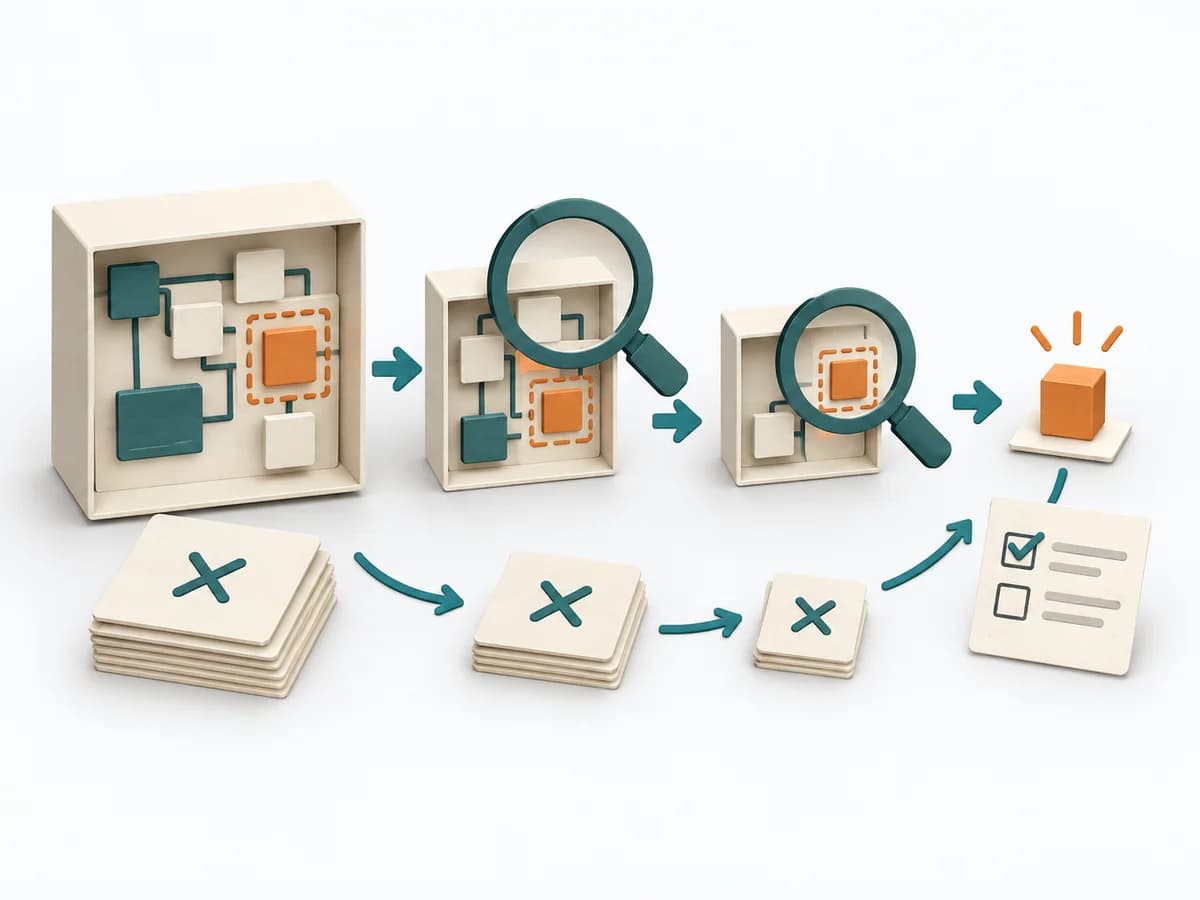 Engineering Fault Isolation | 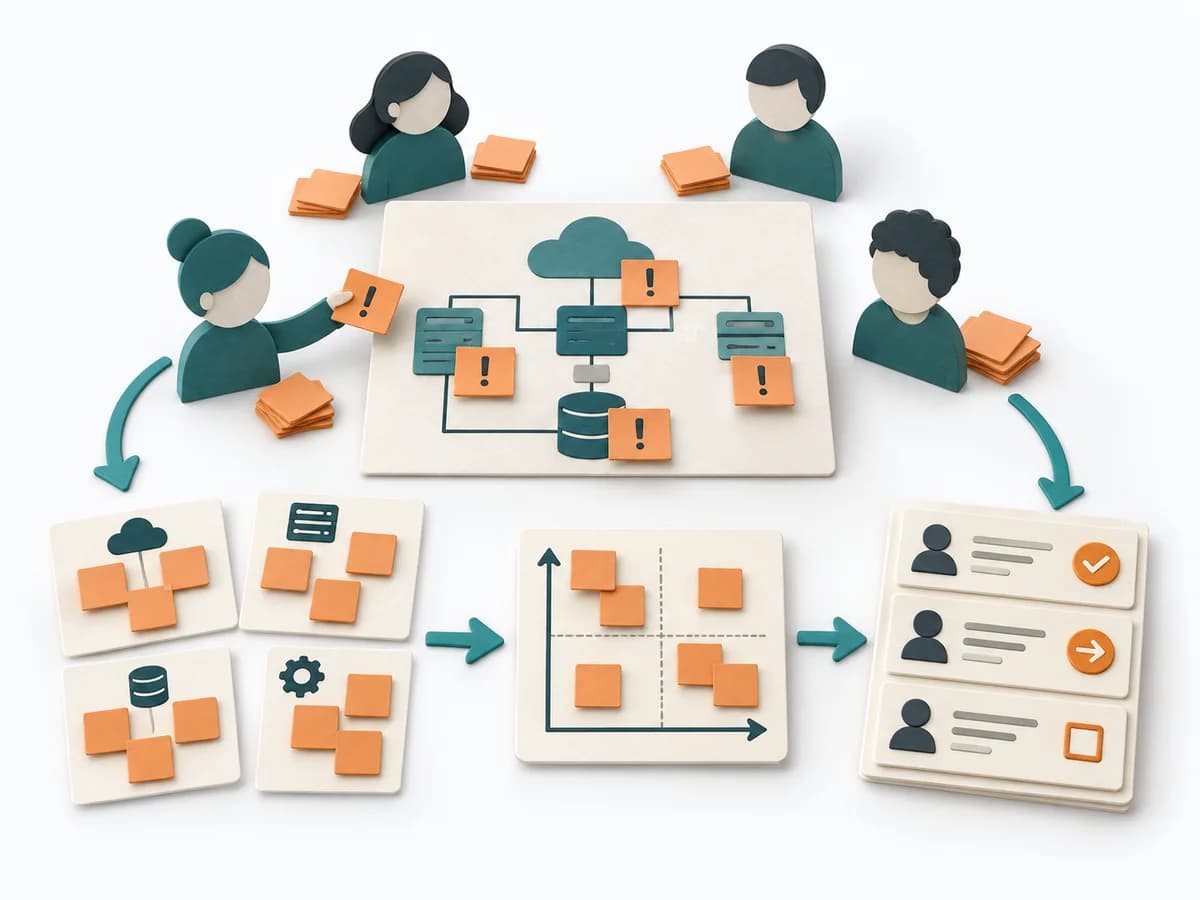 Architecture Risk Storming | 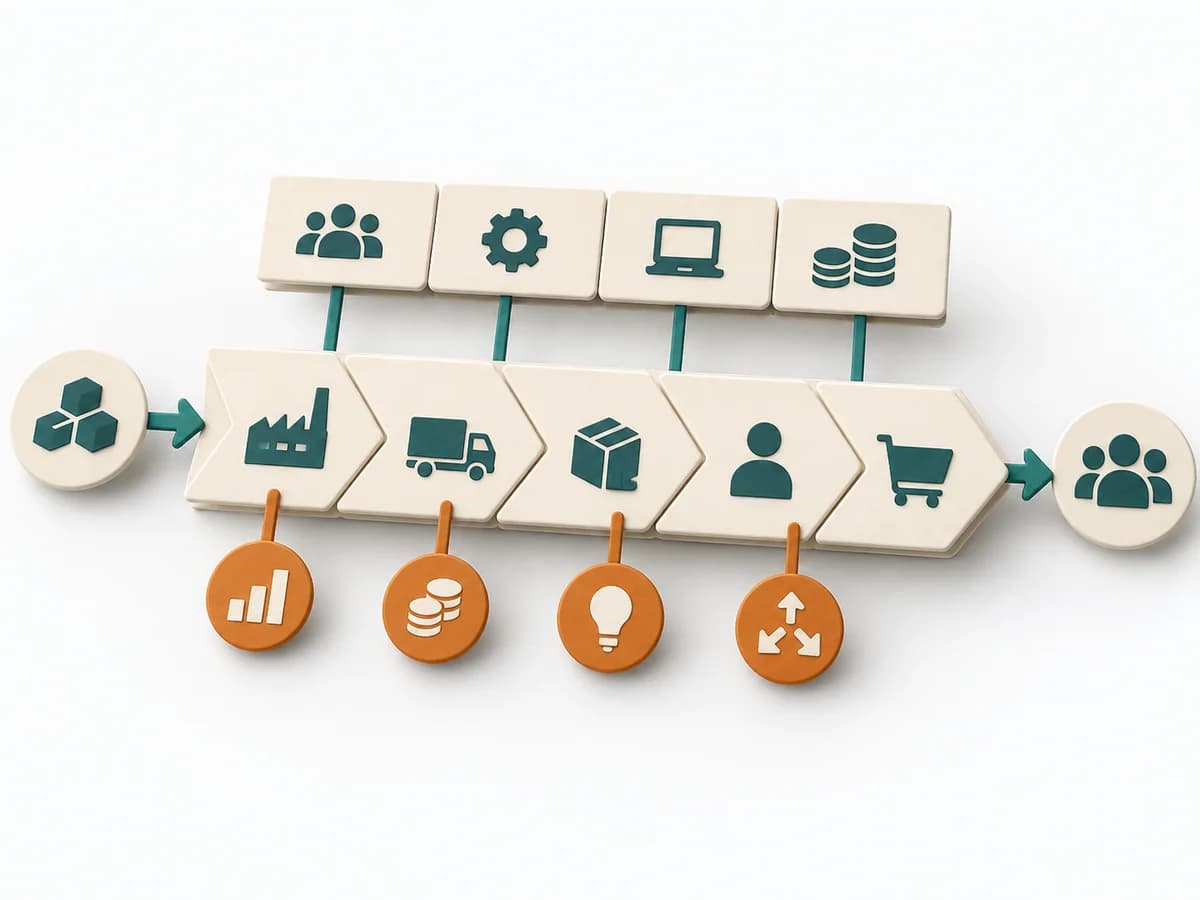 Business Strategy Value Chain Analysis |  Product Discovery Assumption Mapping |
|---|---|---|---|---|
Purposedifferent | In technical failures, the visible symptom often gets mixed up with the actual cause. Fault Isolation narrows the fault space and progressively reduces which part of the system is truly affected. | Helps clarify architecture context, options, and consequences in concrete terms. It organizes technical context, alternatives, and consequences. The result is captured as an Annotated Diagram, a Prioritized Risk List, and an Action Backlog. | Value Chain Analysis shows where value is created, costs accrue, and differentiation becomes possible along the process. It compares strengths, risks, market logic, and courses of action. The result is captured as a value-chain map and lever list. | When assumptions still sit unordered in the room, it weighs uncertainty against leverage. It makes visible which hypotheses should be checked first. |
Complexitydifferent | Medium | Low | High | Medium |
Timedifferent | 30-180 min | 60-90 min | Half day | 45-60 min |
Participantsdifferent | 1-6 | 4-12 | 3-8 | 2-8 |
Formatdifferent | Workshop + async | Workshop | Workshop | Workshop + async |
Outputdifferent | Fault Isolation Map, Test Log, Excluded Hypotheses, Narrowed Fault Area | Annotated Diagram, Prioritized Risk List, Action Backlog | Value Chain Map, Lever List | Assumption map, Test backlog, Risk ranking |
Tagsno overlap | TroubleshootingDiagnosisEngineering | RiskArchitectureWorkshopValidation | StrategyBusiness modelDiagnosisAnalysis | AssumptionsRiskExperimentsValidation |