View methods side by side.
Choose up to four methods. Add them using the search and share the comparison by copying its link.
| Criterion | 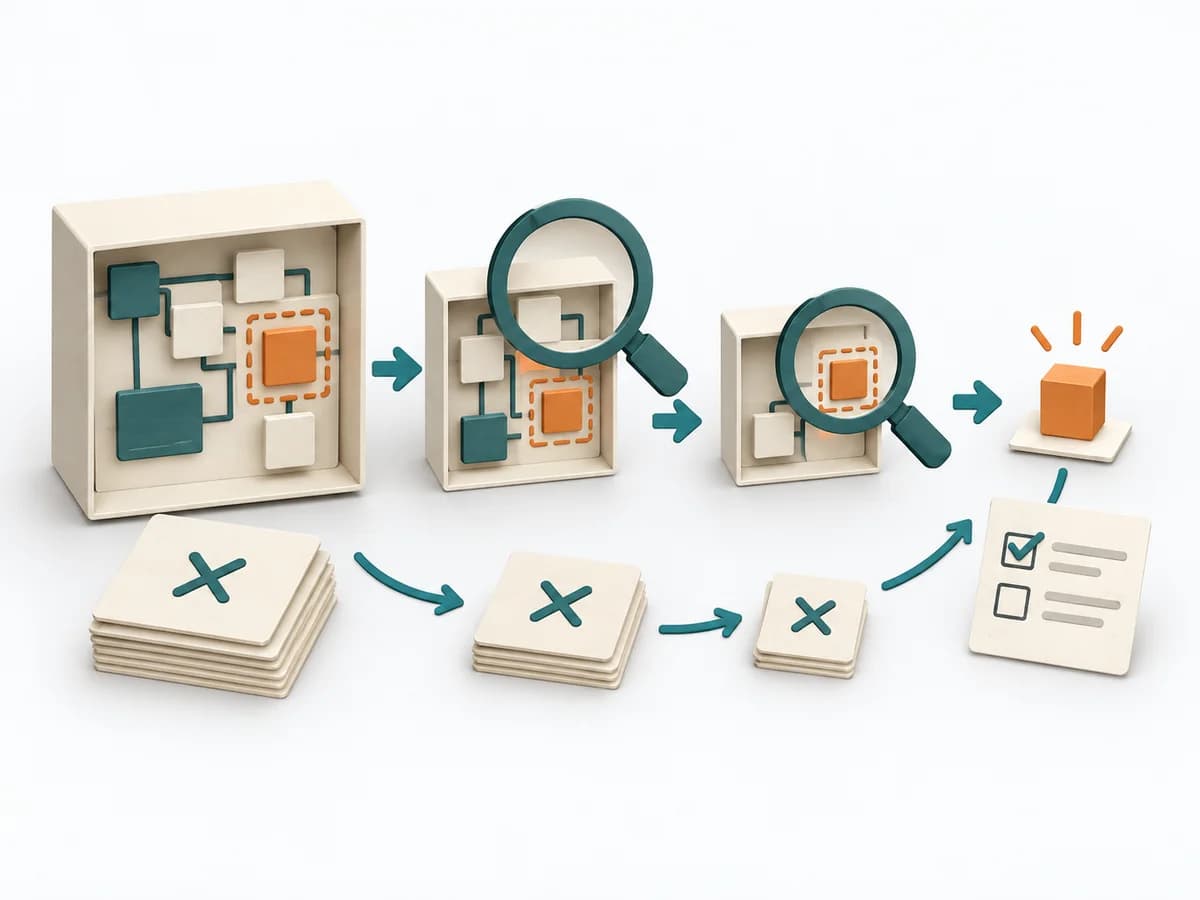 Engineering Fault Isolation | 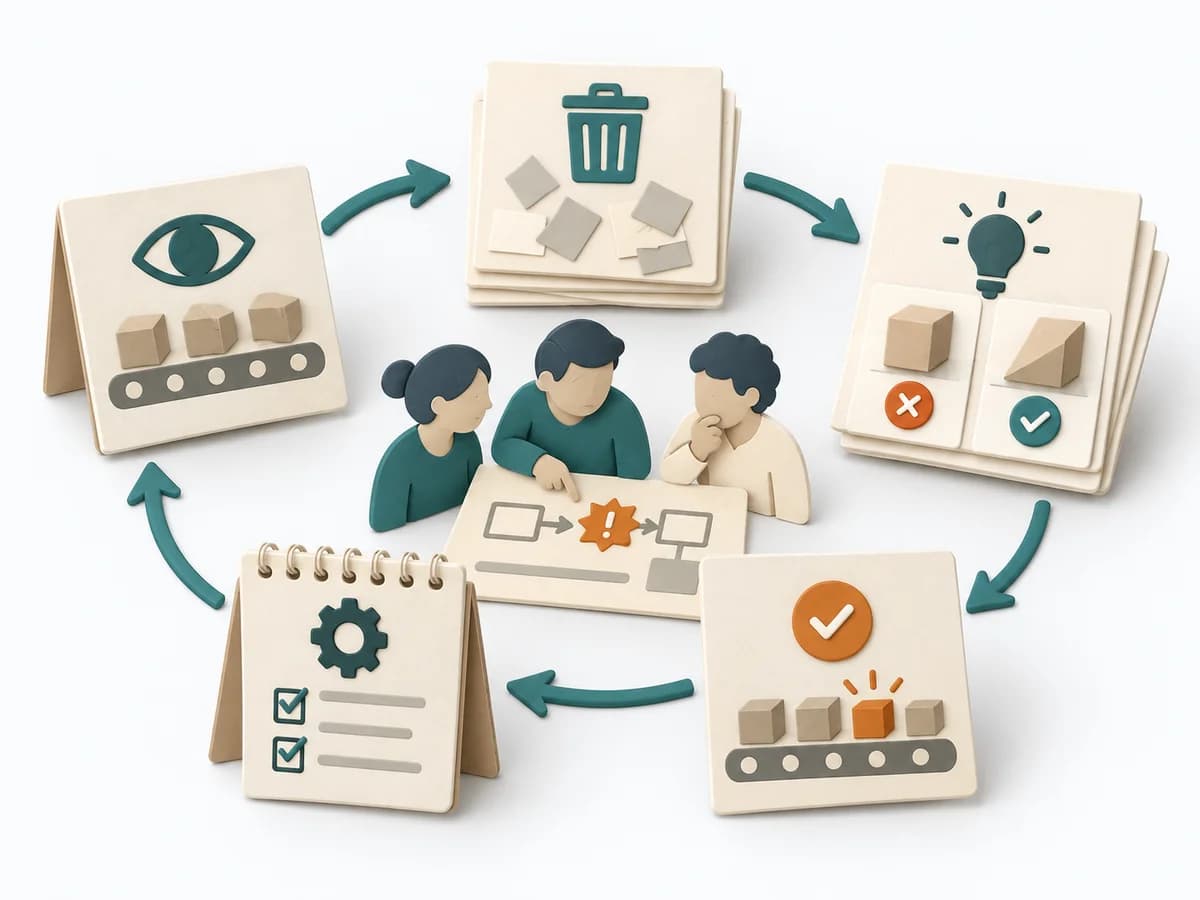 Operations Kaizen Event | 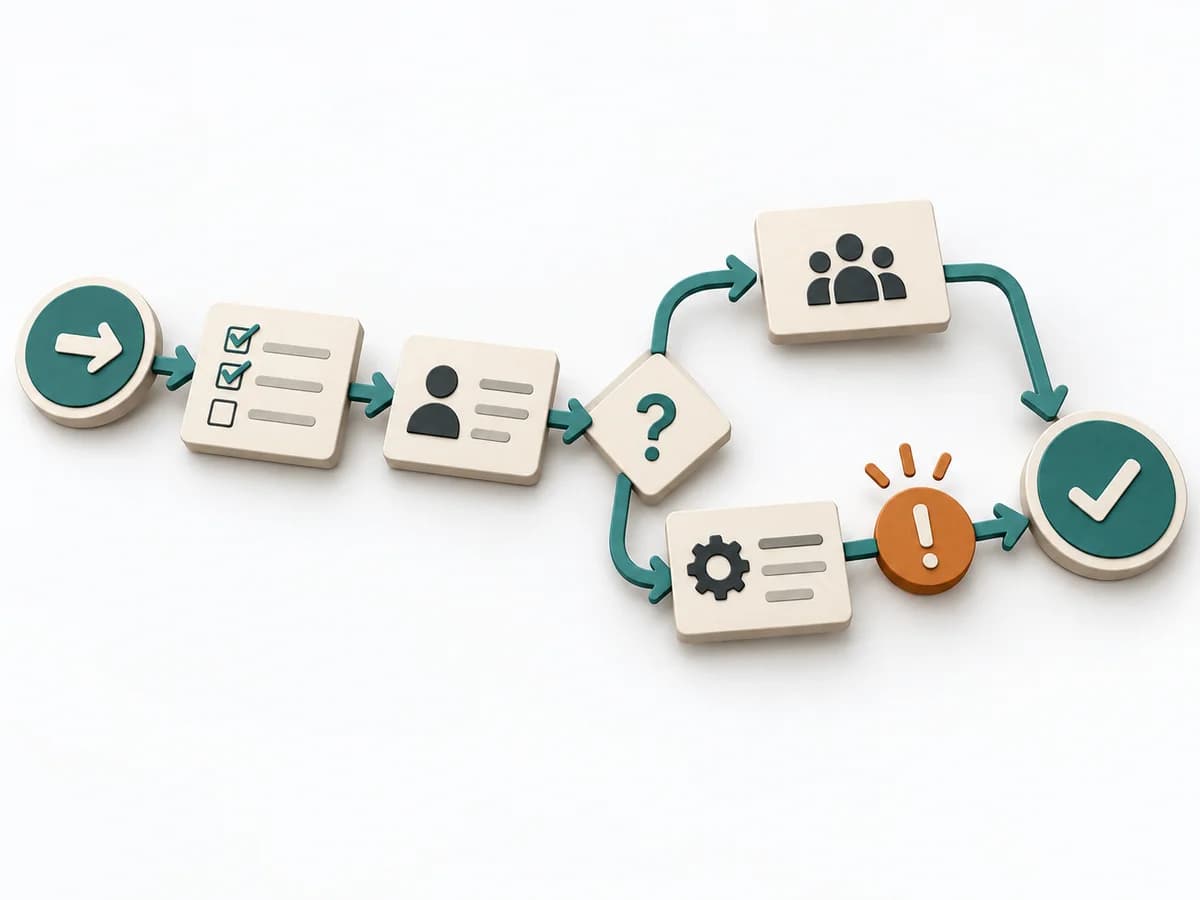 Operations Process Mapping | 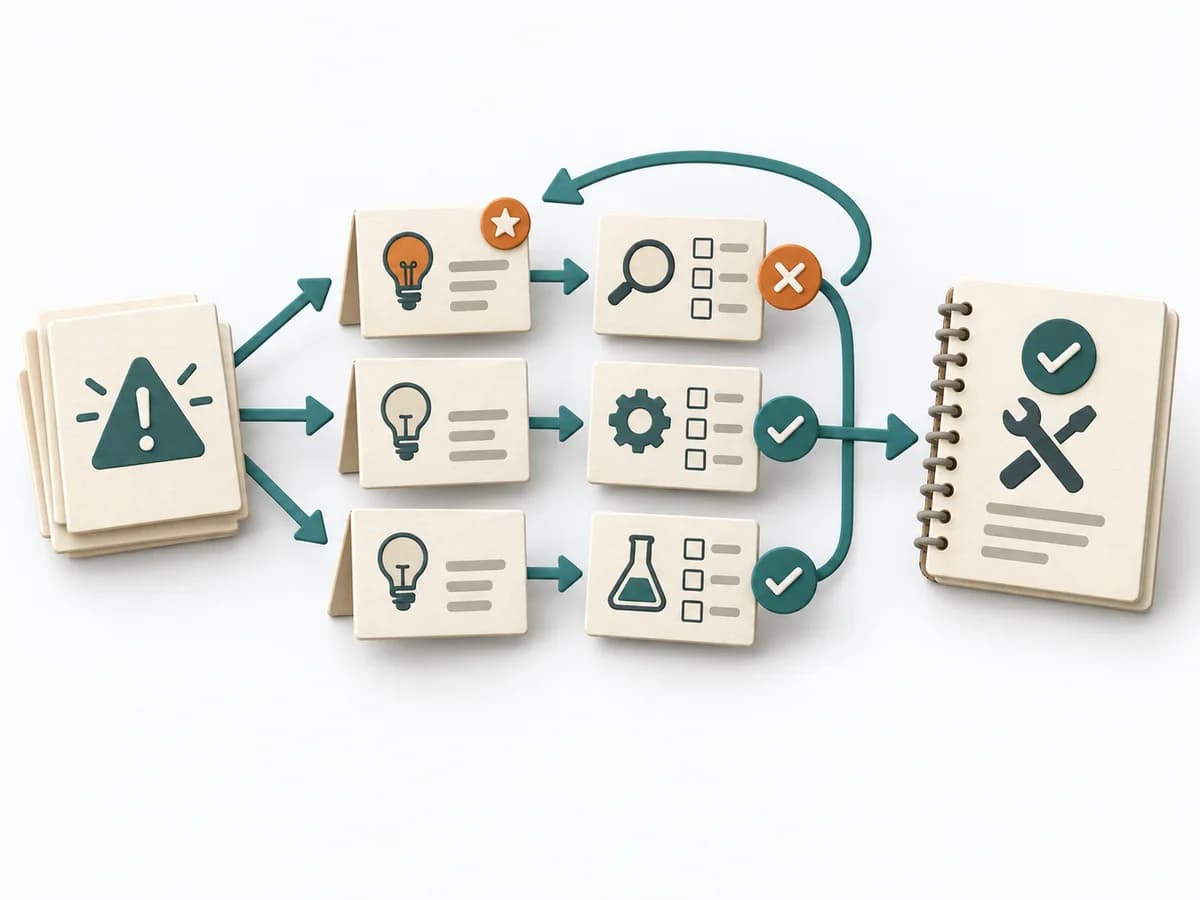 Engineering Hypothesis-Driven Troubleshooting |
|---|---|---|---|---|
Purposedifferent | In technical failures, the visible symptom often gets mixed up with the actual cause. Fault Isolation narrows the fault space and progressively reduces which part of the system is truly affected. | For a tightly scoped process segment with noticeable waste, the method bundles shared energy for change. It suits situations that call for fast learning loops and visible adjustments. | With a confusing workflow that has many handoffs, the method makes the actual process visible. It shows where work is passed on, delayed, or duplicated, so improvement targets the right spots. | When systems fail unexpectedly, spontaneous attempts often produce more noise than insight. Hypothesis-driven Troubleshooting translates symptoms into testable assumptions and makes troubleshooting learnable. |
Complexitysame | Medium | Medium | Medium | Medium |
Timedifferent | 30-180 min | 0.5-5 Tage | 1-3 h | 30-240 min |
Participantsdifferent | 1-6 | 4-10 | 3-10 | 1-6 |
Formatdifferent | Workshop + async | Workshop | Workshop | Workshop + async |
Outputdifferent | Fault Isolation Map, Test Log, Excluded Hypotheses, Narrowed Fault Area | Kaizen Charter, Waste List, Improvement Experiments, Standard Work Update | Process Map, Handoff List, Improvement Backlog | Hypothesis Log, Test Plan, Evidence Notes, Diagnosis Summary |
Tagsno overlap | TroubleshootingDiagnosisEngineering | LeanContinuous improvementOperations | ProcessOperationsImprovement | TroubleshootingProblem solvingDiagnosis |