View methods side by side.
Choose up to four methods. Add them using the search and share the comparison by copying its link.
| Criterion | 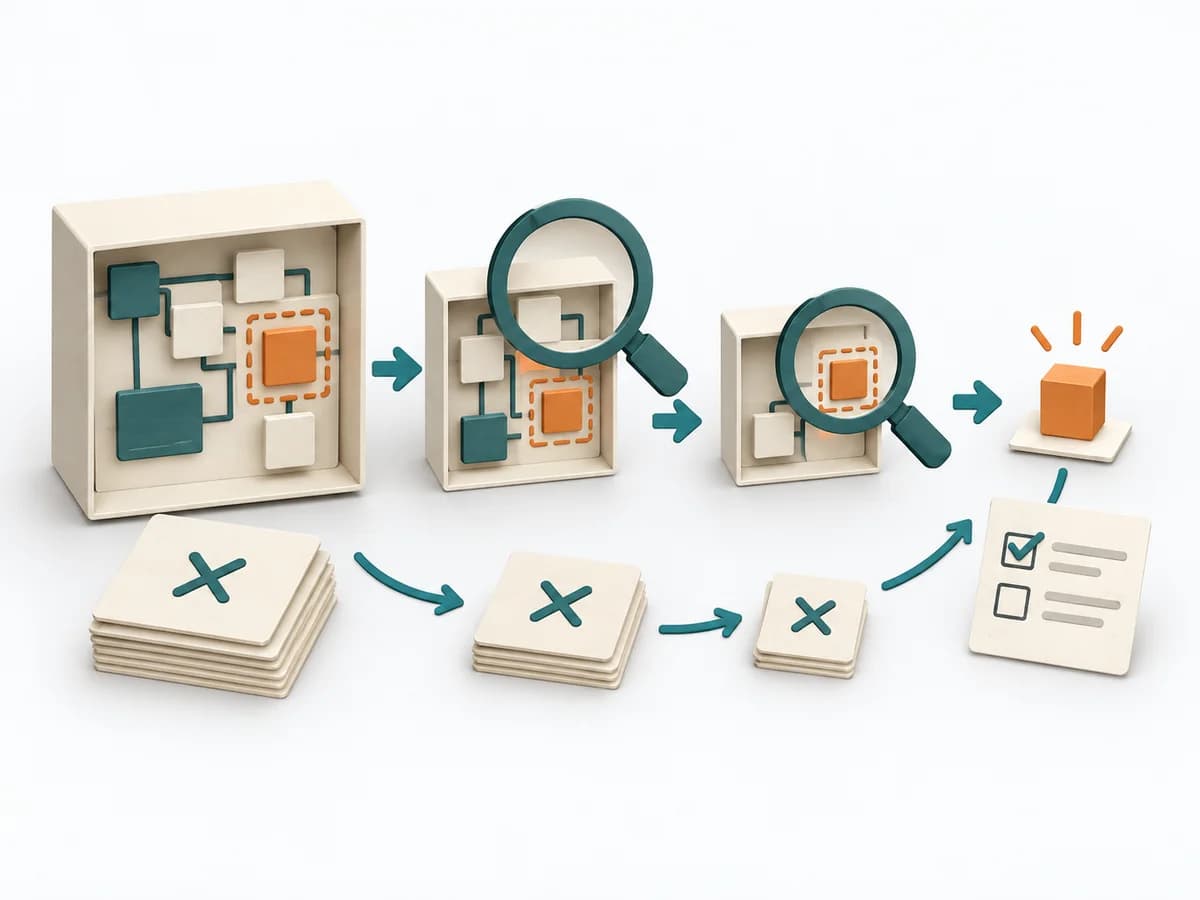 Engineering Fault Isolation |  UX Research HEART Framework | 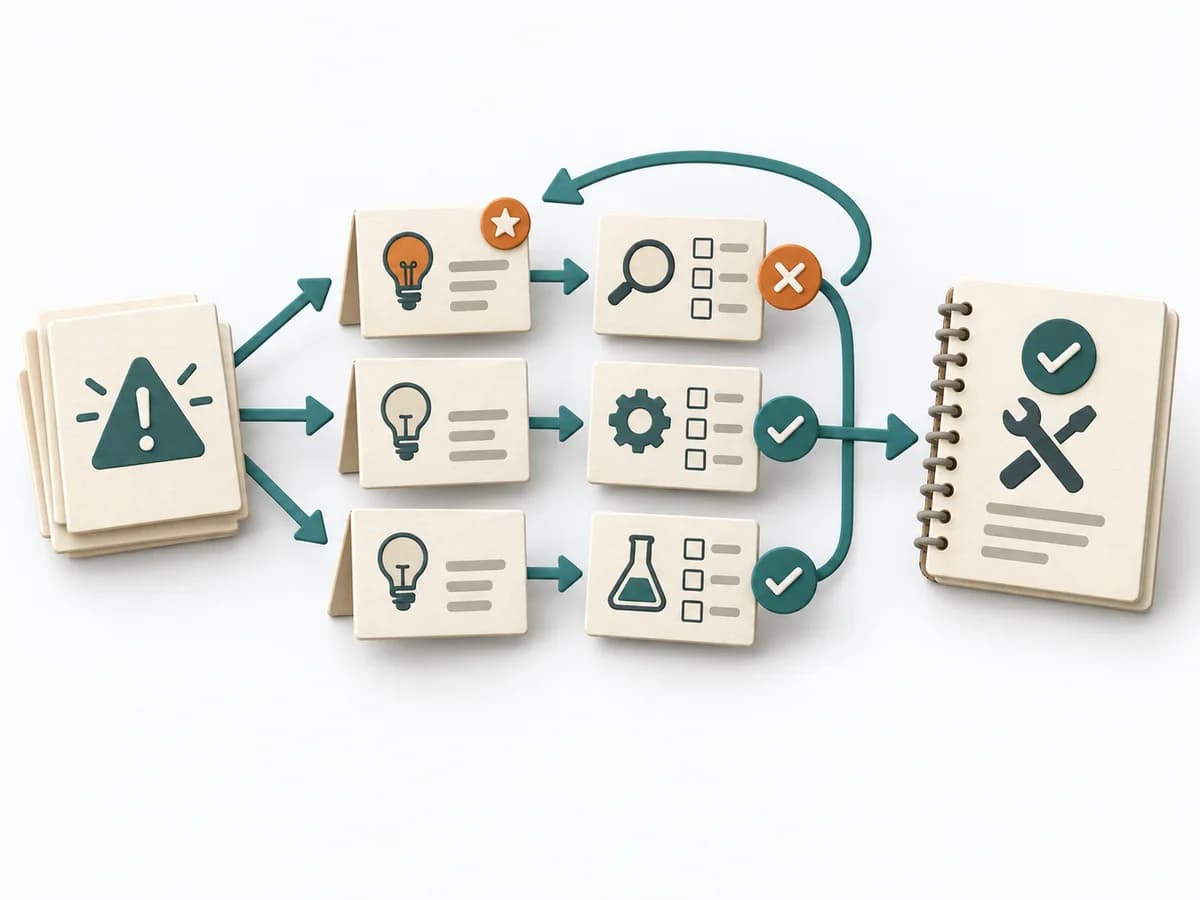 Engineering Hypothesis-Driven Troubleshooting |  Operations 5 Whys |
|---|---|---|---|---|
Purposedifferent | In technical failures, the visible symptom often gets mixed up with the actual cause. Fault Isolation narrows the fault space and progressively reduces which part of the system is truly affected. | Helps clarify observations, needs, and patterns in concrete terms. It groups observations into patterns, questions, and decisions. The result is captured as a HEART-GSM table and dashboard. | When systems fail unexpectedly, spontaneous attempts often produce more noise than insight. Hypothesis-driven Troubleshooting translates symptoms into testable assumptions and makes troubleshooting learnable. | For a single, hard-to-explain deviation, the method exposes the causal chain behind the visible symptom. It keeps the cause open until a controllable condition emerges instead of a mere description. |
Complexitydifferent | Medium | Medium | Medium | Low |
Timedifferent | 30-180 min | 120 min initial, dann laufend | 30-240 min | 15-30 min |
Participantsdifferent | 1-6 | 3-6 | 1-6 | 2-6 |
Formatdifferent | Workshop + async | Workshop + async | Workshop + async | Workshop |
Outputdifferent | Fault Isolation Map, Test Log, Excluded Hypotheses, Narrowed Fault Area | HEART-GSM Table, Dashboard | Hypothesis Log, Test Plan, Evidence Notes, Diagnosis Summary | Root cause notes, Countermeasures |
Tagsno overlap | TroubleshootingDiagnosisEngineering | MetricsUX researchMeasurementSatisfaction | TroubleshootingProblem solvingDiagnosis | Root causeIncidentLeanProblem solving |