View methods side by side.
Choose up to four methods. Add them using the search and share the comparison by copying its link.
| Criterion | 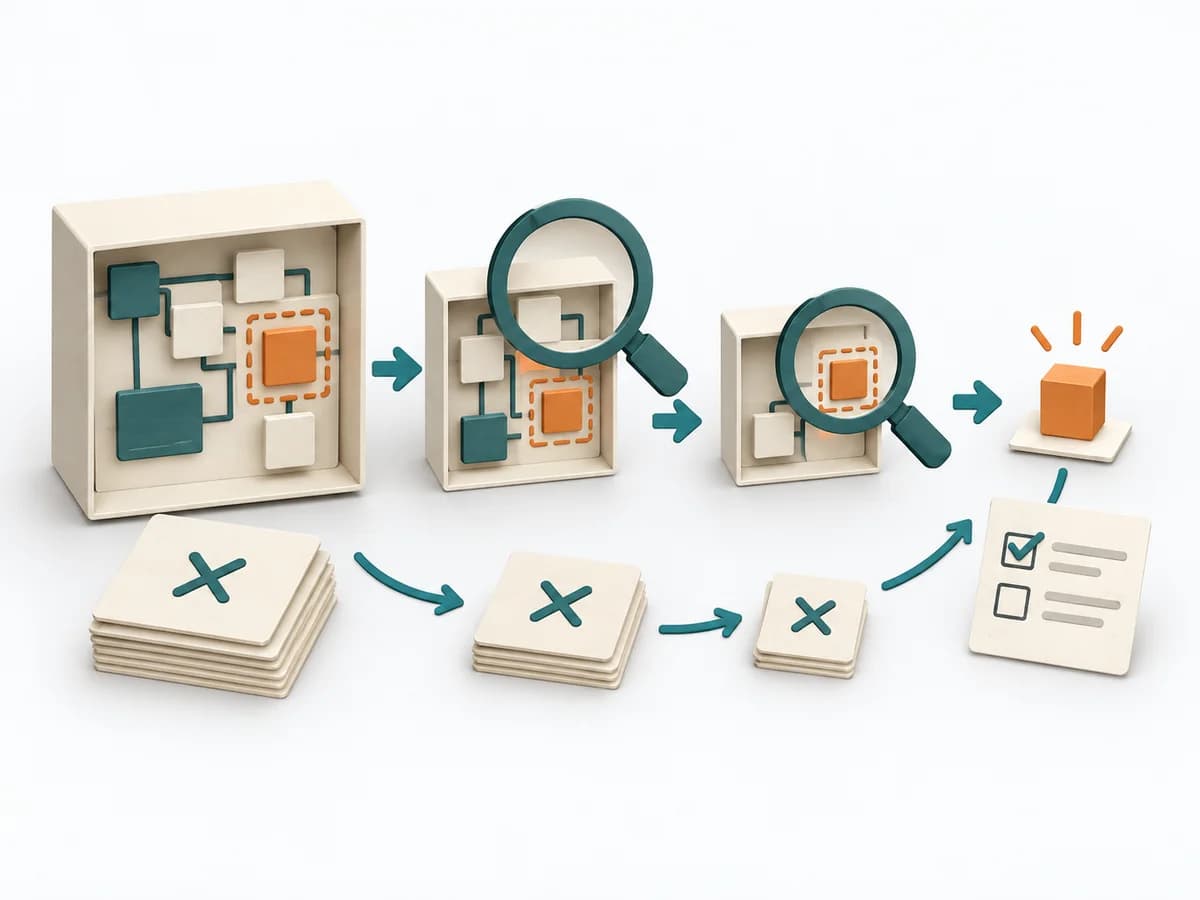 Engineering Fault Isolation |  Decision Making Delphi Method | 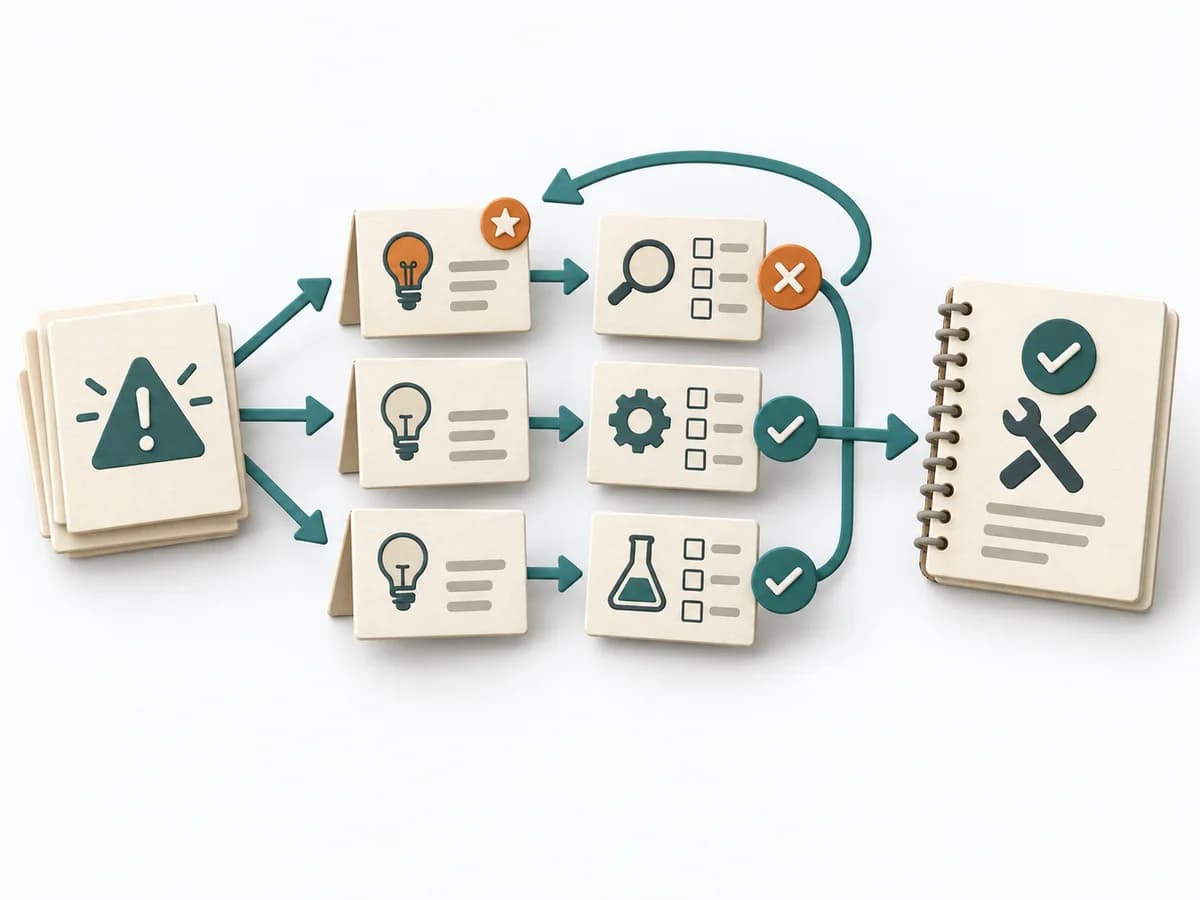 Engineering Hypothesis-Driven Troubleshooting |  Decision Making Force Field Analysis |
|---|---|---|---|---|
Purposedifferent | In technical failures, the visible symptom often gets mixed up with the actual cause. Fault Isolation narrows the fault space and progressively reduces which part of the system is truly affected. | When knowledge is distributed and direct dominance should be avoided, groups quickly fall under the sway of their opinion leaders. The Delphi Method gathers assessments iteratively and gradually brings expert judgments closer together. | When systems fail unexpectedly, spontaneous attempts often produce more noise than insight. Hypothesis-driven Troubleshooting translates symptoms into testable assumptions and makes troubleshooting learnable. | In change initiatives, supporting and restraining forces sit at the table at the same time. Force Field Analysis makes these tensions explicit and shows where change can be pushed forward by strengthening or relieving. |
Complexitydifferent | Medium | High | Medium | Low |
Timedifferent | 30-180 min | 1-4 Wochen | 30-240 min | 45-90 min |
Participantsdifferent | 1-6 | 6-30 Experten | 1-6 | 3-12 |
Formatdifferent | Workshop + async | Async | Workshop + async | Workshop |
Outputdifferent | Fault Isolation Map, Test Log, Excluded Hypotheses, Narrowed Fault Area | Expert Forecast, Consensus Range, Assumption Notes | Hypothesis Log, Test Plan, Evidence Notes, Diagnosis Summary | Force Field Map, Change Levers, Risk Notes |
Tagsno overlap | TroubleshootingDiagnosisEngineering | ForecastingExpertsDecisionStrategy | TroubleshootingProblem solvingDiagnosis | ChangeDecisionStrategy |