View methods side by side.
Choose up to four methods. Add them using the search and share the comparison by copying its link.
| Criterion | 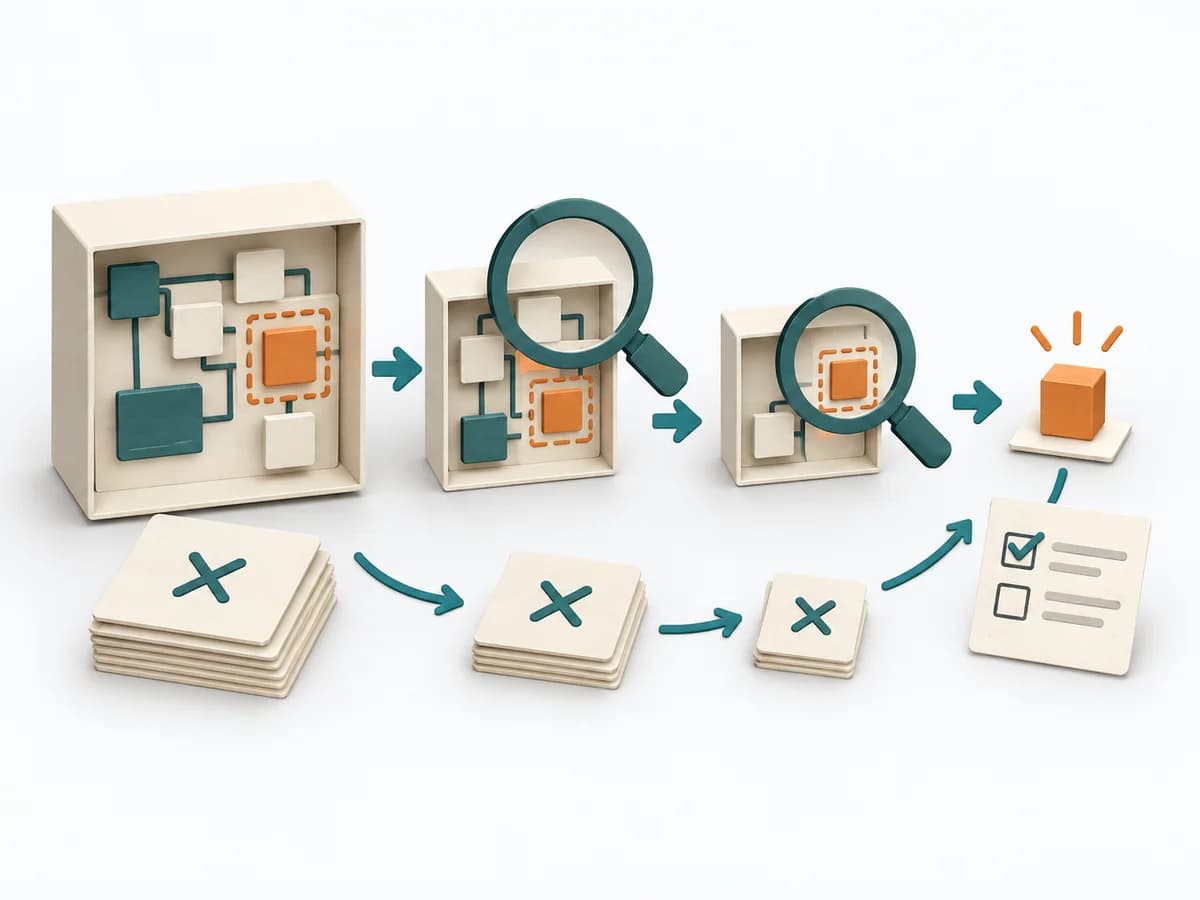 Engineering Fault Isolation |  Knowledge Modeling Competency Questions |  Engineering Hypothesis-Driven Troubleshooting | 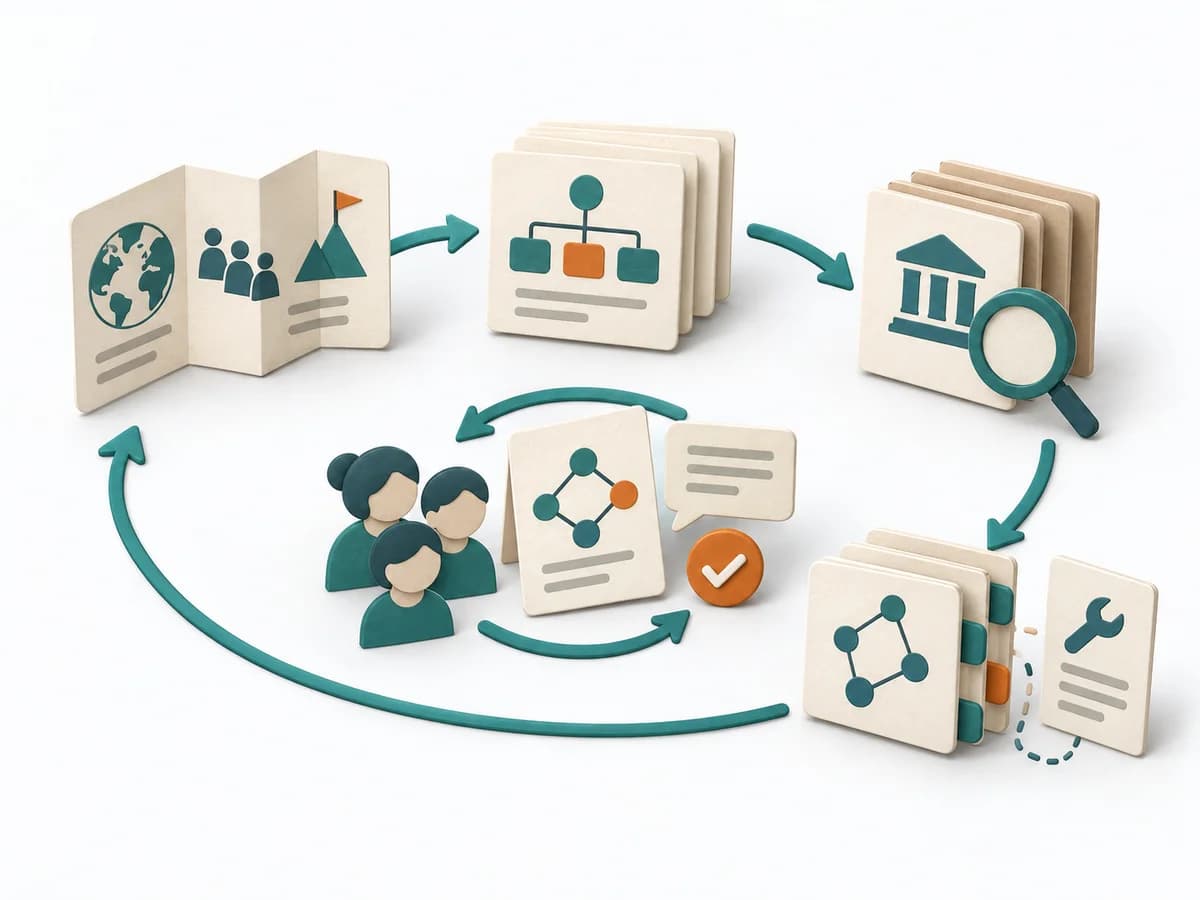 Knowledge Modeling NeOn Methodology |
|---|---|---|---|---|
Purposedifferent | In technical failures, the visible symptom often gets mixed up with the actual cause. Fault Isolation narrows the fault space and progressively reduces which part of the system is truly affected. | Competency Questions translate a domain model into concrete questions that it must be able to answer. The method keeps the model's scope clean and prevents pretty but useless structures. | When systems fail unexpectedly, spontaneous attempts often produce more noise than insight. Hypothesis-driven Troubleshooting translates symptoms into testable assumptions and makes troubleshooting learnable. | The NeOn Methodology structures ontology work as a controlled process with reuse, scenarios, and reviews. It is useful when ontologies should not emerge ad hoc but modularly and reusably. |
Complexitydifferent | Medium | Medium | Medium | High |
Timedifferent | 30-180 min | 2-4 h | 30-240 min | Mehrere Wochen bis Monate |
Participantsdifferent | 1-6 | 2-8 | 1-6 | 2-10 |
Formatsame | Workshop + async | Workshop + async | Workshop + async | Workshop + async |
Outputdifferent | Fault Isolation Map, Test Log, Excluded Hypotheses, Narrowed Fault Area | Competency Question Set, Required Concepts, Test Queries, Coverage Matrix | Hypothesis Log, Test Plan, Evidence Notes, Diagnosis Summary | Ontology Requirements Specification, Reuse Plan, Ontology Modules, Evaluation Report |
Tagsno overlap | TroubleshootingDiagnosisEngineering | OntologyKnowledge graphScopeRequirementsSemantic | TroubleshootingProblem solvingDiagnosis | OntologyMethodologyReuseSemanticEngineering |